Demand generation tools help B2B teams find accounts that may be ready to buy, nurture their interest and see which activity creates pipeline. Generating real opportunities is key for marketing teams to prove impact. A strong demand gen marketing strategy plays a crucial role in achieving this. Executing a practical demand generation approach with the right tools becomes efficient and straightforward. We’ve compiled a list of the top demand gen marketing tools that can help you create, track, and optimise your campaigns.
TL;DR:
- Demand generation tools cover different jobs, not one category.
- Choose by your biggest gap, not by which tool leads the market.
- UK teams should check data coverage and UK GDPR compliance before buying.
The tools are grouped by job, not ranked. MyOutreach has no partner, affiliate or resale relationship with any tool listed.
What are demand generation tools?
Demand generation marketing is the foundation of the B2B growth strategy, which focuses on creating awareness and interest in your product and service.
Demand generation tools are the software B2B marketing teams use to spot accounts that may be ready to buy, build interest through coordinated campaigns, score and route the leads that follow, and report on which activity creates pipeline, so marketing and sales work from one picture.
The term is separate from Google Ads' "Demand Gen" campaign type and from Kotler's "states of demand".
Demand generation vs lead generation
Demand generation creates and nurtures interest across the whole market, including buyers who aren't looking yet. Lead generation captures and converts people who have already shown intent. Many of the tools below serve both jobs. Our guide to demand generation vs lead generation explains the difference in more detail.
Demand generation tools compared
Content marketing plays a crucial role in a successful demand generation strategy. Let's explore the essential demand generation tools that can drive more substantial results.
Pricing and data coverage are as published on each vendor's own site. The page also covers supporting tools for SEO, analytics, attribution and A/B testing, which help demand generation but aren't core platforms.
Marketing automation and website conversion
You've got their attention now - what is the next step? You must use the right tools for lead capture and nurturing in your demand generation strategy. These are our recommendations.
To capture and nurture leads effectively, you will need the appropriate tools. This way, you make customers happy and improve your demand generation marketing. Other CRM benefits:
- Smart data enrichment
- Tracks customer interactions
- Seamlessly integrates with other tools and systems
- Spot cues if customers want to buy
HubSpot Marketing Hub: best for small and mid-market teams
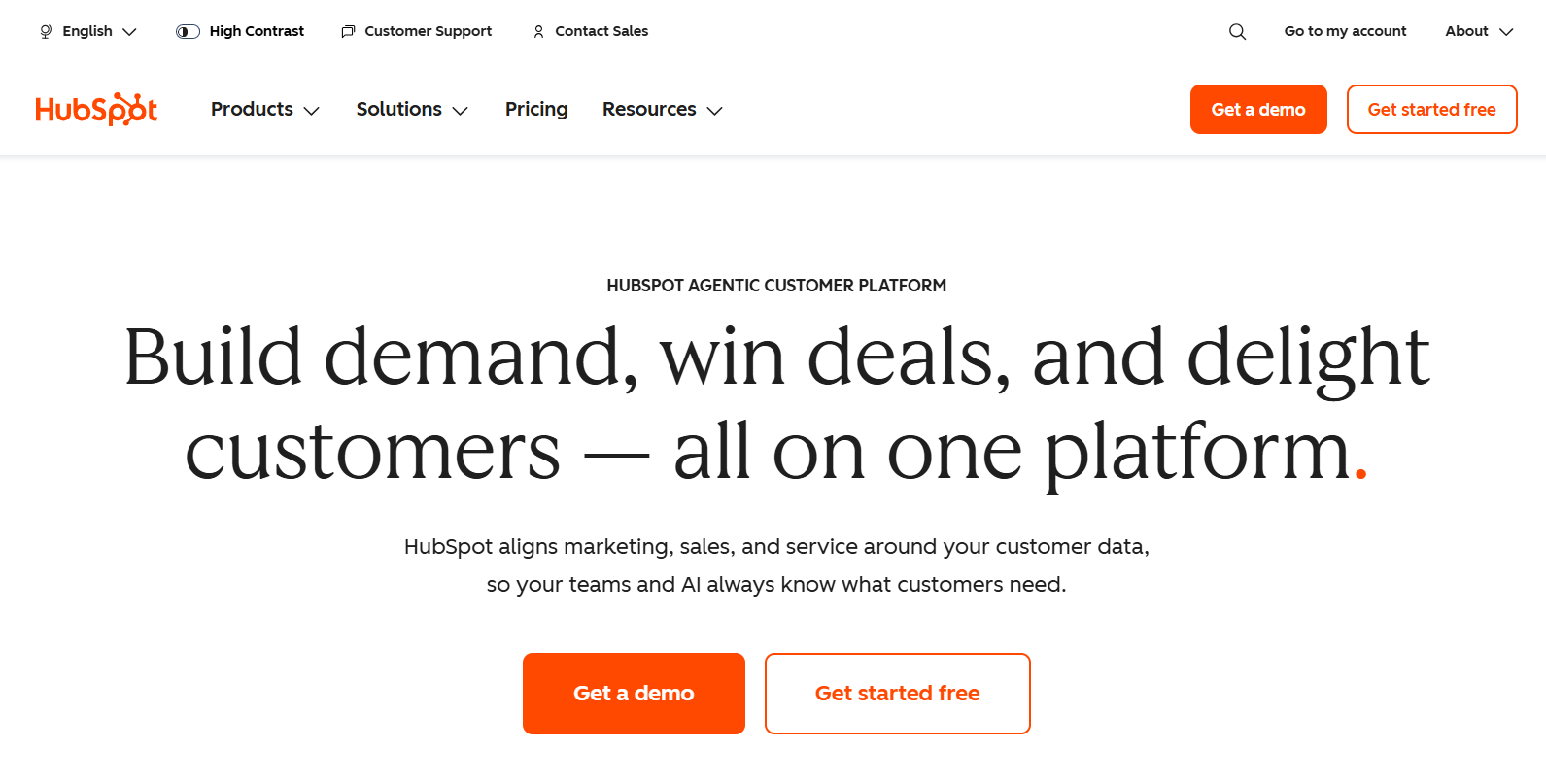
HubSpot Marketing Hub brings the whole package for you. Marketing automation, email campaigns, social media marketing and more. It makes it easy to get the right message to the prospect at the perfect moment in their buyer journey. There's a free plan, but cost rises with contacts, seats and tier.
CRM helps organise and maintain accurate, up-to-date customer data, avoiding campaign failure due to bad data.
Chatbots engage leads instantly and deliver answers on the spot. Website conversion tool to consider:
Qualified: best for Salesforce teams converting website visitors
Qualified turns website conversations into pipeline. Its AI SDR agent, Piper, talks to visitors by text, voice or video and books meetings. Qualified is now part of Salesforce, so check the fit if you run a different CRM.
Lead scoring helps demand gen marketing by prioritising the right prospects by integrating seamlessly with your CRM, segmenting leads intelligently, and instantly alerting you when high-intent prospects are ready to engage. These tools will help you to score your leads effectively:
Adobe Marketo Engage: best for complex enterprise programmes
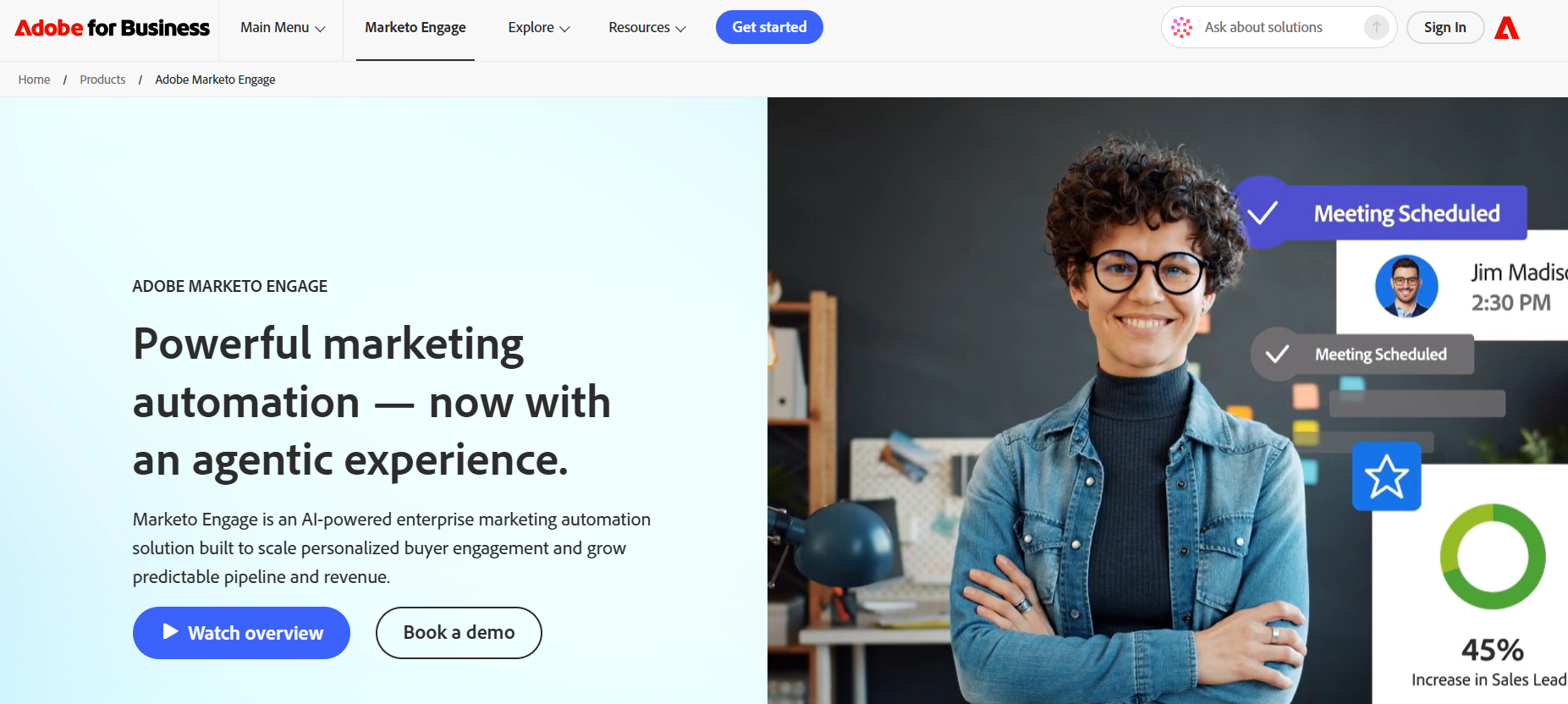
Adobe Marketo Engage works together with AI and ranks leads based on:
- Past behaviour
- How engaged they are
- Who they are
- If and where they fit
Pricing isn't published, and it takes real effort to implement and run, so it suits larger teams best.
Analytics and data tools for demand gen
Every successful demand generation campaign starts with good quality data, these tools can give you the insights to drive better results.
ZoomInfo: best for broad contact and company data
ZoomInfo offers a large contact and company database with intent signals. Pricing is quote-based and grows with scale, so test the accuracy of its UK and EMEA data before you commit.
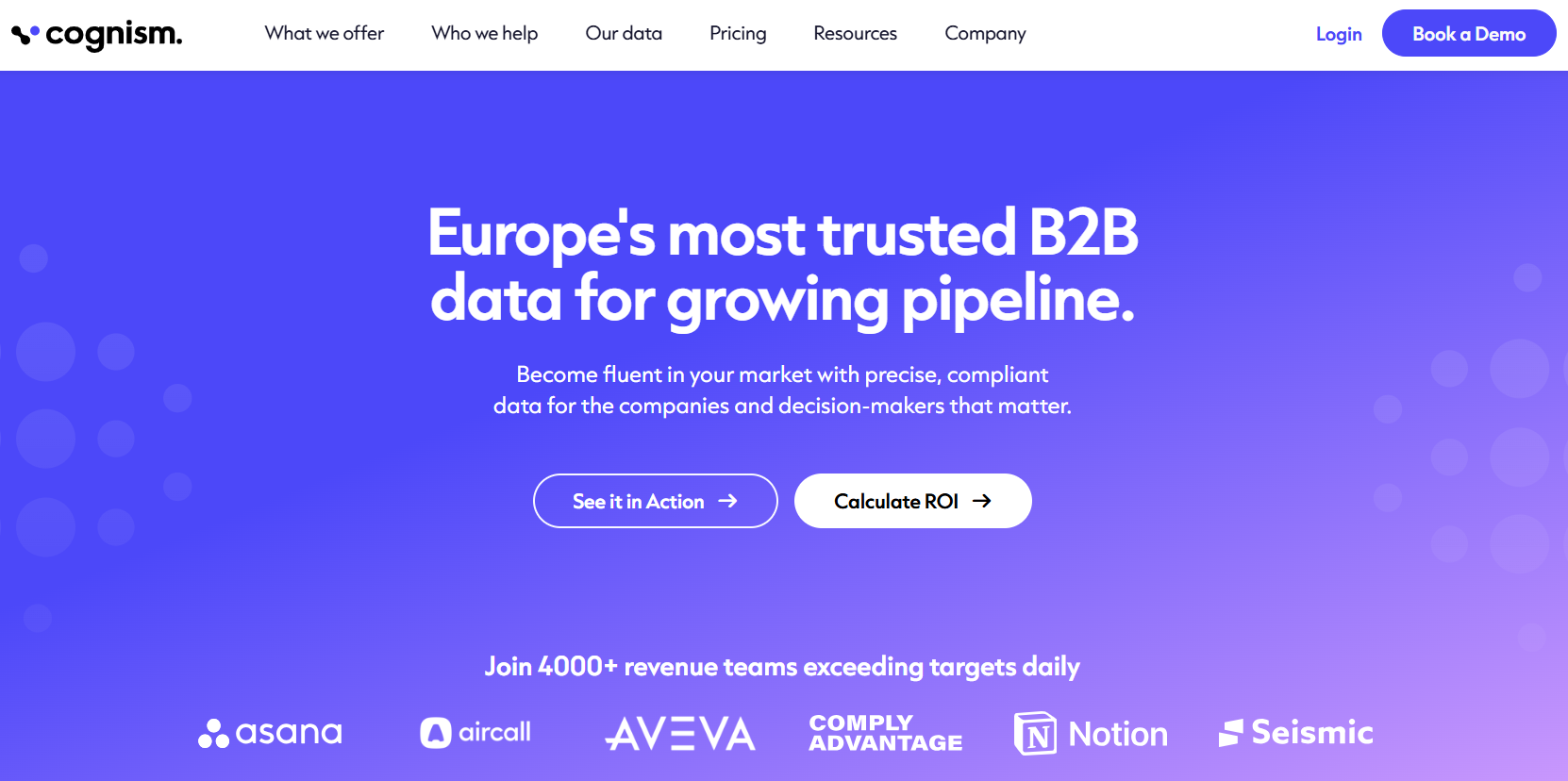
Cognism: best for UK and European contact data
Cognism focuses on European B2B data, including phone-verified mobile numbers. It's a data tool, so you'll need another platform to run outreach or campaigns.
Breeze Intelligence: best for HubSpot users
Breeze Intelligence (formerly Clearbit) enriches contacts and companies inside HubSpot. It's a natural fit for HubSpot teams, but it doesn't work outside HubSpot.
If a tool supplies contact data for outreach, UK GDPR and PECR apply to how you use it. The ICO's direct marketing guidance explains the rules.
ABM platforms for demand generation
Account-based marketing platforms help businesses target high-value accounts with personalised messages, improving conversion rates and ROI in their demand generation programs.
6sense: best for enterprise ABM programmes
6sense uses AI to identify individuals currently searching for solutions like yours, supporting your product marketing and demand generation strategies. Pricing isn't published, and it's built for enterprise teams with a mature ABM motion.
Demandbase: best for combining ABM, ads and account data
Demandbase brings account intelligence, advertising and personalisation together. Pricing is quote-based, with a platform fee plus a per-user fee and no free tier.
Bombora: best for adding third-party intent data
Bombora supplies third-party intent data that shows which companies are researching topics like yours. It's data only, so you'll need your CRM, marketing automation or ad platform to act on it.
Leadfeeder: best for identifying website visitors by company
Leadfeeder (rebranded from Dealfront in March 2026) identifies the companies visiting your website, with a free plan available. It works at company level, not individual visitors, and UK GDPR and PECR apply to how you use visitor data.
Supporting tools for SEO, analytics and attribution
These tools help demand generation but aren't core demand generation platforms, so they sit in a short table rather than the main list.
How to choose the right demand generation tool
Choose by your biggest gap, not by which tool leads its category. Check these five things before you buy:
- Your biggest gap. Work out where pipeline stalls first: unknown accounts, poor data, weak nurture or a website that doesn't convert.
- Fit with your stack and team. Check that the tool connects to your CRM, and that you have people to run it day to day.
- Data quality and UK GDPR. Test a sample of UK and EMEA records before you buy, and check how the vendor sources its data.
- Total cost. Add implementation, onboarding fees and the hours needed to maintain it to the licence price.
- Integrations and reporting. Make sure activity flows back to your CRM, so you can see pipeline and not just clicks.
Buy for your most pressing constraint first, and get that tool working before you add the next one. An ABM platform won't help if sales can't reach the contacts it surfaces.
Not sure where to start? Use the table below, and see our guide to demand generation vs lead generation for how the two jobs differ.
How to measure demand generation
Measure demand generation by pipeline sourced and influenced, sales cycle length, demo requests and branded search, not by lead volume alone.
Much of the influence happens where tools can't track it, such as private conversations and communities, so combine your attribution reports with a "How did you hear about us?" field on your forms. The attribution tools in the supporting table above cover the part you can track.
Demand generation tools FAQs
What is an example of demand generation?
An ungated industry research report is a common example. Anyone can read it, so it builds awareness and trust with buyers before they're ready to talk to sales. Our demand generation vs lead generation guide has more examples.
How do you drive demand?
You drive demand with educational content, SEO, events, communities and account-based campaigns. The aim is to reach the whole market, including buyers who aren't looking yet, so they remember you when they are.
What is the difference between demand generation and growth marketing?
The terms overlap, and companies use them differently. A common distinction is that demand generation focuses on creating interest and pipeline from new buyers, while growth marketing covers the whole customer lifecycle, including activation, retention and expansion.
What are the benefits of demand generation?
Demand generation builds trust before buyers contact sales, so conversations start further along. It improves lead fit, because buyers self-select, and over time it reduces reliance on paid lead capture.
Conclusion
In conclusion, the right demand generation tools are essential for streamlining your efforts and delivering measurable results. By combining powerful tools for SEO, lead capture, nurturing, data, and analytics, you can optimise your strategy and achieve real impact. Key benefits include:
- Improved lead engagement and conversion
- More accurate lead scoring and prioritisation
- Improved insights through advanced analytics and attribution
- More efficient account-based marketing targeting
Start by finding where your pipeline leaks, pick one job to fix first, and use the shortlist above for that job.
How MyOutreach can help
Demand gen marketing can be challenging to handle on your own. MyOutreach is a B2B SaaS lead generation agency offering content syndication, intent data, ABM, virtual events, executive roundtables and outsourced SDR. Tools help you run demand generation programmes, and we can run them alongside your team.
Example: Wind River used intent and install data with MyOutreach to reach qualified leads, and got 866 MQLs. Case Study ➝