.webp)
Every year, somewhere around June, B2B activity in tech starts to cool. Customers head off on holiday, kids finish school, and buyers guard their family time.
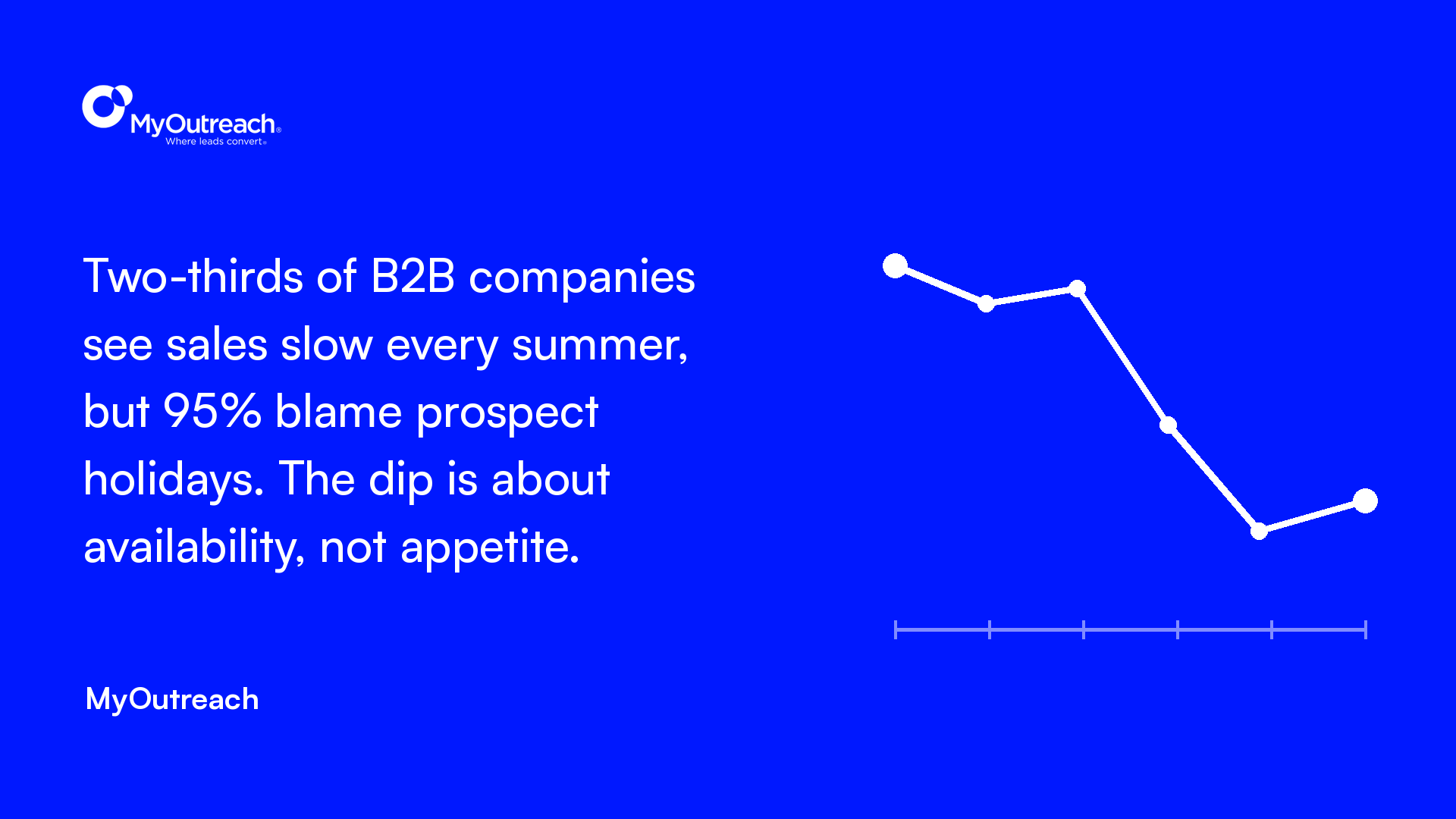
The numbers back up the feeling. Sagefrog's research found that two-thirds of B2B companies report slower sales in summer, and among those affected, nearly 75% see drops of 20% or more. For one in five, the decline exceeds 40%. Internal capacity shrinks at the same time: office attendance falls roughly 19% as your own team takes PTO, workplace productivity drops by around 20% between June and August, and workers are 45% more distracted.
Outbound gets harder too. Belkins analysed 7.5 million cold emails sent across 2025 and found reply rates fell from 0.50% in the first half of the year to 0.40% in the second, with the sharpest drop landing in July and August.
Underneath the seasonal dip sits a structural one. The average B2B sales cycle has stretched from about 4.9 months in 2019 to roughly 6.7 months in 2025. If your forecast still assumes a 90-day cycle while the real number is closer to 140, you will miss the quarter and then blame the sales team for what was actually a calendar problem.
The dip is about availability, not appetite. The budget didn’t disappear. The buyers who do engage in July often have more room to think than they have had all year: less firefighting, lighter calendars, emptier inboxes. Lower volume doesn’t mean lower intent. The handful of people who engage with you during a slow stretch are often the ones quietly planning their next purchase.
So the response that works is less noise, aimed at the right people, made personal. Three words carry the whole approach: strategic, personalized, and focused.
Name the dip before you fight it
The most common mistake is pretending the slowdown is not coming. When it’s not built into the forecast, a normal, predictable, seasonal dip starts to feel like the sales team is failing. It’s not. It happens every year, and it will happen next year too.
So the first move is alignment. Get sales, marketing, and leadership to agree that when engagement patterns change, revenue expectations and KPIs change with them. Practically, this means three adjustments:
- Recalibrate the forecast: If your average cycle runs 90 days the rest of the year, model 110 to 130 for deals entering the pipe in June and July, and adjust pipeline coverage ratios so nobody panics at a gap that’s really just a repeating cycle.
- Change what you count: Swap MQL volume targets for depth metrics during Q3: meetings held with named target accounts, multithreading (new contacts added inside existing accounts), and re-engagement of stalled opportunities.
- Write it down: A one-page seasonal plan that sales, marketing, and finance have all signed prevents the August blame cycle.
Once everyone is on the same page, you can stop chasing waves of top-of-funnel leads and start doing the thing that actually pays off in a quiet season: figuring out exactly who your most important buyers will be next quarter, and making them feel valued, cared about, and seen.
To be clear, this isn’t a campaign to sell anyone anything right now. It’s to engage, build trust, and have some fun. Do that well and it opens new conversations later, and often earns unsolicited referrals from a champion who wants to help you as much as you’ve helped them.
Trade volume for depth
When engagement is down, quality of connection beats quantity, and that’s nearly impossible to do at scale. This is where micro events earn their place, and the broader event data explains why.
Per Vendelux's compilation of event marketing research, 52% of marketers attribute at least half of their closed-won deals to events, 72% ranked events as their company's most effective marketing channel, and 78% of organisers call in-person conferences their most impactful channel.
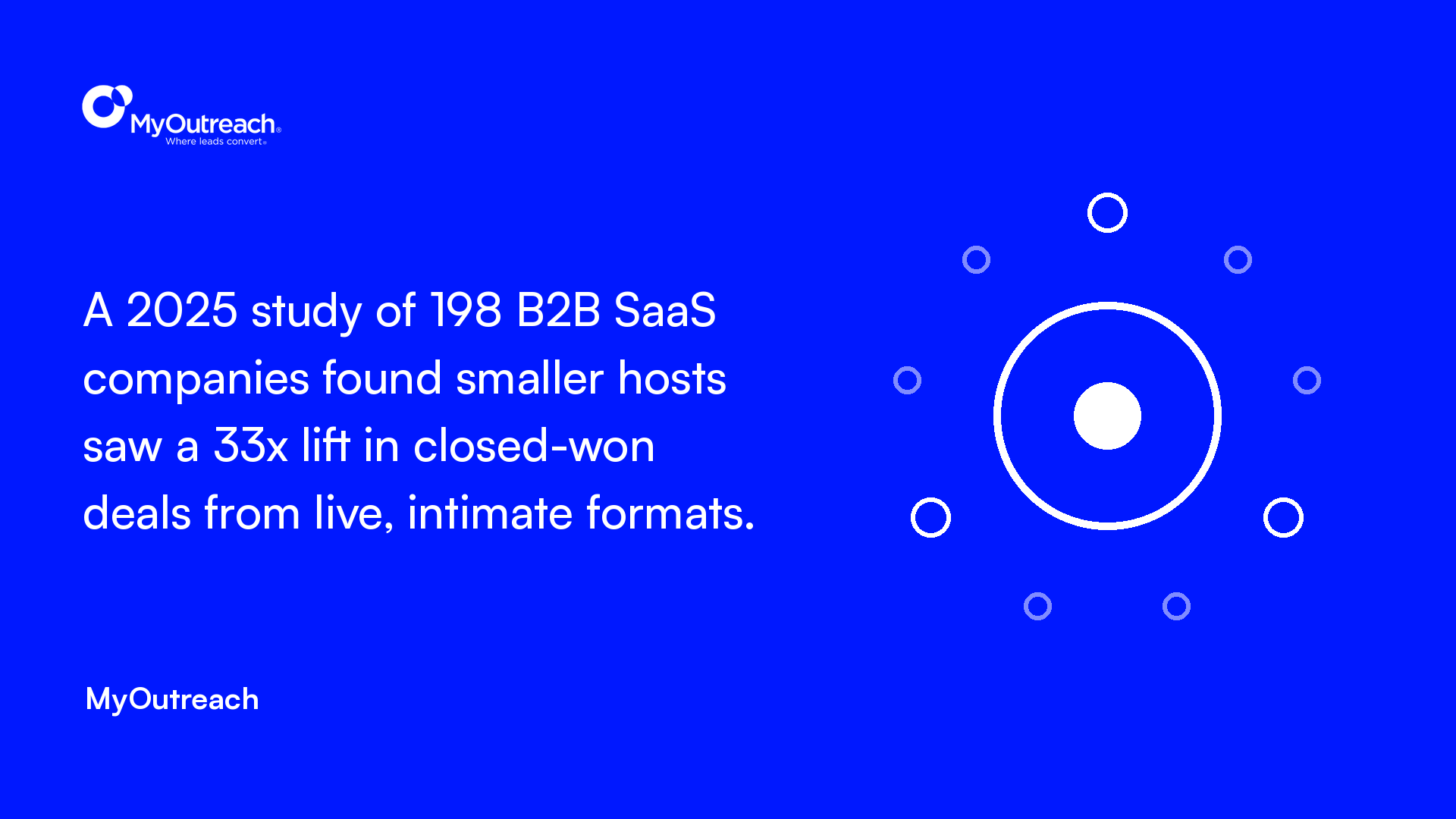
The more interesting question is which format earns its money, and the answer runs against instinct. A 2025 analysis of 198 B2B SaaS companies found that smaller hosts saw a 33x lift in closed-won deals from live, intimate formats.
By contrast, mid-market companies report roughly a 1% in-person conversion rate from trade show leads, and more than 90% of senior marketers say events deliver their greatest value in mid-to-late funnel stages, which only happens when the room has the right seniority in it. On cost per qualified meeting, curated dinners are typically the cheapest format of all at roughly $1,000 to $3,000, well below booth-based shows.
A micro event is an in-person gathering built for a small audience, ideally fewer than 20 people. It cuts through the noise of endless automated email and lets you connect with each guest as a person. A few things make or break one:
- The right room: A select group of your most important buyers, champions, or long-term partners. Every seat should belong to someone who will contribute and could convert real pipeline or loyalty. With 20 seats, a single bad invite costs you 5% of the event.
- A memorable experience: This is the ingredient that matters most, and everything around it has to be organized start to finish.
- Real time to network: Guests value this more than almost anything, so give them room to mingle.
- A follow-up plan sales knows about in advance: The event is not over when the drinks end. That is when the real work starts.
One tip from us: invite a few prospects alongside your best customers, roughly a 70/30 customer-to-prospect split. When a happy customer tells a prospect why they love working with you, that unscripted endorsement carries far more weight than anything your own team could pitch.
Pick the event format based on data
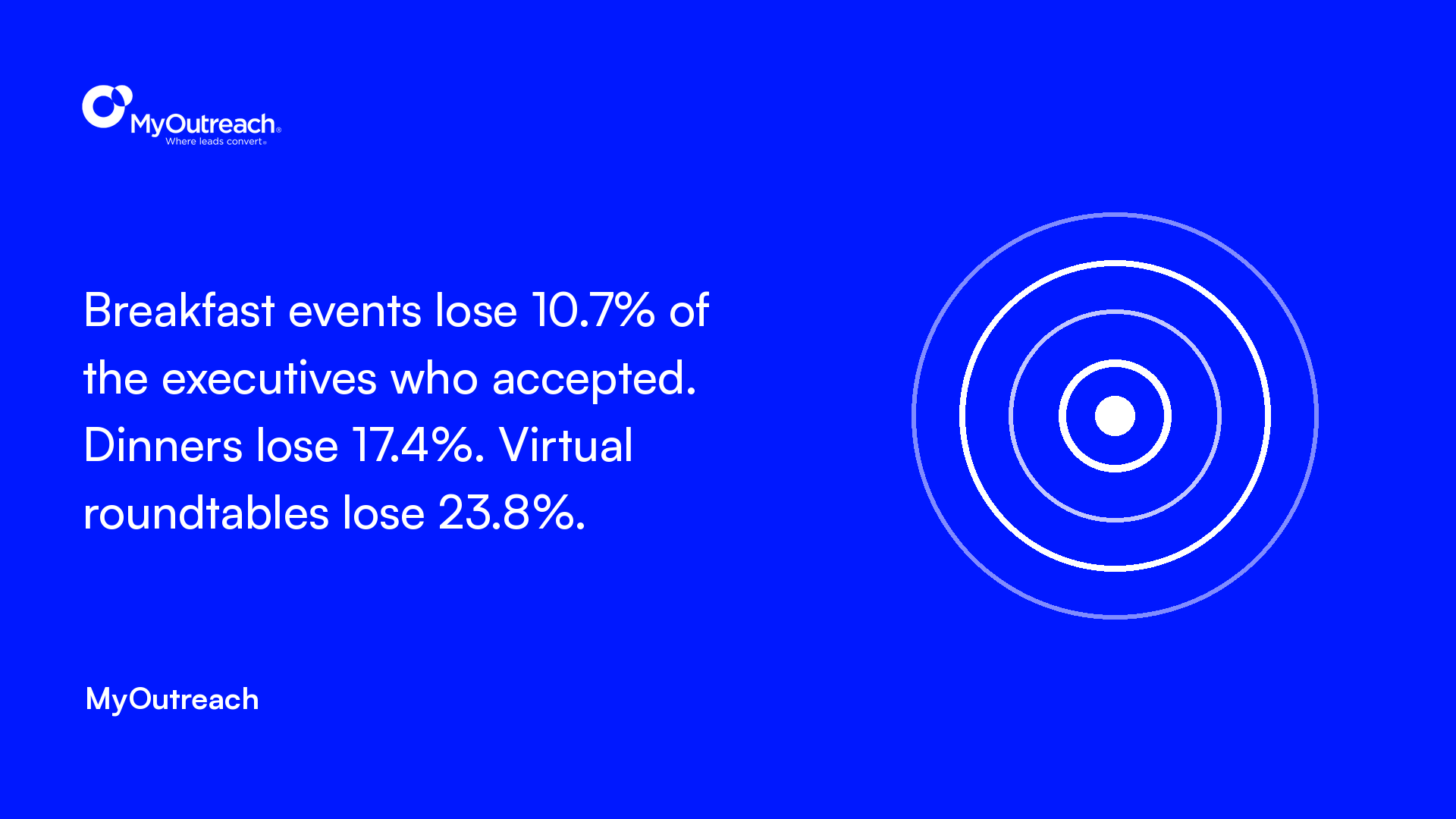
Drop-off on the day differs sharply by format. Breakfast events lose 10.7% of executives who had accepted, dinners lose 17.4%, virtual roundtables lose 23.8%, and in-person masterclasses lose 26.5%. If certainty matters more to you than atmosphere, morning formats are the safer bet.
Format matters more than timing, too. Physical roundtables average 67% to 69% attendance against 58.4% for physical masterclasses. And virtual roundtable attendance has been sliding for five years, from 66.9% in 2020 to 58.5% in 2025, though the same research found that pairing a virtual format with a curated physical experience pushes attendance back up to around 75%.
One more lever most teams underuse: a properly run six-week promotion sequence lifts registration-to-attendance from a baseline of about 35% to 60% or better. Reminders are not admin; they are the difference between half a room and a full one.
How to plan an engaging micro-event
Define the goal before anything else. Events should be about retention, deeper activity inside your best accounts, loyalty, trusted referrals, and moving real opportunities forward. Once that is clear, the KPIs follow, and they will differ by company: attendees who show, revenue closed within a set window, upsell and cross-sell, NPS, referrals, pipeline influenced.
Pick two or three, not eight, and set a measurement window. This is where most campaigns come undone. Forrester found 62% of marketers struggle to measure event ROI and cite it as the single biggest barrier to defending their event budget. Almost none of that is a measurement problem. It is a decision problem, and the decision needs to be made before the invites go out.
From there, a working timeline:
- 6 to 8 weeks out: Lock the guest list and design the whole thing around them: their job, their tastes, their location, not yours. Work within budget on a venue that’s genuinely convenient, and think about how guests get home, whether that is a car to the door, valet, or validated parking.
- 4 to 6 weeks out: Send invites, personal, from a human, not a marketing alias. Run an internal kickoff so every stakeholder knows their role and deadlines.
- 2 weeks out: Reminders, dietary and accessibility checks, and build the follow-up plan before the event rather than after: who contacts whom, with what message, by when.
- The night itself: Use the first hour for arrival and networking while the room is fullest, then a short talk (15 minutes, no more), then the experience.
- Within 24 hours: Personal thank-yous with clear next steps. Treat it like a launch, not an afterthought.
Event ideas that still work in summer
The best events tie into something people already find interesting. A few that consistently work:
- A cooking class with a local celebrity or TV chef. Between Top Chef, James Beard, and Michelin, it’s easy to find who is hot in any market.
- An exclusive venue for a private dinner: a museum wing, a famous library, a private gallery, an airplane hangar, or the restaurant with the view no one can ever book.
- Something on the water, like a sunset sail with cocktails or dinner with live music on a private boat.
- Tastings. Vineyards, breweries, and distilleries all work, though with more people cutting back on alcohol, cheese and chocolate tastings are easy to find and more inclusive.
- Live entertainment: a private movie screening, a well-known local band, or a live illusionist, which tends to beat expectations every time.
- A private suite at a sporting event, catered, with gifts. Or a watch party for a big tournament with plus-ones and custom jerseys sent afterward.
- A dog-friendly beer garden with branded dog treats, water bowls, and bandanas.
- Nationwide golf invitations with branded beverage carts, mocktails, and a trophy ceremony.
- A private shopping event where guests carry a passport, get it stamped at each table, and leave with a gift card and a discount. Low pressure, high delight.
- A "dine and dash": a private table, a short networking happy hour, and a to-go order on you on the way out so guests bring dinner home. Ideal when people are protecting family time.
- A social wellness club: smoothies and a coffee cart, saunas and cold plunges, massage, then a live Q&A. A welcome break from the usual bar scene.
Don’t skip the small stuff. Handwritten notes and thoughtful, relevant branded gifts land hard: an apron from a cooking event, a robe from a spa night, a growler from a brewery tour.
Measure it, and stretch a small budget
An event only works if sales and marketing agree upfront on goals, action items, and deadlines, and if sales leaders hold their teams accountable afterward. The industry-wide measurement gap is your opening here. Given how many teams can’t trace pipeline back to a specific event, one that does the basics well is already ahead of most of the market.
The basics:
- Tag every lead and touched opportunity in the CRM with the event, so pipeline and closed revenue trace back to it. Track influenced pipeline, not just sourced, since most micro-event guests are already in your world. Event research consistently finds that CRM-integrated programs achieve roughly two to three times better conversion outcomes than programs doing attribution manually after the fact.
- Make follow-up easy with templates and clear touchpoints, and consider incentivizing the team, because reps love a challenge with a prize at the end.
- Report at 30, 90, and 180 days. Micro events pay out on retention and expansion timelines, not webinar timelines.
If money is tight, protect the experience above everything. Cut these in order: guest numbers first, then venue, then catering, then the scale of the wow factor, and gifts last. Instead of a yacht dinner for 20, a hot air balloon ride and a champagne toast for eight can hit harder.
As a rough budget split for a small-format event: about half on the experience and venue, a quarter on food and drink, and the rest on gifts, transport, and the small touches.
When an in-person event is not an option
Virtual events are not dead, they are just often done badly, and the bar is low: only 12% of marketers rate themselves very effective at running them. Keep the messaging to 15 or 20 minutes, build an activity around it (mailed tasting kits work well), keep it interactive with polls and prizes, and keep the whole thing under an hour, because attention fades after that.
Be realistic about attendance, though. As the Ortus data shows, virtual roundtables now lose nearly a quarter of the people who accepted, so plan your invite list against a 58% show rate.
And if even that is off the table, send a genuinely personal gift. Not expensive, just thoughtful enough that someone feels seen as a person rather than an account. The trick is to log the small details from every conversation, the family, the pets, the hobbies, the book they love, the place they vacation, then send something no one else would think to give them. When they ask "how did you know," you have got it right.
Rethink your messaging, too
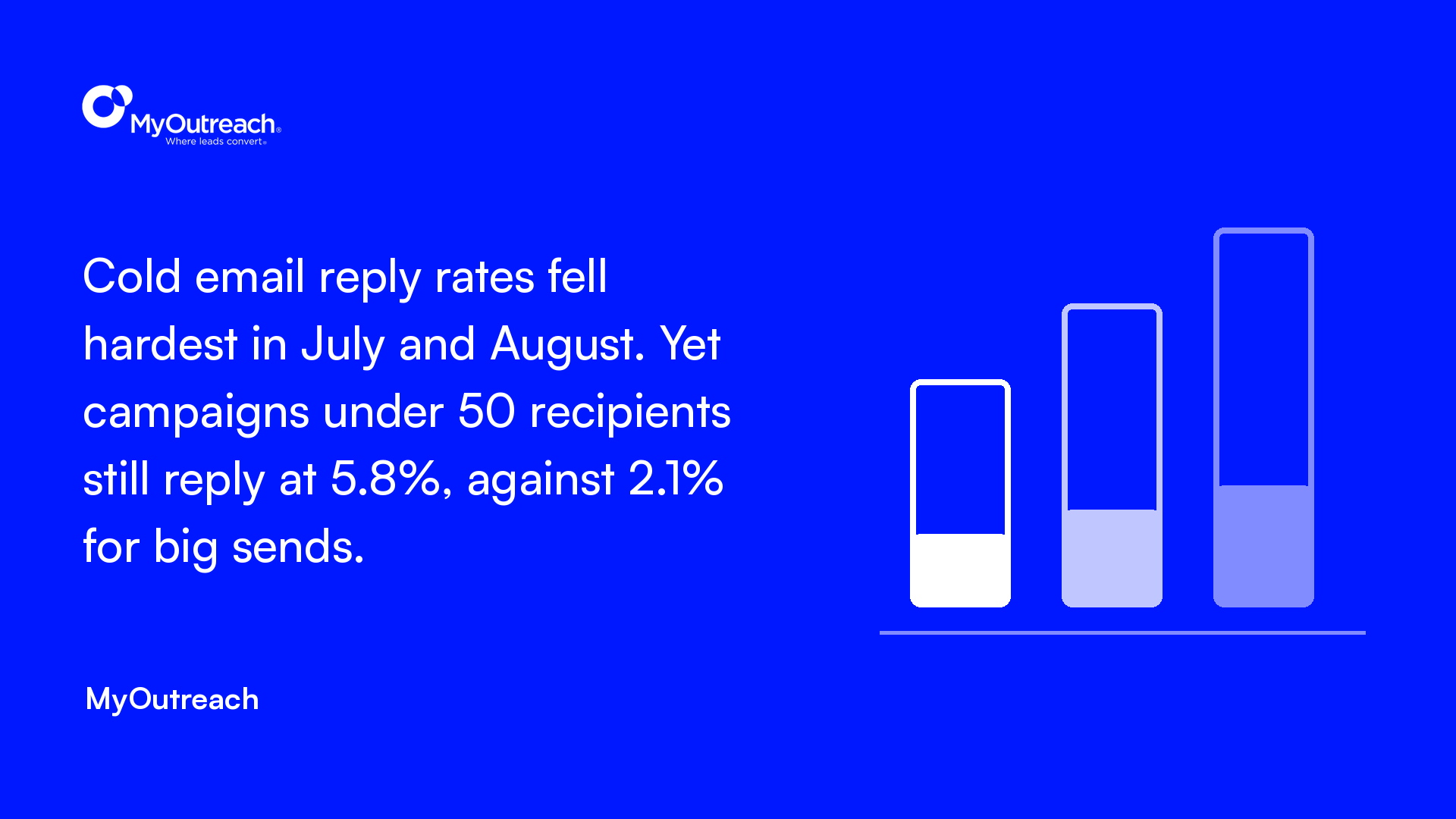
Executives don’t stop checking email in a slow season. They stop replying to anything irrelevant. So this isn’t the time for spray-and-pray sequences, and the data is blunt about why: cold campaigns sent to fewer than 50 recipients average a 5.8% reply rate, against 2.1% for large sends. Smaller and sharper wins, which is the same principle as the micro event, applied to the inbox.
Write short, direct messages that genuinely come from you and offer real value. In practice, that means dropping the promotional words, all caps, piles of exclamation points, emojis, and stacks of links or images, all of which trip the filters execs now rely on.
One piece of conventional wisdom worth retiring: the old advice was to send at the bookends of the day, early morning and late evening, on the theory that your email would be sitting at the top of the inbox when the buyer woke up. Belkins' 2025 data reverses it. Morning sends between 8am and noon now produce the highest reply rates at 0.54%, while 8pm to 11pm sends have fallen to last place at 0.40%. Their explanation is credible: as more teams adopt AI-assistants, evening emails get sorted before the recipient ever sees them. Wednesday and Thursday mornings are the strongest slots in the dataset. Keep the early start, drop the late-night send.
One more timing note: don’t sleep through late August. Most companies only reassemble their sales effort once autumn officially starts, which means their prospects have been back at their desks for three or four weeks before the first message lands. Build your September plays in August, load the sequences, brief the reps, and be the first thing in the inbox when everyone returns.
.jpg)


.webp)

.webp)
.webp)