People who'll buy from you next year aren't looking for you today. Demand generation is the long-term marketing work that gets the right buyers to recognise a problem, trust you to solve it and want to talk to you, months before they buy. It covers the whole buying journey, from first impression to signed contract.
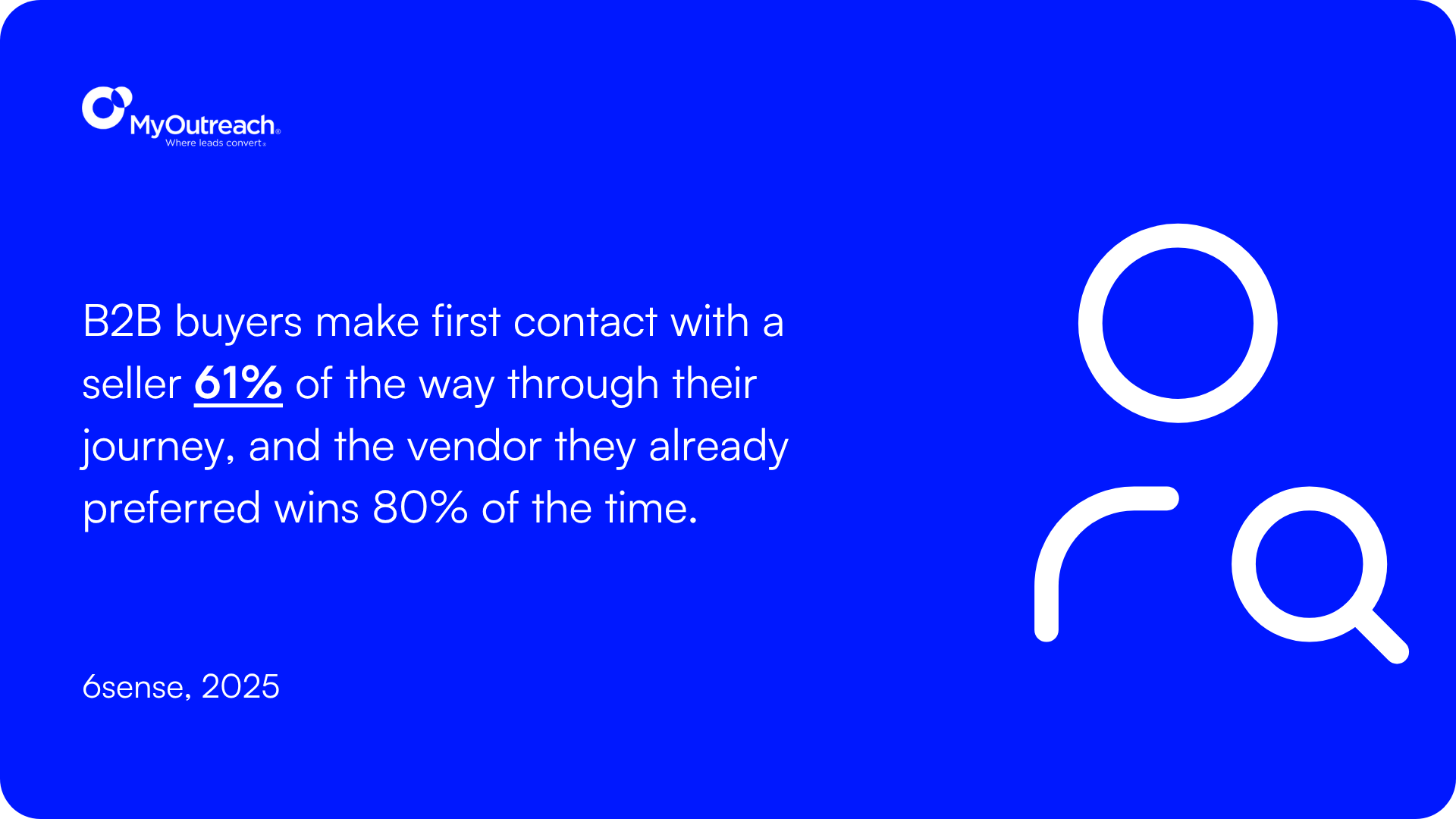
Why does that matter? Because buyers now do most of the work without you. In 6sense's 2025 Buyer Experience Report, buyers made first contact with a seller 61% of the way through their journey, and the vendor they already preferred won 80% of the time. Turn up late and you're usually competing for second place.
What is demand generation?
Demand generation is a strategy for building awareness and interest among people who may not know they need you yet, so you're the obvious choice when they do.
It's a strategy rather than a channel. A webinar is a tactic. A quarter of LinkedIn ads is a campaign. Demand generation is the plan that connects them across the buying journey and keeps running after any single campaign ends.
Most of your market isn't buying today. People start looking when a contract ends, a new leader arrives or a problem gets expensive, and more of them now do that research alone: in a Gartner survey published in March 2026, 67% of B2B buyers said they prefer a rep-free buying experience. The trust you build now decides whether you make their shortlist later.
It has two halves. Demand creation builds interest among people who aren't looking yet. Demand capture converts the ones who are, through search, review sites and contact forms. You need both, and you'll measure them differently.
Demand generation vs lead generation, growth marketing and sales
Demand generation is the umbrella strategy, and lead generation, growth marketing and sales each cover part of it. Here's how they line up.
Demand generation vs lead generation
Lead generation sits inside demand generation, downstream of it. Demand generation warms your audience so they know who you are and why you matter. Lead generation captures their details once they're ready to raise a hand. Skip the demand work and you'll spend your budget chasing people who've never heard of you. Our guide to demand generation vs lead generation goes deeper.
Demand generation vs growth marketing
Growth marketing covers the whole customer lifecycle, from first visit to renewal, and runs on constant testing. Demand generation is one part of it: the part focused on winning new buyers.
Is demand generation upper funnel?
Mostly, though sources disagree. In practice it spans the top and middle of the funnel and stays involved through the sales handoff, because a buyer who goes quiet after a demo still needs nurturing.
Demand generation vs sales
Sales turns identified opportunities into revenue. Demand generation creates those opportunities and keeps them coming.
Why demand generation matters
Demand generation fills your pipeline with buyers who already trust you, and that makes every later stage easier. The benefits, strongest first:
- Buyers who already understand what you do, so sales conversations start further along.
- Trust and authority that make you the default name on a shortlist.
- Better-fit leads, because people self-select after reading your content.
- Less reliance on paid capture over time, as branded search and direct traffic grow.
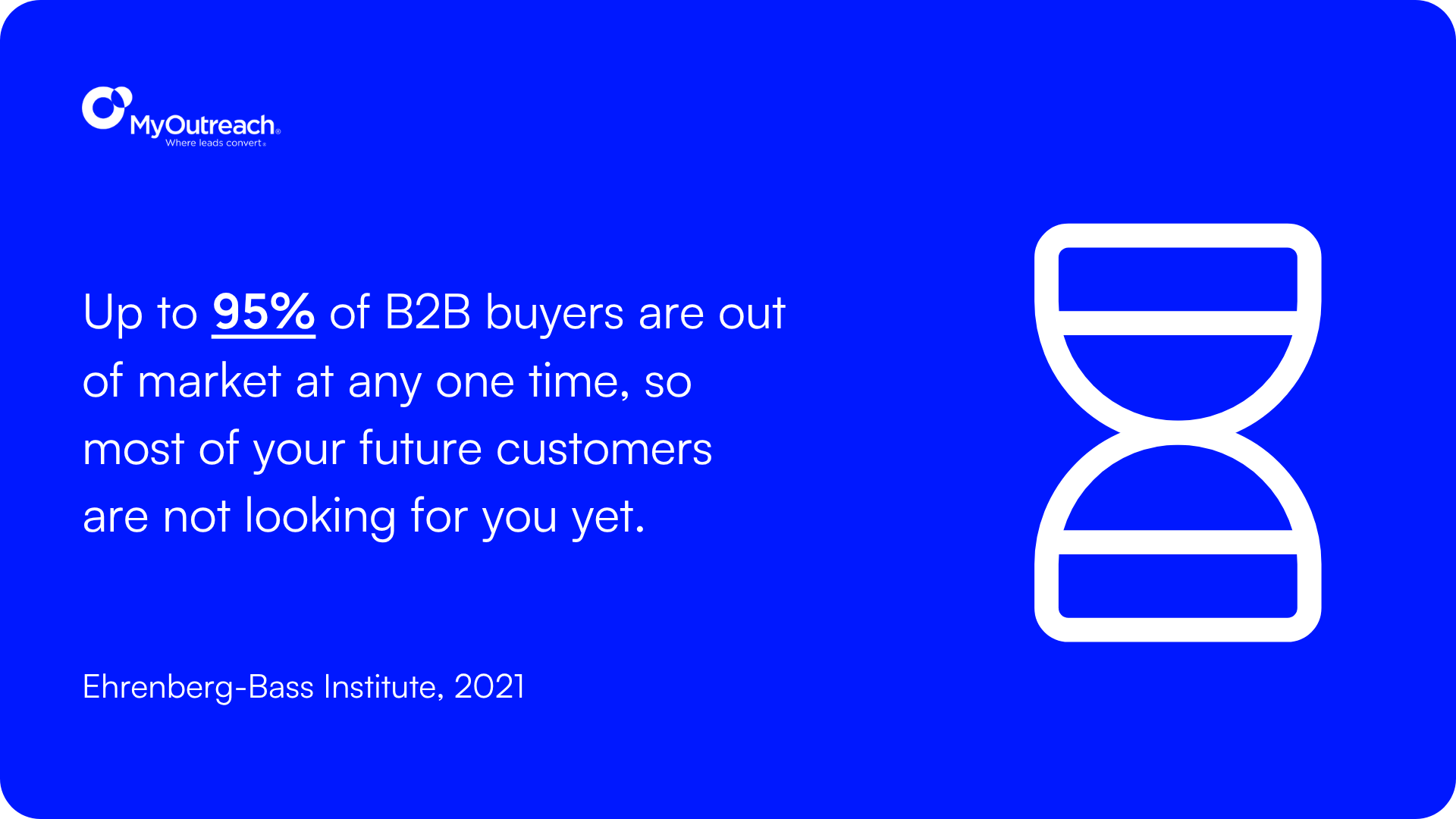
Why does it work? In a 2021 paper for LinkedIn's B2B Institute, Professor John Dawes of the Ehrenberg-Bass Institute estimated that up to 95% of B2B buyers are out of market at any one time. That became the 95:5 rule, though Dawes calls it a rough guide. Les Binet and Peter Field's 2013 analysis of IPA effectiveness data found a 60:40 split between brand building and activation drives the most growth. For B2B, their 2019 work for the B2B Institute put the optimum nearer 46:54.
And the "rule of 7", the idea that buyers need to see you seven times before they act? It's folklore, said to date back to 1930s film marketing. Repetition matters, but no study backs the number.
How demand generation works
Demand generation moves buyers through five stages. Each one has its own goal, its own content and a signal that the buyer is ready to move on.
- Awareness. Get known by the right people through thought leadership, social posts, podcasts and short video. It's working when they recognise your name, follow you or search for you by brand.
- Engagement. Earn attention and repeat visits with detailed guides, newsletters and webinars. Look for return visits, subscriptions and time spent on your most useful pages.
- Consideration and nurture. Help them build the business case with comparisons, case studies, ROI calculators and nurture emails. The signal is several people from the same account engaging, or visits to your pricing page.
- Conversion and sales handoff. Turn interest into a conversation through demos, trials and consultations. A demo request or qualified meeting goes to sales with the full history attached.
- Retention and advocacy. Keep customers, grow them and turn them into referrers through onboarding, customer events and community. Renewals, expansion, referrals and reviews tell you it's working.
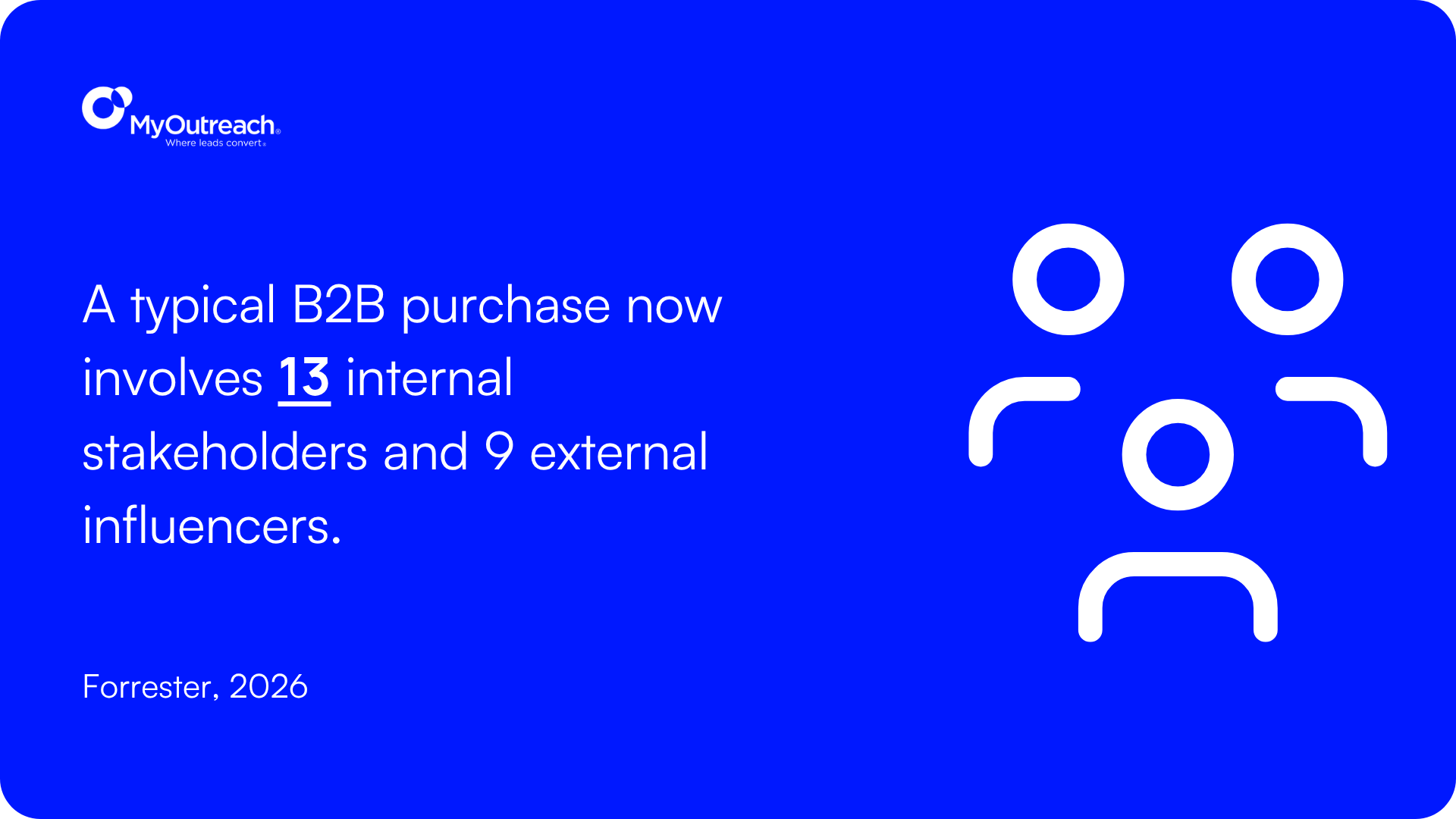
Don't expect a straight line, though. Forrester's State of Business Buying 2026 found a typical B2B purchase involves 13 internal stakeholders and nine external influencers, and each of them can sit at a different stage.
Demand generation strategies and examples
The core demand generation strategies are content marketing, SEO, paid media, account-based marketing, email nurture, and events and webinars. Each one does its best work at a different stage of the journey above, so run them together. For where each is heading, see our demand generation trends for 2026.
Content marketing
Ungated content that answers buyers' questions before they speak to anyone, such as an annual benchmark report built on your own customer data. Run it all the time, because it feeds every other channel.
SEO
SEO gets that content found when buyers start searching. Aim for a guide that ranks for the problem you solve, not just your product name. Start early: SEO compounds slowly, then keeps paying once a page ranks.
Paid media
Paid media reaches the right people faster than organic can, for example LinkedIn video ads targeted by job title and company size. It's best for building reach in a new market or backing a launch.
Account-based marketing (ABM)
ABM puts your effort into a named list of high-value accounts, with tailored content or executive dinners for 50 target companies. It suits big deals and markets small enough to list.
Email nurture
Email keeps you in touch with people who know you but aren't ready to buy. For anyone who engaged and then went quiet, a monthly newsletter with one useful idea per issue does the job.
Events and webinars
Events give buyers real time with your experts and with each other, whether that's a webinar led by a practitioner or a roundtable for senior buyers. Use them when trust is the bottleneck.
Two examples worth studying
Schneider Electric ran brand and demand as one campaign, "Schmoooth", in US industrial automation, where it ranked sixth for brand consideration. The Drum's awards case study (June 2026) reports unaided awareness up 50%, pipeline up 118% in year one and $22M in won revenue.
In the UK, EE built its strategy around the 90% of its market that wasn't buying at any given moment, instead of fighting over the 10% who were. Its IPA case study (2026) reports broadband customers up 257%.
How to build a demand generation plan in six steps
Strategies only pay off inside a plan. To build one, set revenue goals, narrow your audience, map their questions, match content and channels to each stage, get sales on board, then measure what changes.
- Set revenue-linked goals. Start from the number the business cares about: pipeline or revenue, not leads. Then work backwards. If you need £2m in new pipeline and your average deal is £40k, you need 50 qualified opportunities. Judge every activity against that number.
- Define a narrow ICP and personas. Your ideal customer profile names the companies you win with: industry, size, region, tech stack and the events that trigger a purchase. Personas name the people inside them. Go narrower than feels comfortable. A tight list of 500 accounts you can reach properly beats 50,000 you can only spray.
- Map buyer questions at each stage. Talk to sales, read call notes and ask recent customers what they were trying to solve. List the questions buyers ask at awareness, consideration and decision. Each one is a piece of content waiting to be written.
- Choose content and channels by stage. Match each question to a format and a place. Early questions suit open articles, podcasts and social posts; later ones need case studies, comparisons and demos. Pick the two or three channels where your buyers already spend time, and do those well before you add more.
- Align sales and marketing. Agree what a good lead looks like, how fast sales follows up and what happens to leads that aren't ready yet. Share one dashboard. Meet every fortnight to review which accounts are warming up, which leads went nowhere and why.
- Measure and optimise. Track leading signals monthly and pipeline quarterly, and cut whatever moves neither. Expect demand creation to take two or three quarters to show up in pipeline.
A practical tip: you don't have to drop your MQL model overnight. Start by making your content more useful and less gated. Once branded search and inbound demo requests start climbing, you'll have the evidence to change how you measure.
How to measure demand generation
Measure demand generation by its effect on pipeline and revenue, backed by brand signals that show demand building before it converts. Start with the commercial numbers your finance team already trusts:
- Pipeline and revenue influenced by marketing
- Customer acquisition cost (CAC)
- Customer lifetime value (CLV)
- Sales cycle length
- MQL to SQL conversion rate
Then add the brand-side signals most guides skip:
- Branded search volume, or how many people type your name into Google
- Direct traffic to your site
- Share of voice against competitors in your category
- Self-reported attribution, from a free-text "How did you hear about us?" field on your demo form
That last one is cheap and surprisingly revealing. Software attribution tends to credit the last click, which is often a branded search. Buyers tell a different story: when HockeyStack analysed more than 8,000 responses in 2024, 18% named word of mouth, which no tracking pixel sees. Most of these signals come from tools you already use, and our roundup of demand gen marketing tools covers the gaps.
Is lead generation a KPI?
Yes, but lead volume on its own is a poor measure of demand generation. A thousand leads that sales rejects are worth less than fifty that become opportunities. Forrester's 2023 Buyers' Journey Survey found 93% of B2B buyers bought as part of a group, so one form fill rarely proves a deal exists.
Is demand generation B2B or B2C?
Both use it, but it matters most in B2B. Business purchases involve buying groups, long cycles and high stakes, so trust has to exist well before anyone signs. Consumer brands do the same work and usually call it brand building: EE's strategy above is demand generation in all but name.
Google's Demand Gen campaigns are a different thing
Google Demand Gen is a Google Ads campaign type that shares the name but means something much narrower. Google announced it in 2023 to replace Discovery ads and upgraded the remaining Discovery campaigns between January and March 2024. The campaigns run image and video ads across YouTube (including Shorts), Gmail and Discover, optimised for conversions or clicks. They can be one paid channel inside a demand generation strategy.
Is demand generation a skill?
Yes, or rather several: understanding buyers, writing content that earns attention, running paid and email channels, and reading data well enough to tell activity from pipeline. In most B2B companies it sits with a demand generation manager or team reporting to the head of marketing, working closely with sales and revenue operations. Smaller teams often split it between one marketer and a demand generation agency.
How MyOutreach does demand generation
That outside partner is the role we play. MyOutreach runs demand generation and SaaS lead generation for B2B tech companies across the whole funnel, covering content syndication, programmatic ads, email, webinars and events.
We start with your ICP and target account list, use intent data to find the accounts researching your category right now, and reach their decision-makers through the channels that fit each stage. Every lead is checked by a person as well as by software. And we share the risk: you pay for qualified leads and confirmed attendees, and event no-shows aren't billed.
GoTo is a good example. It needed the right people in the room at an executive event, and registrations alone wouldn't get them there. We sourced attendees against GoTo's ICP and nurtured them through to the day. The target was 10 to 12 on-site attendees. 14 came, every one matching the job titles and companies GoTo sells to. In GoTo's words, the "level of care, detail and guarantee made it a no brainer." GoTo has since booked more events with us. Watch the GoTo testimonial.
Demand generation FAQs
How long does demand generation take to work?
Early signals such as branded search and engagement usually show within a quarter. Pipeline impact tends to take two or three quarters, and longer for enterprise deals.
Is SEO part of demand generation?
Yes. SEO captures buyers who are already searching, and it helps the content you create for demand creation get found.
Is demand generation the same as brand awareness?
No. Brand awareness is one outcome of demand generation, which also covers nurture, conversion and the handoff to sales.
What does a demand generation manager do?
They plan and run campaigns across channels, share pipeline targets with sales and report on which activities turn into revenue.
Final words
Demand generation is slow work, and most of it happens before a buyer fills in a form. If you change one thing this quarter, add a "How did you hear about us?" field to your demo form and start judging marketing on pipeline instead of lead counts. Then give it two or three quarters before you call it.
If you'd like help filling your pipeline with the right buyers, or a room with the right executives, let's have a chat.