.webp)
Most of the B2B SaaS lead generation strategies you'll read about this year were written in 2019 and lightly reheated. "Offer a free trial." "Show testimonials." "Post consistently on LinkedIn." None of it is wrong, exactly. It's just not a strategy. It's table stakes dressed up as advice.
The channels that actually fill SaaS pipeline in 2026 look different, and the gap between teams who know that and teams who don't shows up directly in their pipeline reviews.
This post breaks lead generation down channel by channel, because that's how you actually budget and plan. It's based on the campaigns we run at MyOutreach for SaaS clients, over 1,000 of them at this point, for companies like Veeva, Bitdefender, CloudBees and Twilio.
Why SaaS lead gen is not regular B2B lead gen
Three things change the maths, and each one points you towards specific channels.
The buying committee
The average SaaS deal now involves 11 to 13 stakeholders. You're not nurturing a lead, you're nurturing a small parliament. This is why account-level plays (ABM, roundtables, LinkedIn targeting by account) outperform contact-level plays (cold email to one champion) the moment your deal size justifies them.
The sales cycle
Mid-market SaaS deals take 30 to 90 days to close, and enterprise deals run 90 to 180 or more, with cycles 22 percent longer than they were in 2022. Whatever you do today feeds pipeline in Q4, not this month, which is exactly why channels that reach buyers earlier in their research, like content syndication and intent data, exist at all.
Your GTM motion
Product-led and sales-led SaaS need almost opposite playbooks. PLG wants volume and self-serve activation, so SEO and paid search do the heavy lifting. Sales-led wants fewer, bigger, warmer conversations, so outbound, ABM and events earn their budget. Most generic advice ignores this distinction entirely, which is how a £200-ACV product ends up running an ABM programme.
One more variable worth flagging: geography changes the playbook too. What converts in NORAM often flops in APAC. We've covered that separately in our lead gen strategy by region breakdown, so this post stays focused on channels.
The 9 channels, ranked by what we actually see working
1. Outbound: cold email and LinkedIn sequences
Outbound isn't dead, but you need to be strategic about it. What separates outbound that books meetings from outbound that burns domains in 2026:
Signal-based triggers beat static lists
A sequence that fires when a target account posts three RevOps job ads, raises a round, or changes sales leadership will outperform a sequence sent to "VPs of Marketing at SaaS companies, 50 to 500 employees" every single time. The message writes itself when the trigger is real: "saw you're scaling the SDR team" lands. "Hope this finds you well" does not.
Tight ICP, short sequence
The 8-touch spray-and-pray cadence is how you end up in spam filters and screenshot threads. Three to four touches, each one earning the next, to a list you'd be comfortable reading aloud to your CEO.
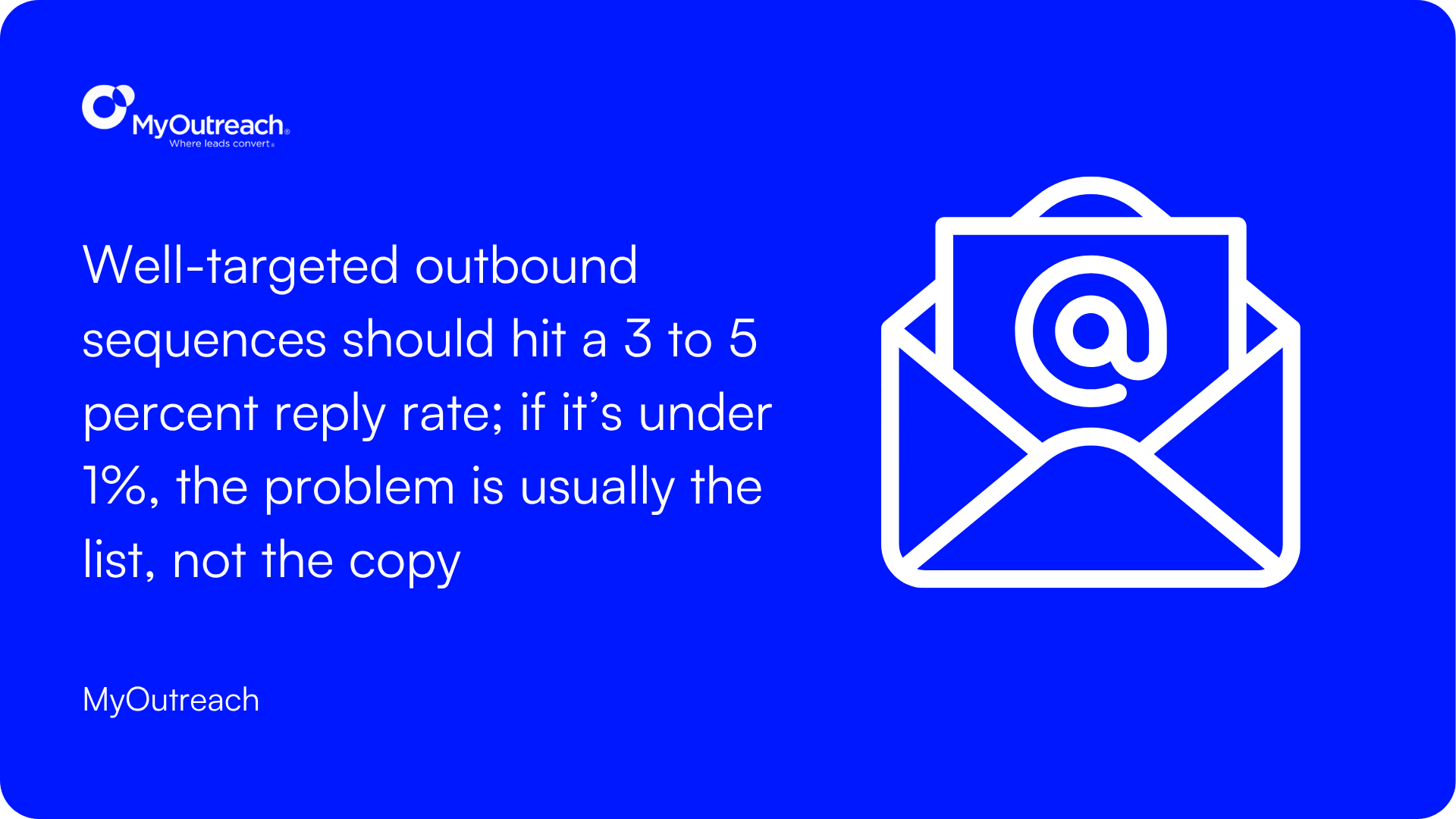
A realistic benchmark: well-targeted SaaS sequences should hit a 3 to 5 percent reply rate. If you're under 1 percent, your list is the problem, not your copy.
A structure we've seen work for clients:
- Touch 1: reference the trigger, one sentence on the problem it implies, no pitch
- Touch 2 (3 days later): a relevant asset, a benchmark report or a one-page teardown, given freely
- Touch 3 (5 days later): the ask, framed as a question about their plan rather than a request for their calendar
- LinkedIn in parallel: connection request after touch 1, a comment on their content before touch 3
Tools that earn their seats: Apollo or Clay for list building and enrichment, Lemlist or similar for sending. But the tool matters far less than the trigger.
2. LinkedIn: organic and paid
Two different channels wearing one trench coat.
Organic LinkedIn
Founder-led and employee-led content outperforms the company page by roughly 10 to 1 in reach for SaaS brands. People follow people. Your brand page is a billboard; your founder's profile is a conversation. If your CEO posts one sharp, opinionated piece a week about the problem your product solves, that beats five polished brand posts about your product.
Paid LinkedIn
The mistake most SaaS teams make is running demo-request ads to cold audiences. Nobody books a demo from someone they met four seconds ago. LinkedIn Lead Gen Forms work for mid-funnel offers: a benchmark report, an ROI calculator, a genuinely useful guide. Capture the lead there, nurture to the demo.
Targeting that works: job title plus company size plus tech stack, layered with intent data from Bombora or G2 so you're spending on accounts already in-market rather than the entire addressable universe.
The format almost nobody is using yet: Thought Leader Ads, where you put paid spend behind an employee's organic post instead of a brand ad. Engagement rates are consistently higher because the ad doesn't look like an ad. If your founder's content already performs organically, this is the cheapest reach on the platform right now.
3. SEO and bottom-funnel content
In the world of SaaS SEO, traffic is a vanity metric. A post that pulls 20,000 visitors a month on "what is customer success" will generate fewer SQLs than a comparison page that pulls 300 visitors on "[your competitor] alternative."
The content types that actually produce sales-qualified leads:
- Comparison posts: "X vs Y" searches come from buyers building a shortlist. Be the one who frames the comparison.
- "Best [category] software" pages: Listicle intent is buying intent. If you can't rank your own, get included in the ones that do rank.
- Use-case pages: "[Your category] for [industry]" captures buyers who've already decided on the what and are choosing the who.
Top-of-funnel content, including posts like this one, builds brand and earns links. It rarely converts directly, and pretending otherwise is how content teams end up defending their existence every budget cycle. Know which job each piece is doing.
If you're building out your stack on a budget, we've separately rounded up free lead gen tools worth a look.
4. Content syndication
This is the channel most SaaS marketing leaders either haven't tried or tried once with a bad vendor and wrote off. Both are expensive mistakes.
Content syndication means distributing your gated assets, whitepapers, reports, webinar recordings, through third-party publication networks to reach buyers who match your ICP and are showing intent. The point isn't the download. The point is reaching the 95 percent of your market that isn't Googling your category yet. SEO and paid search capture demand. Syndication finds it earlier, while your competitors are still waiting for the form fill.
The honest caveat, and it's a big one: lead quality varies wildly by vendor. The industry's reputation problem is real. Plenty of providers will happily sell you a CSV of names scraped from somewhere unspeakable. Protect yourself by filtering on ICP before you accept a single lead, demanding engagement history with every record, and confirming every contact is opt-in and GDPR-compliant. Any vendor who hesitates on those three points has just answered your question.
Full disclosure: content syndication is our core service, so weigh our bias. Whoever you work with, here's what a credible vendor should be able to show you:
- ICP-filtered distribution, not a database dump. Leads matched on industry, title and company size before delivery. (Ours run across 50+ B2B publications.)
- Verification before delivery. Every lead checked before it hits your CRM, not after sales complains. (Ours pass a 3-point process combining AI checks and human review.)
- A rejection rate you can audit. 10 to 15 percent rejection is common in this channel; ours sits at 0.7 percent across client campaigns. Ask any vendor for theirs, in writing.
And two benchmarks to hold any provider to once the campaign is live:
- Syndicated leads should MQL at or above your inbound rate. On a recent enterprise cloud security campaign, leads converted at 25 to 27 percent against the client's own 20 percent benchmark. If a vendor's leads convert at half your inbound rate, you're buying names, not pipeline.
- Delivery should stay on pace at scale. Volume that arrives late is a forecasting problem dressed up as a lead gen win.
5. Webinars and virtual events
Someone who sits through 45 minutes of your content is not a lead. They're a hand raised. Few channels produce intent signals that strong, which is why webinars survive every "webinars are dead" thinkpiece cycle.
What's changed for 2026 is the format. The 300-registrant mega-webinar where 90 percent ghost and the other 10 percent are competitors and students is fading. What's replacing it: smaller, targeted sessions where the invite list is the strategy. Invite 40 people from your target account list, get 15 in the room, and you've run an ABM play disguised as an event.
What separates webinars that fill pipeline from webinars that fill calendars:
- Recruit your target accounts, don't broadcast. A registrant from your TAL is worth 50 random sign-ups.
- The follow-up is the campaign. The session is the excuse; the post-event sequence is where meetings get booked.
- Syndicate the recording. One live session becomes a gated asset that generates leads for six months.
Two patterns from event delivery data, useful whichever provider you use:
- Format length predicts fill rate. Executives will commit to a 90-minute roundtable; acceptance collapses on full-day agendas. Across recent programmes, the events that missed their attendance targets were almost all summits running longer than four hours.
- Timing matters more than anyone budgets for. Senior decision-makers accept invitations disproportionately early in the week and early in the month: Monday recruitment runs at roughly double Thursday's rate, and the first ten days of a month outperform the final ten by a similar margin. If your invites go out on a Thursday in the back half of the month, your attendance problem started before the first email sent.
One structural point if you outsource promotion: insist on guaranteed attendance, not guaranteed registrations. Registrants who never show up are the oldest trick in this channel. (It's why we guarantee both on our virtual events and delegate acquisition work.)
6. ABM (account-based marketing)
Most "essential SaaS lead gen strategies" posts skip ABM entirely, which tells you they were written for a £50-a-month product, or written by someone who's never run it.
ABM inverts the funnel. Instead of generating leads and qualifying them down, you pick the accounts worth winning and build coordinated campaigns to open them. It's the right play when your ACV clears $20k, your motion is sales-led, and your sales cycle is long enough that a few big wins beat a thousand small ones.
What a real ABM programme runs in parallel:
- LinkedIn ads targeted to the account list, warming the whole buying committee
- Personalised outbound to the specific stakeholders, triggered by engagement
- Direct mail for the accounts that matter most (a well-chosen physical send still cuts through precisely because nobody does it)
- Executive events to get senior decision-makers in a room (more on that below)
Tools like 6sense, Demandbase and RollWorks orchestrate this at scale, though a focused team can run a 50-account programme with a spreadsheet and discipline.
The honest trade-off: ABM is slow and expensive per account. If you need 200 leads this quarter to hit a volume target, this is the wrong channel. If you need 8 enterprise logos this year, it's probably the only channel.
7. Intent data
Another channel the generic listicles skip, and arguably the highest-leverage line item on this list, because it doesn't generate leads itself. It makes every other channel sharper.
Intent data is third-party behavioural signal showing which companies are researching your category right now: reading reviews on G2, consuming content on industry publications, comparing vendors. The main sources are G2 Buyer Intent, Bombora, and LinkedIn's Matched Audiences.
The way to use it is simple and most teams still don't: when an account in your ICP spikes on intent, route it to outbound immediately. Don't wait for them to find you, because they're equally likely to find your competitor. Intent-triggered outreach gets 2 to 3 times the reply rate of cold outreach, for the obvious reason that you're talking to someone already thinking about the problem.
This is the data layer underneath most of our campaigns: we track 6,000+ intent signals across the SaaS industry against a database of 189M+ verified contacts, which is how syndication leads arrive warm rather than random. You don't need our scale to start, though. Even a basic G2 intent feed routed into your outbound sequences will outperform the same sequences run cold.
8. Paid search
Google Ads for SaaS is the most honest channel on this list. It's expensive, it's measurable, and it doesn't pretend to be anything else.
Where it earns its cost: bottom-funnel, high-intent terms. "[category] software," "[category] for [industry]," and the quietly ruthless "[competitor] alternative." Someone typing those phrases has budget and a deadline. Pay whatever the click costs, within reason, because the alternative is your competitor paying it.
The mechanics that matter for SaaS specifically:
- Match types: phrase and exact on your money terms. Broad match on a "[category] software" keyword will cheerfully spend your budget on students writing essays.
- Landing pages: the ad-to-page match decides your conversion rate. A "[competitor] alternative" ad should land on a comparison page, not your homepage.
- Bidding: start on manual or max-clicks until you have conversion volume, then move to target CPA. Handing Google's automation an account with 9 conversions a month is donating money.
- Conquest campaigns: bidding on "[competitor] alternative" terms is fair game and often the cheapest high-intent traffic available, because the search itself tells you the buyer is unhappy.
Know your CAC per channel before you scale spend. Paid search looks expensive on cost-per-lead and often looks brilliant on cost-per-closed-deal. Measure to the second number.
One adjacent play worth a line: B2B programmatic through trade media and industry publications, rather than the open display exchange. Standard display benchmarks sit at a 0.05 to 0.1 percent CTR. Across recent enterprise tech campaigns we've run through publication networks, CTRs ranged from 0.36 to 1.39 percent, between 4 and 14 times that benchmark, because the placement does the targeting for you. A security buyer reading a security publication doesn't need an algorithm to find them. If display has burned you before, the inventory was probably the problem, not the channel. We've broken down how B2B programmatic actually works separately.
9. Partner and referral programmes
The least glamorous channel and routinely the best-converting one.
Three flavours worth building:
- Integration partners: If your SaaS integrates with HubSpot, Salesforce or Slack, their marketplaces are distribution. Buyers searching a marketplace have already bought the platform; they're shopping for you specifically.
- Agency partnerships: Agencies that serve your ICP talk to your future customers every day. A demand gen agency, a RevOps consultancy, an implementation shop: each one is a referral engine if the relationship is genuinely two-way.
- Customer referrals: Highest conversion rate and lowest CAC of any source, and almost always under-invested because it feels awkward to ask. Build the ask into your customer success motion at the moments customers are happiest: post-launch, post-renewal, post-good-QBR.
Referrals won't scale on demand, which is why they can't be your only channel. They will quietly produce your best-fit customers while every other channel fights for the rest.
How to prioritise: match channels to your stage
There's no universal playbook, and anyone selling you one is selling you their channel. What works depends on your ARR, your ACV and your motion. A rough map from the campaigns we see:
Early stage (under $1M ARR): Founder-led outbound, founder LinkedIn, customer referrals. Cheap, fast feedback, and the founder selling is a feature, not a bug.
Growth ($1M to $10M ARR): SEO, content syndication, webinars, paid search. You have proof and content assets; now you build repeatable demand engines.
Scale ($10M+ ARR): ABM, intent data, partner ecosystem, executive events. Volume plays plateau; the next phase is winning specific accounts deliberately.
The pattern underneath: early on you trade founder time for pipeline, in growth you trade money for repeatability, and at scale you trade breadth for precision. Skipping a stage usually means paying for channels you can't yet feed. We've watched seed-stage companies burn two quarters on ABM tooling they had no list for, and $20M companies still relying on the founder's DMs.
Pick two or three channels that fit your stage. Run them properly for two quarters before judging. The most common failure mode we see isn't choosing the wrong channel, it's running six channels at 30 percent effort and concluding none of them work.
What to measure (and what to stop measuring)
The metrics that flatter you and the metrics that inform you are rarely the same list.
MQL volume is the most dangerous number in SaaS marketing. It's easy to inflate and easy to celebrate. If your MQLs don't convert to SQLs, you haven't generated demand, you've generated admin for your sales team. Track the MQL-to-SQL conversion rate by channel and let it reallocate your budget.
Pipeline influenced, not just pipeline sourced. Last-touch attribution will tell you the demo-request form generated the deal, ignoring the webinar, the syndicated whitepaper and the six LinkedIn touches that got the buyer there. Source matters, but influence is where multi-channel strategies prove their worth.
CAC by channel, measured to closed-won. Syndication or events can look expensive per lead and cheap per customer, because the leads are warmer. Paid search sometimes runs the other way. Judge channels at the revenue line, not the lead line. For events specifically, where attribution gets messy, we've written a full guide to measuring event ROI.
Time to pipeline. How long from first touch to qualified opportunity? This number tells you how far ahead each channel makes you plan, and it's the difference between a Q3 panic and a Q3 you saw coming in Q1.
A reality check on the benchmarks you'll find online, because most of them are inflated. From what we see across SaaS clients and what their revenue teams report back: MQL-to-closed-won realistically lands between 0.5 and 1.5 percent, not the 3 to 5 percent some vendor reports claim.
And on the events side, the best delegate-to-deal conversion we've heard a client substantiate is around 1 in 5, and that was an exceptional programme, not a planning assumption. Build your forecasts on the conservative numbers. If a channel beats them, that's a pleasant surprise; if you budgeted on the optimistic ones, that's a board meeting.
FAQ
What is the best lead generation channel for B2B SaaS?
There isn't one, and any answer that names a single channel is describing the answerer's business model, not yours. The best channel depends on your stage, your ACV and your GTM motion. Under $1M ARR, founder-led outbound and referrals usually win. In growth, SEO, content syndication and webinars build repeatable pipeline. Past $10M, ABM and intent data take over.
How much does B2B SaaS lead generation cost?
It varies enormously by channel and quality, which is why cost-per-lead comparisons between channels mislead more than they inform. As a reference point, our own rates start from $40 for MQLs, $180 for SQLs and $1,000 for booked appointments, on an outcome-based model where you pay for qualified leads rather than activity. Whatever provider or channel you price up, measure cost at closed-won revenue, not at the lead.
How long before lead generation produces pipeline?
Add the channel's ramp time to your sales cycle. Outbound and paid search can produce conversations in weeks. SEO takes 6 to 12 months to compound. Syndication and webinars sit in between, typically feeding pipeline within a quarter. Add your sales cycle on top, and a lead generated today is revenue in two quarters. Start before you're desperate.
Should we outsource lead generation or keep it in-house?
It depends which problem you have. If you lack strategy, hire in-house first; no agency can fix a positioning problem. If you have strategy but lack execution capacity or reach, outsourcing those specific channels is usually faster and cheaper than building them. Most of our clients run a hybrid: in-house owns strategy and brand, we run syndication, SDR or events alongside. If you go the agency route, vet hard: here's a framework for choosing a lead gen agency and the warning signs your current one isn't working.
Is cold email still effective for SaaS in 2026?
Yes, with a caveat the size of a billboard: only signal-based, tightly targeted outbound works now. Generic sequences to scraped lists are dead, killed by spam filters and buyer fatigue, and good riddance. Well-targeted sequences triggered by real signals (funding, hiring, tech changes) still hit 3 to 5 percent reply rates, and intent-triggered outreach gets 2 to 3 times the replies of cold. The channel isn't dead. The lazy version of it is.
How many lead generation channels should a SaaS company run at once?
Two or three, run properly, for at least two quarters before judging. The most common failure we see isn't picking wrong channels, it's running six at 30 percent effort and concluding lead generation doesn't work. Add a channel only when the current ones are instrumented, performing and no longer improving from extra attention.
Where to go from here
If you take one thing from this post, take the stage table. Two or three channels, matched to your ARR and your motion, run properly. That beats a ten-channel strategy every time, and it's cheaper.
We build and run demand generation and lead generation programmes for B2B SaaS companies: content syndication, outsourced SDR, virtual events and executive roundtables, all on an outcome-based model. You pay for qualified leads, not activity, and if we don't deliver, you don't pay. The receipts are in our case studies.
If you want a second opinion on which channels fit your pipeline, book a discovery call with our team. Worst case, you leave with a clearer plan and we never speak again. We're comfortable with those odds.
.jpg)


.webp)

.webp)
.webp)