Syndicated content is safe for SEO when the original page is clearly credited and the republished copy is kept out of search results or points back to it, but it is not a reliable way to earn rankings or links.
Content syndication has emerged as a vital strategy in the digital age, offering a pathway to amplify brand awareness and tap into new opportunities by republishing existing content across third-party websites.
This practice extends the reach of your brand, reinforcing the importance of understanding what content syndication means in today's competitive landscape. With the digital environment becoming more cluttered, ensuring your content stands out and reaches the right target audience through content syndication services is becoming increasingly challenging, yet imperative for successful lead generation and marketing strategy.
By diving into the realm of content syndication, businesses are equipped with a cost-effective tool for boosting their online visibility and driving referral traffic. This method supports marketers in navigating the complexities of SEO performance while fostering content creation that resonates with a broad audience.
Through a strategic approach to content syndication, which includes judicious selection of partners and precise execution of content marketing practices, businesses can significantly enhance their brand awareness and cultivate a targeted audience ready for engagement.
What Is content syndication?
Content syndication is a strategic approach where content from one website is republished onto third-party sites to drive greater visibility and reach a broader audience. This practice is not considered plagiarism as it occurs with full awareness and consent of the original content creators, distinguishing it from unauthorised content duplication.
Essentially, content syndication involves taking an article, video, infographic, or other types of content and republishing it, either in full or in parts, across the web to amplify brand exposure and engage new audiences. For example, a blog post republished on a partner's industry site, or on a platform like Medium.
This is different from B2B lead generation syndication, where gated assets like whitepapers sit behind a form and don't create a second copy of your page in search results.
Furthermore, content syndication is a win-win for both the original authors and the publications that republish the content. It allows publications to offer fresh information to their readers while enabling authors to get their brand in front of a new audience, thereby increasing brand awareness and lead generation opportunities.
Does content syndication hurt SEO?
Not on its own, but it can put the wrong version in search results.
Duplicate content myths
One prevalent concern in the SEO community is the fear of duplicate content penalties stemming from content syndication. This anxiety is largely unfounded, as Google has clarified that duplicate content does not lead to penalisation unless it's intended to manipulate search results. The real risk is competition between the original and syndicated versions.
Google's algorithms are designed to identify and consolidate duplicate content, choosing the "best" URL to display in search results and consolidating signals, such as links, to that URL.
If a partner's version is chosen, your page is filtered out and the traffic goes to the partner. Therefore, when content syndication is executed correctly, it does not negatively impact your SEO but can enhance your content's visibility.

Google's stance on syndicated content
Google's approach to syndicated content is nuanced. While the search engine giant acknowledges the practice of content syndication as legitimate, it emphasises the importance of how syndicated content is handled.
For instance, Google advises against using automated scraping and syndication techniques, as these can be flagged as spam. However, if content is syndicated according to Google's best practices, such as including a link back to the original article and requesting the use of a noindex tag on the syndicated version, there should be no negative impact on rankings.
Google recommends noindex over a canonical tag for syndicated copies, because syndicated pages often differ too much from the original (Google Search Central). Google aims to showcase the most appropriate version for users in search results, which may not always be the version preferred by the content creator.
This underscores the significance of strategic content syndication, where the original content is credited and distinguished from malicious duplication efforts by scrapers.

Does content syndication help SEO?
It reliably brings readers; ranking and link benefits are less certain.
Content syndication emerges as a powerhouse in driving free traffic and enhancing brand visibility by strategically leveraging the expansive networks of syndication partners. This method significantly extends the content's reach beyond the original website, tapping into the vast audiences of third-party platforms such as social media, content aggregators, or partnership networks.
Each of these platforms hosts a unique user base, thereby exposing your content to new audiences who might not have discovered it otherwise.
Increased visibility and reach
- Expanding Reach Through Third-Party Platforms: Syndicating content to platforms outside your own website introduces your content to new audiences. This expansion is crucial for engaging with users who may have otherwise remained unreachable, thus increasing the potential for website visits and further engagement with your content.
- Leveraging Existing Audiences of Syndication Partners: By utilising the established user bases of partnership networks or content recommendation platforms, content syndication allows for tapping into audiences that trust the content provided by these platforms. This not only drives traffic back to your website but also enhances brand credibility and authority.
- Increased Online Presence: Regular citation and publication on authoritative sites boost digital visibility and accessibility, making your brand more prominent and accessible to a broader audience. This visibility is essential for reaching larger audiences than typically accessible through your own channels.
Backlink authority and referral traffic
- Generating Backlinks: When third-party websites publish your content and include a backlink to your site, it creates backlinks. Whether links from syndicated copies pass ranking value is debated, so treat them as a bonus, not the goal. Paid placements bought mainly for links can break Google's spam policies.
- Driving Referral Traffic: Backlinks also drive direct referral traffic from users clicking on these links. This referral traffic represents a measurement of how impactful your content is in drawing prospects to your webpage, providing opportunities to connect with potential buyers.
In summary, content syndication offers a multifaceted approach to improving brand visibility and driving traffic through strategic distribution and leveraging the audiences of syndication partners.
What are the drawbacks and how do you avoid them?
The main risks are the partner's copy outranking yours and losing control of your content.
Risk of content overlap
Content duplication can significantly impact SEO performance, as search engines may show a partner's copy instead of your original. To mitigate these risks, it is crucial to ask partners to noindex their copy, or to utilise canonical tags, which inform search engines of the original content location, thereby preserving SEO integrity.
Moreover, understanding and respecting the platform's audience ensures that the content matches their expectations and avoids redundancy, which could lead to content fatigue.
Best practices for syndicating without harm
Avoiding the loss of content control is essential when engaging in content syndication. Companies should establish agreements with syndication partners that restrict any alterations to the content, ensuring that the core values and messages remain intact. Regular monitoring of syndicated content is also advisable to promptly address any misrepresentations or unauthorised changes.
Furthermore, selecting the right platforms for syndication plays a critical role in maintaining the credibility and effectiveness of the content. Aligning content goals with reputable platforms helps avoid the pitfalls of associating with low-quality or irrelevant sites, which could harm the brand's reputation and SEO performance. By setting clear terms and conditions with syndication platforms, companies can safeguard their content's integrity and ensure a mutually beneficial relationship.
Additionally, optimising content for syndication by focusing on SEO, social media sharing, and mobile-friendliness can enhance visibility and engagement across different platforms. Crafting compelling headlines and adapting content to suit the specific media ensures that it resonates with the intended audience and achieves the desired impact.
How do you syndicate content safely?
- Publish on your site first. Make sure Google has indexed your original before the partner's copy goes live.
- Ask the partner to noindex their copy. A noindex tag tells search engines not to show a page in search results. It's Google's recommended option for syndicated content.
- If they refuse, ask for a canonical tag and a visible credit. A rel=canonical tag on their copy, pointing to your URL, tells search engines which version is the original. It's a hint, not a command. Either way, ask for a visible "originally published on" link to your page.
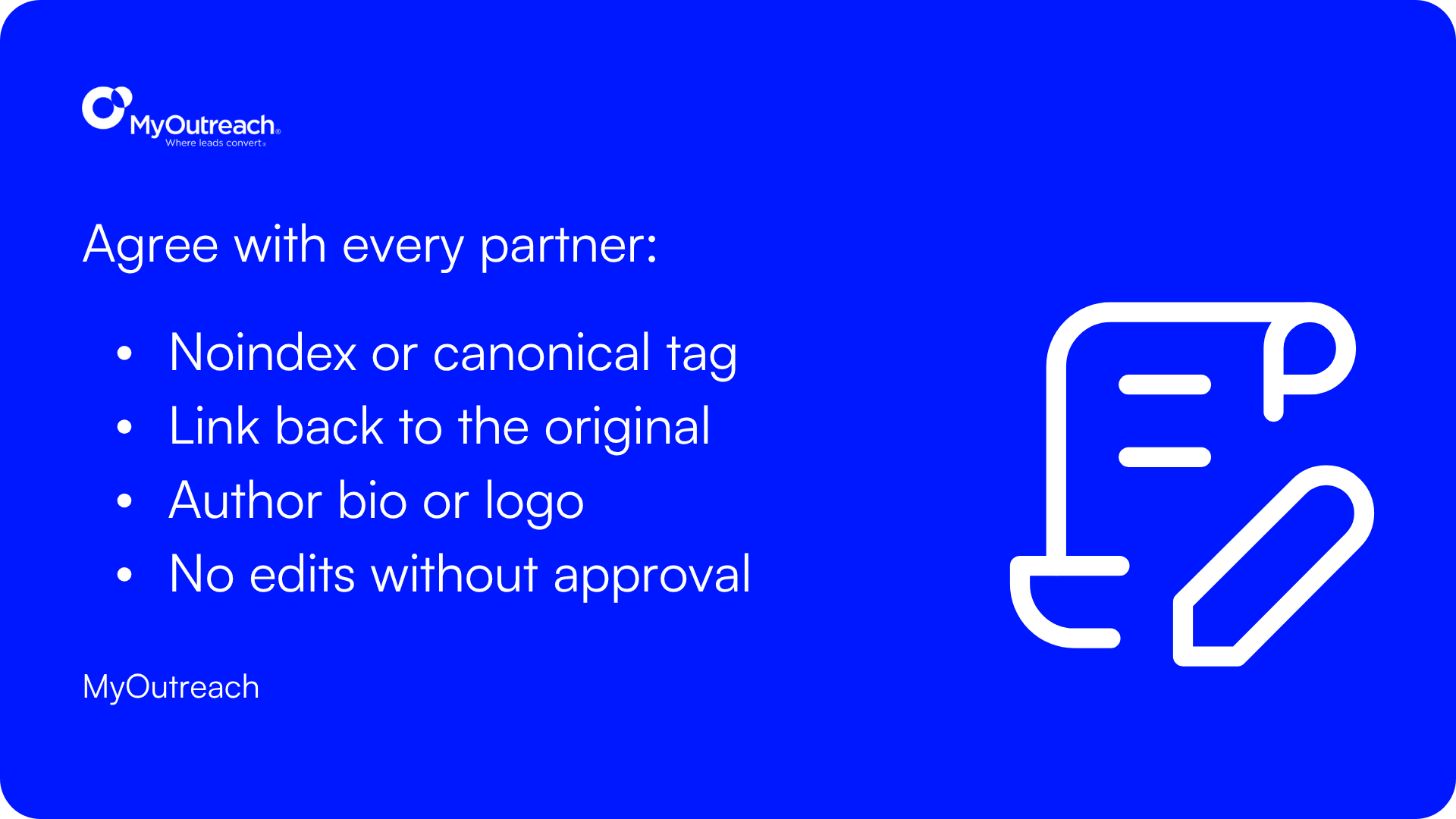
- Put the terms in writing. Agree on noindex or canonical, link placement, who can edit the content and how long it stays live.
- Check the live page. View the source of the partner's page and search for "noindex" or "rel=canonical". Then inspect your original URL with the URL Inspection tool in Google Search Console and check the Google-selected canonical. If it shows the partner's URL, Google has picked their copy over yours.

What should you syndicate, and where?
Syndicate high-performing, evergreen content on credible sites your audience trusts.
Choosing the right platforms and partners
Selecting appropriate platforms and partners is crucial for successful content syndication. It's essential to prioritise partners with established credibility in the B2B space, known for their success and relevance to your target audience.
Consider the types of content these partners typically syndicate and how their audience demographics align with your own. Ensuring that these platforms agree to noindex or canonicalise your content and credit you is also vital. Avoid partnering with companies competing for the same keywords to prevent dilution of SEO efforts and confusion for search engines.
Creating a syndication plan
Developing a detailed content syndication strategy is essential for maximising the impact of your efforts. Start by identifying clear goals for your campaign, such as increasing brand awareness or generating leads.
Use a targeted approach to ensure your content reaches the intended audience, and consider using visual elements like images or videos to make your content more engaging and visible in search results.
Repurposing high-performing content can maximise ROI, allowing you to reach broader audiences without the constant need for new content creation. Evergreen how-tos and guides travel well; product launches and time-limited offers do not.
Diversify the types of content you syndicate over time to keep your audience engaged and interested. Finally, once leads are generated, it's crucial to nurture them effectively to ensure a higher conversion rate, using appropriate follow-up and engagement strategies.
How do you ensure proper attribution?
Ask the partner to noindex or canonicalise their copy and link back to your original.
Ensuring proper attribution in the realm of content syndication is pivotal for maintaining SEO integrity and fostering healthy relationships with syndication partners. This section delves into the strategic use of canonical tags and the importance of negotiating backlinks and credits, which are essential practices for achieving these objectives.
Use of canonical tags
Canonical tags play a crucial role in content syndication by signalling to search engines the original source of content, thereby preventing duplicate content issues and consolidating SEO benefits to the original publisher.
By implementing a canonical tag, webmasters can indicate to search engines which version of the content should be considered the primary source, thus reducing the risk of the wrong version ranking. This practice is especially useful in scenarios where content is republished across multiple platforms, including mobile versions of sites, to maintain consistency and SEO value across all instances of the content.
The correct use of canonical tags not only manages the website's crawl budget more efficiently by directing search crawlers to the most relevant version of the content but also enhances the user experience by ensuring that search results lead to the most appropriate page. Note that a canonical tag is a hint rather than a command, and for syndicated content Google recommends noindex instead.
Negotiating backlinks and credits
Negotiating backlinks and credits is akin to networking for guest blogging or influencer marketing, where establishing a strong relationship with syndication partners is key before making content syndication requests.
Once the negotiation phase begins, it's important to be prepared for discussions around how the content will be displayed, linked, or credited on the partner's site. This might involve negotiating a noindex or canonical tag on the syndicated copy, and where the link back to your original sits.
Additionally, securing a more prominent brand callout, such as featuring a logo or an author bio, can significantly enhance brand visibility and recognition on third-party sites. These negotiations ensure that the syndicated content maintains its integrity and continues to align with the brand's messaging and goals.
By adhering to these practices, businesses can effectively navigate the complexities of content syndication, ensuring that their content is attributed correctly and that search engines show the original. This strategic approach not only preserves the SEO value of the original content but also fosters beneficial relationships with syndication partners, ultimately enhancing the brand's visibility and authority in its respective industry.
Conclusion
Navigating the terrain of content syndication requires a blend of strategic planning, savvy understanding of SEO implications, and an appreciation for maintaining the integrity and visibility of your brand.
The exploration into the realm of content syndication through this article underscores its significance in expanding brand reach and driving traffic. These benefits, combined with the right approach to avoiding pitfalls like content overlap and ensuring proper attribution, can significantly elevate a brand's digital presence and authority.
In conclusion, while the intricacies of content syndication present both opportunities and challenges, the potential rewards for your brand exposure are substantial. By choosing the right partners, understanding the ins and outs of syndication strategies, and emphasising the importance of proper attribution, businesses stand to gain considerably.
For those looking to streamline their content syndication journey, leave the hard work to us and relax, MyOutreach can manage the intricacies efficiently, allowing your brand to thrive in the competitive digital landscape.