.jpeg)
Attracting C-level delegates to B2B events is one of the biggest struggles for event marketers. These senior decision-makers are usually overwhelmed with invitations, have packed calendars and value only exceptional opportunities.
This blog will give you 9 proven tactics on how to attract C-level delegates at B2B events. You'll discover the exact messaging formulas, strategic timing windows, and compelling incentives that resonate with busy executives.
📖 Useful read: Roundtable Events: A Guide for B2B Marketers
Understanding what C-Level Delegates Value in B2B Events
Before implementing tactics, you need to understand the executive mindset. C-level delegates evaluate B2B events through a completely different lens than mid-level managers.
Time Is a Limited Currency
For executives, time equals money - £500.00 annually, which equates to approximately £240. This means every B2B event invite competes against board meetings, strategic planning sessions and revenue-generating activities.
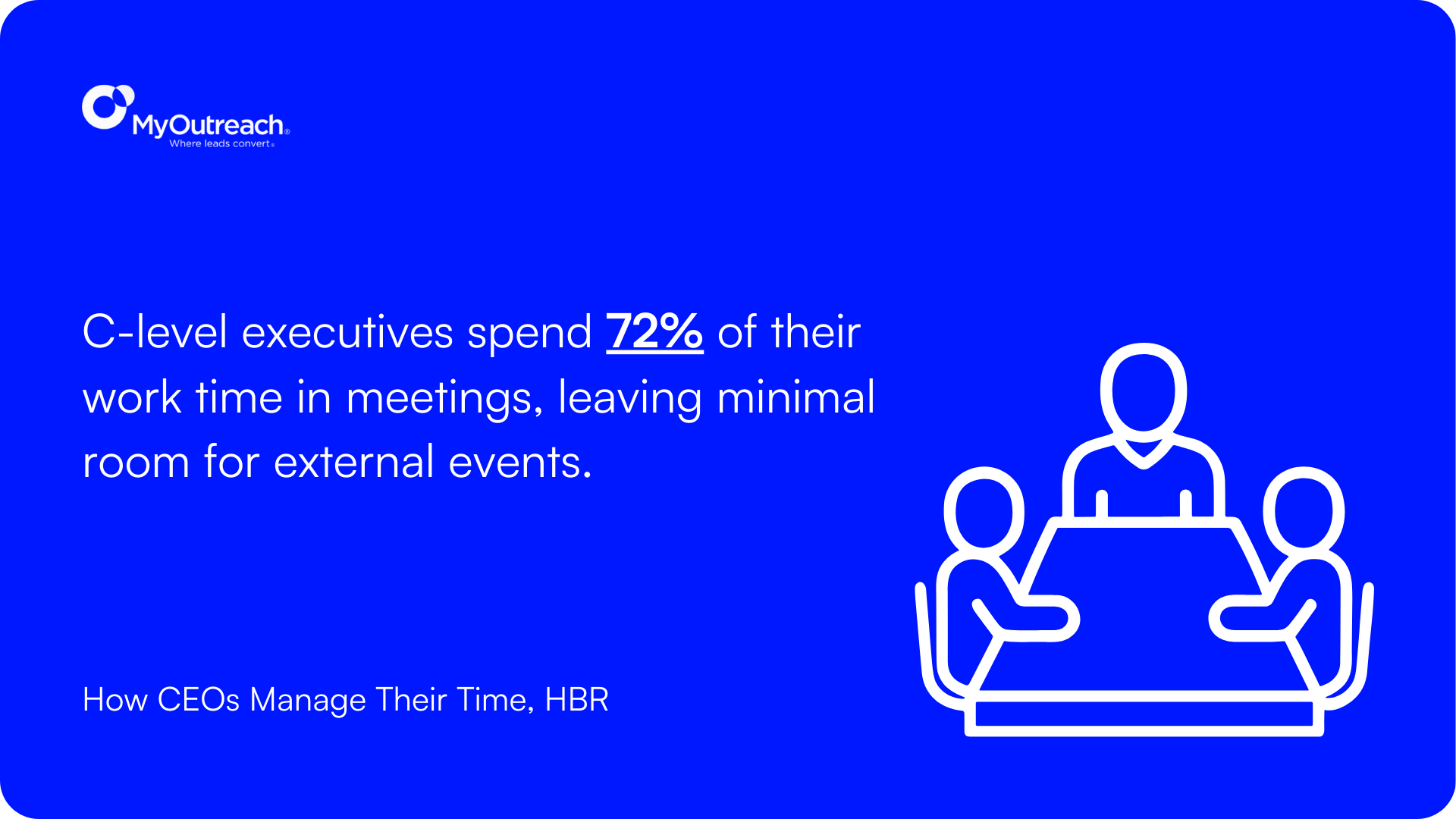
Research from Harvard Business Review shows that C-level executives spend 72% of their work time in meetings, leaving minimal room for external events.
Therefore, your B2B events have to offer clear, quantifiable value that justifies the time investment. Generic networking opportunities won't cut it. Executives attend events that promise insights, high-level connections or competitive advantages they can't obtain anywhere else.
The 3 Decision Factors
An analysis of C-level attendance behaviours identifies 3 core decision factors:
- Strategic relevance - will this B2B event impact current business priorities?
- Peer presence - which other executives are attending?
- Exclusivity - is this opportunity rare or easily accessible?
Events that score highly on all three factors see 3x higher C-level engagement rates compared to those that address only 1 or 2 factors. Understanding these motivations shapes every tactic we'll discuss next.
1. Executive Value Propositions for B2B Events
Generic event descriptions kill C-level delegates’ interest immediately. Your B2B event messaging has to speak directly to executive priorities. Using their language and addressing specific challenges they face will go a long way.
Lead With Business Outcomes
Instead of listing speakers and sessions, lead with concrete business outcomes. Compare these two approaches.
- Generic - “Join 30+ professions for a day of networking and learning about B2B industry trends”.
- Executive-focused - "Gain strategies to increase operational efficiency by 25% while navigating the evolving regulatory environments - insights from CEOs who've already achieved these results".
The second version immediately communicates ROI and speaks to outcomes C-level delegates care about.
Use Data & Specificity
Executives trust data. Incorporate specific statistics and quantifiable results in your B2B event descriptions. Rather than promising "valuable insights", specify "three cost-reduction strategies that saved Fortune 500 companies £47M collectively in 2025".
Create separate landing pages or email sequences specifically for C-level delegates. This targeted approach shows you understand their unique needs and aren’t mass marketing your event to everyone.
2. Leverage Strategic Timing Windows
When you invite C-level delegates to your B2B events, it matters as much as how you invite them. Executives operate on quarterly planning cycles, fiscal calendars and industry-specific seasonal patterns.
The 8-Week Sweet Spot
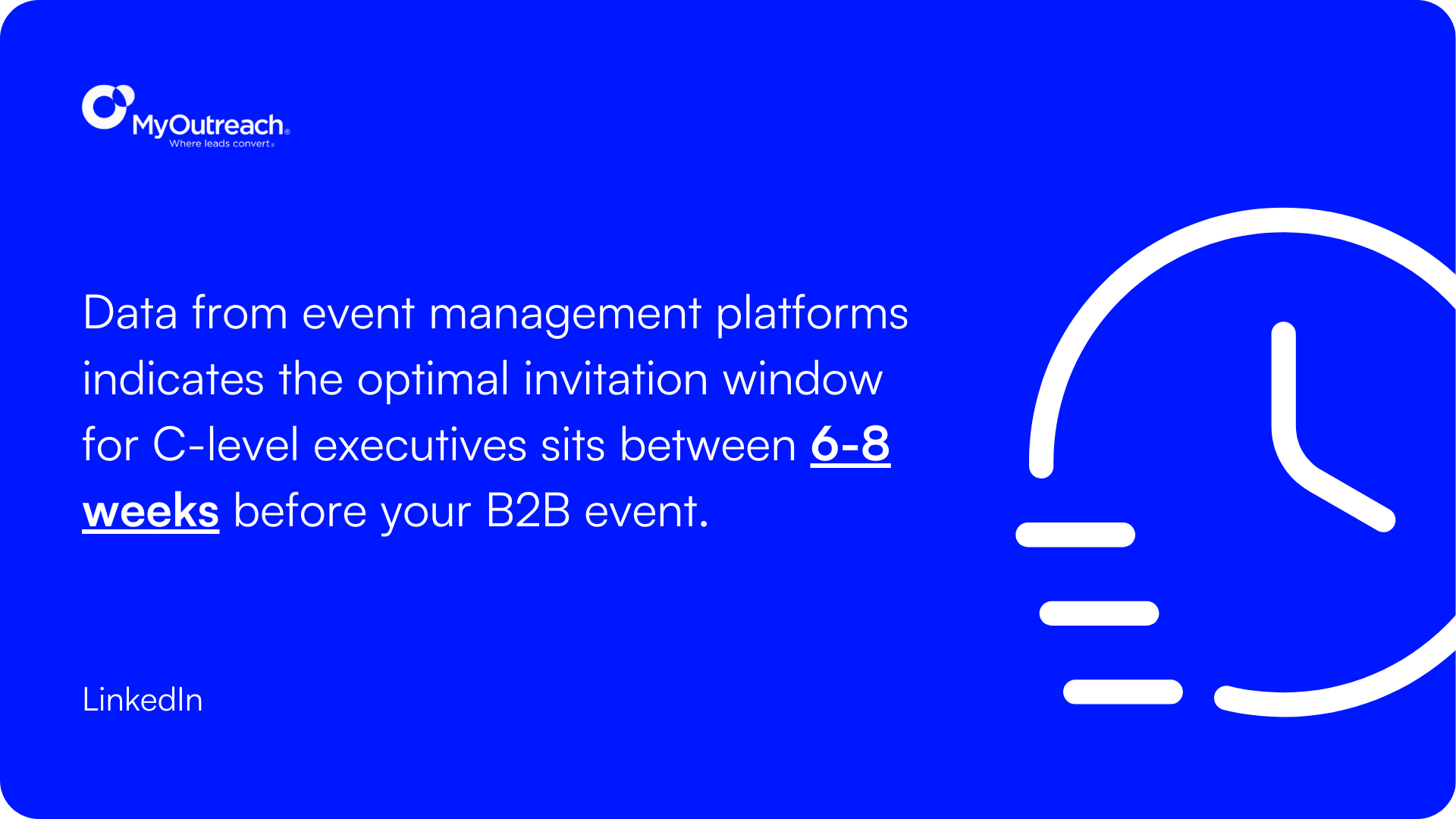
Data from event management platforms indicates the optimal invitation window for C-level delegates sits between 6-8 weeks before your B2B event.
This timeframe allows executives to:
- Review the opportunity with their teams.
- Clear their calendars without conflict.
- Budget for travel and registration.
- Anticipate quarterly priorities.
Invitations sent earlier than 8 weeks often get lost. Those sent 4-5 weeks compete with already-committed calendars. The 6-8 week window captures executives during quarterly planning when they're allocating time for professional development and strategic initiatives.
Industry Specific Calendar Awareness
Different industries have peak busy periods that doom your event invites. Retail executives avoid November-December due to holiday season demands. Financial services leaders are swamped during quarterly earnings cycles. Tech executives cluster around conference seasons (late Q1, early Q3).
Research your target executives’ industry calendars. Schedule your B2B events during their slower operational periods and time invitations accordingly.
3. Implement Tiered Registrations & Exclusive Access
Creating urgency through exclusivity motivates C-level action. However, executives respond to different triggers than general attendees at B2B events.
The Power of Limited Capacity
Cap your executive track or C-suite roundtables at specific numbers (ideally 20-30 participants) for intimacy and meaningful interactions.
Communicate these limits clearly: E.g., limited to 25 C-level delegates to ensure productive discussions.
This approach works because executives value curated experiences over large crowds. They want meaningful conversations.
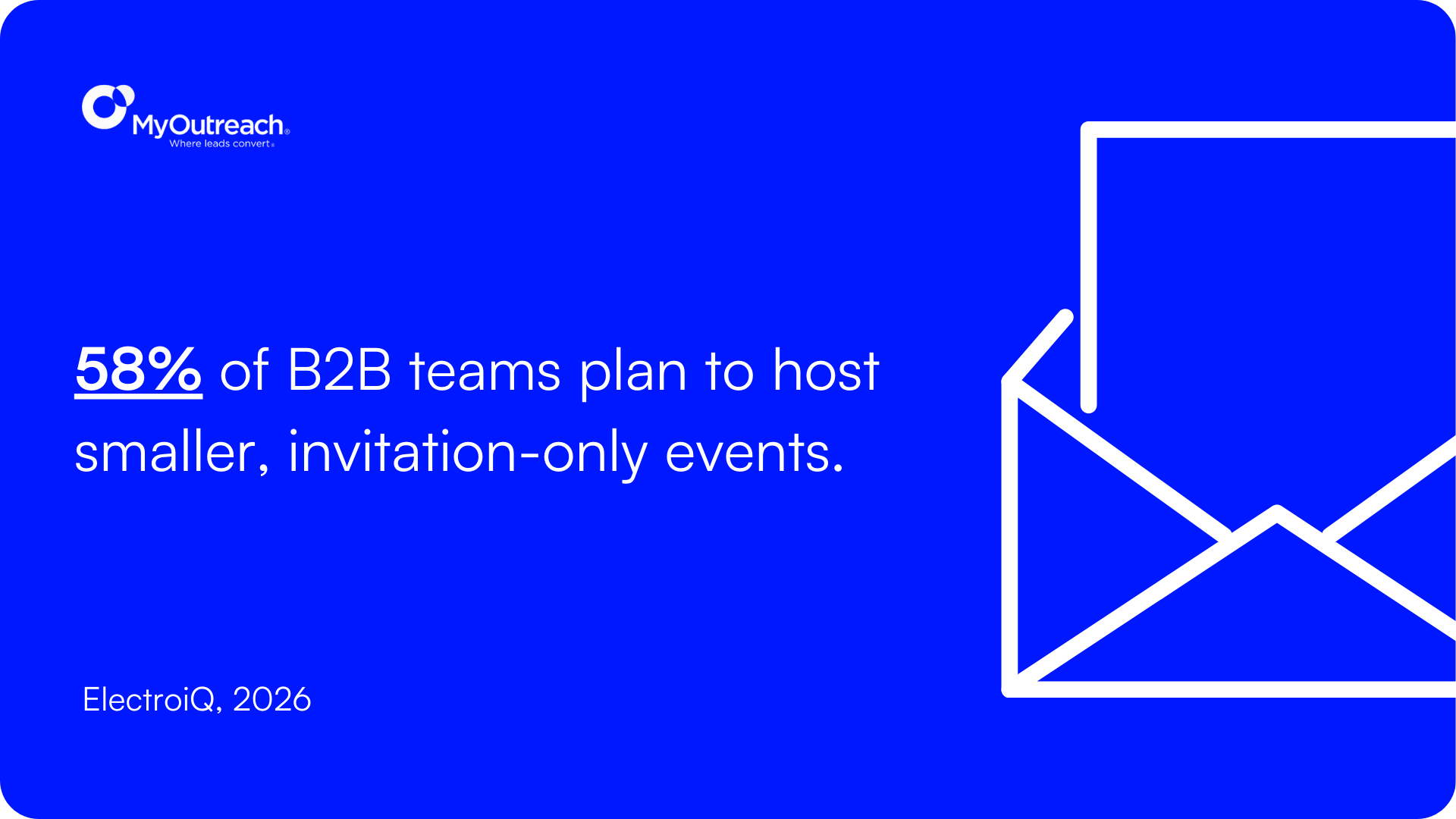
In fact, data shows that 58% of B2B teams plan on hosting smaller invitation-only formats.
Early Registration Benefits
Offer early-bird incentives specifically for C-level delegates, but make them relevant to executive priorities:
- Priority access to keynote speakers or advisory board sessions.
- VIP dinner invitations with industry leaders.
- First access to exclusive research or whitepapers.
- Reserved seating in executive-only sessions.
These incentives cost your B2B events relatively little but provide significant value to busy executives who appreciate recognition and special access.
4. Deploy Multi-Channel Executive Outreach
C-level delegates rarely respond to single-channel marketing. Successful B2B event promotion requires coordinated touchpoints across multiple platforms where executives spend their time.
LinkedIn: Executives' Preferred Platform
LinkedIn remains the most effective channel to reach C-level delegates. However, standard InMail messages achieve 15% less responses than personalised ones.
Here’s how to fix those numbers:
- Have your CEO or fellow executives send personal invitations.
- Leverage mutual connections for warm introductions.
- Share value-first content before extending invitations.
- UseLinkedIn Events to create social proof.
Personalised outreach from peer-level executives increases response rates compared to marketing team messages. Your B2B event invitation should come from someone at the invitee's level or higher.
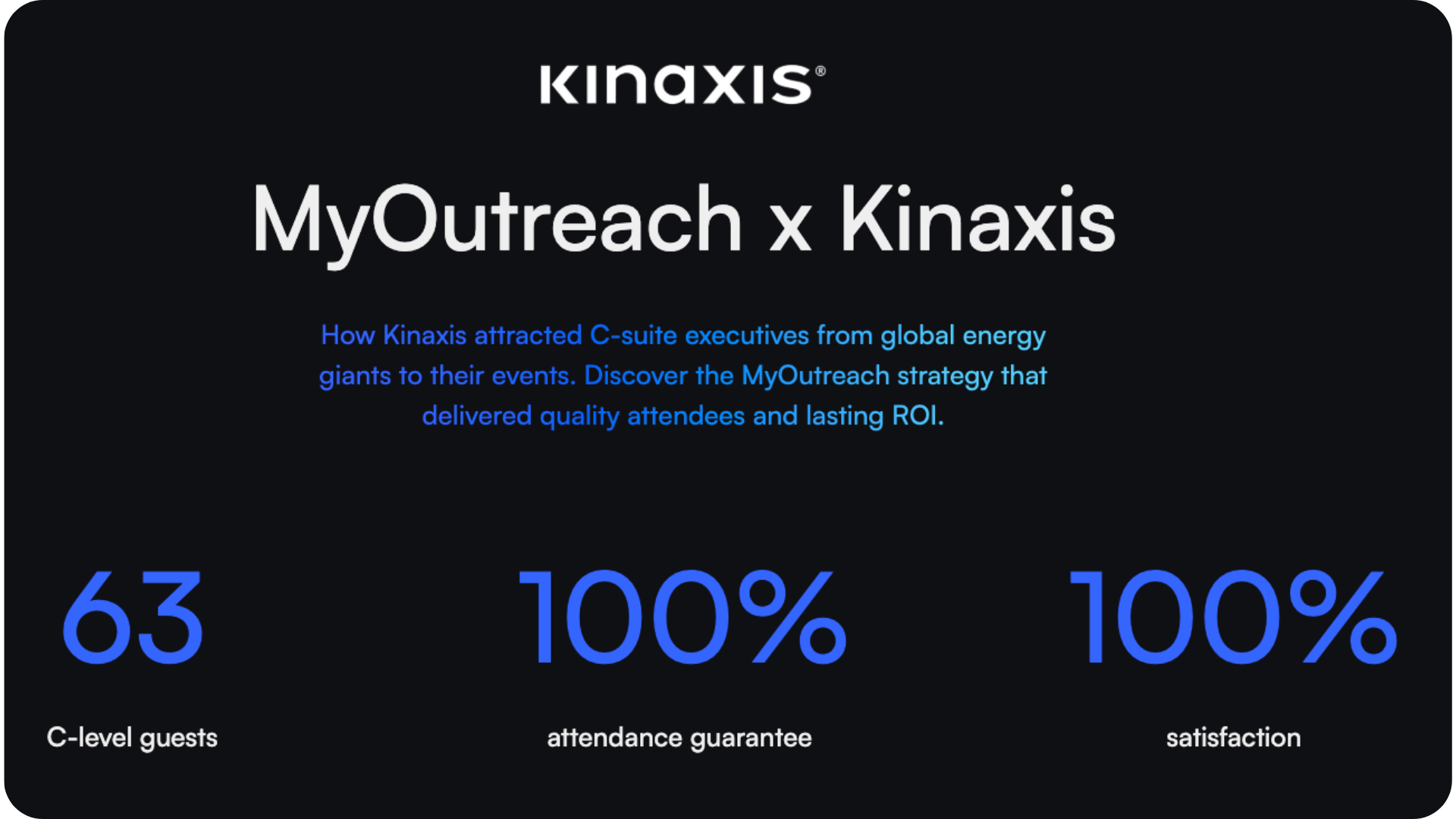
See how MyOutreach helped Kinaxis invite C-level delegates by focusing on high-quality, multi-channel strategy. 👉Full Case Study
The Power of Direct Mail
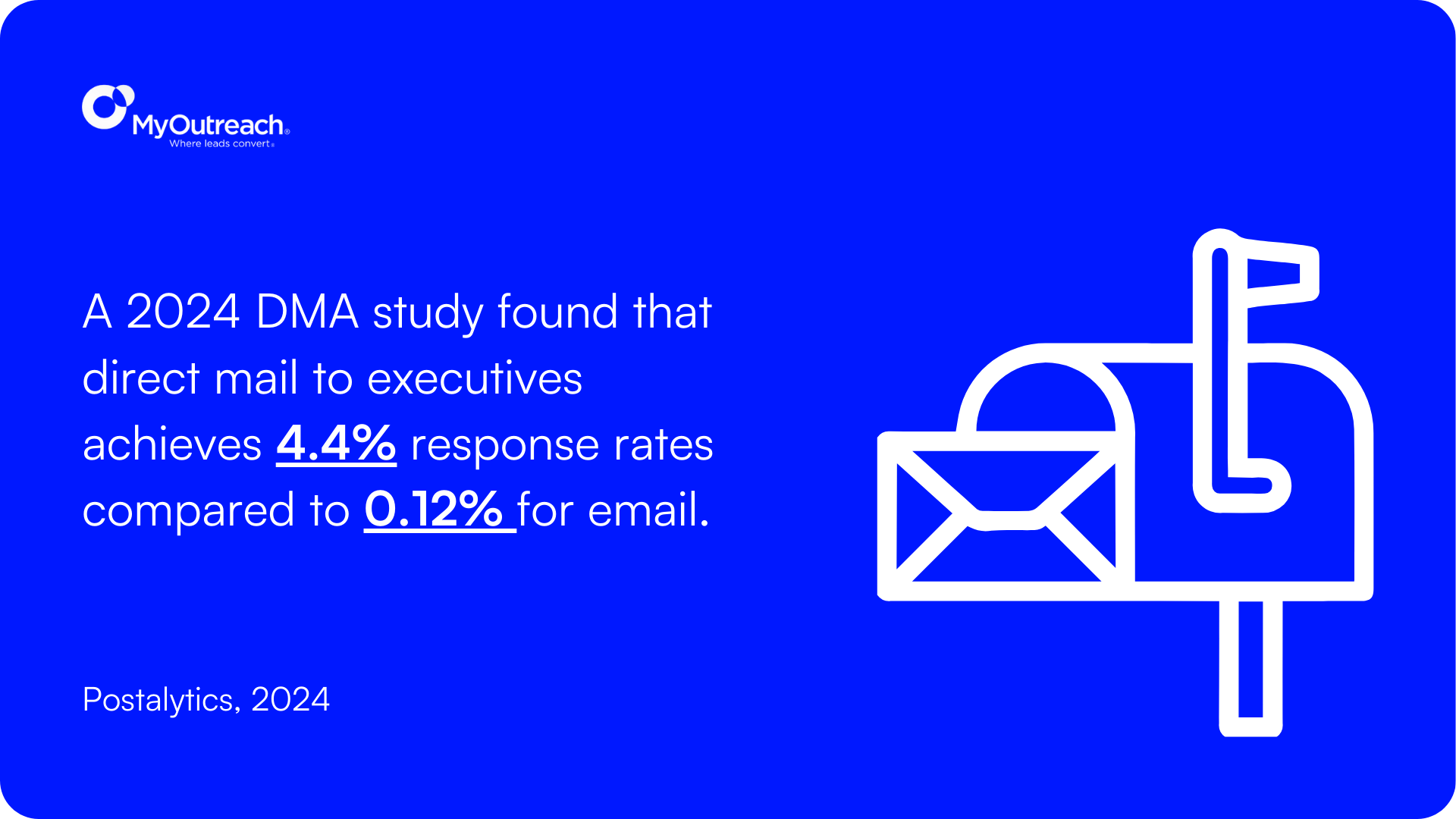
While it seems outdated, physical mail cuts through digitalised noise for C-level delegates. A 2024 DMA study found that direct mail to executives achieves 4.4% response rates compared to 0.12% for email.
For high-priority B2B events, consider:
- Personalised invitation packages with executive summaries.
- Premium materials that reflect event quality.
- Handwritten notes from your CEO or event chair.
- Exclusive "save the date" cards sent 6 to 8 weeks out.
This tactic works best for invitation-only or high-ticket B2B events where the cost per executive justifies the investment.
5. Showcase Peer Attendance & Social Proof
C-level delegates want to know who else is attending your B2B events. The promise of strategic connections often outweighs other factors in their decision-making process.
Strategic Name-Dropping (With Permission)
Once you've secured a few notable executives, leverage their commitment to attract others.
Display logos of confirmed companies, titles of attending executives (without names, for privacy), or industry representation statistics.
Feature testimonials from past C-level delegates that emphasise outcomes: "I closed a £2M partnership directly from connections made at this B2B event" carries more weight than generic praise. Include the executive's full title and company to establish credibility.
Create an Advisory Board
Form an executive advisory board for your B2B event, inviting industry leaders to help shape the agenda.
This serves multiple purposes:
- Advisory board members become invested stakeholders who promote attendance.
- Their involvement signals quality and relevance to other executives.
- You gain valuable input to ensure content meets C-level expectations.
- It creates an exclusive tier that other executives want to join.
Advisory board members typically attend and often bring colleagues, multiplying your C-level participation. Their names on marketing materials provide powerful social proof.
6. Offer Speaking & Thought Leadership Opportunities
Executives value platforms to establish thought leadership and raise their professional profiles. This motivation provides powerful leverage for B2B event organisers.
Strategic Speaking Invitations
Invite C-level delegates to speak, moderate panels, or lead roundtable discussions at your B2B events.
Even if they decline speaking roles, this approach:
- Elevates their perception of your event's value.
- Creates a warmer relationship for follow-up attendance asks.
- Sometimes, it converts to attendance even without speaking.
- Builds your speaker pipeline for future events.
When extending speaking invitations, be specific about topics that align with the executive's expertise and current initiatives. Generic "we'd love to have you speak" messages fail. Instead, propose: "Given your recent success leading digital transformation at [Company], would you share your change management strategies in our CIO panel?"
Position Attendance as Research Opportunity
Frame B2B event attendance as a research opportunity where executives can gather competitive intelligence, validate strategies, or identify emerging trends.
Offer:
- Preview access to presentations and materials.
- Opportunities to test ideas with peers in controlled settings.
- Access to event data and post-event reports.
- Media coverage opportunities.
This repositioning transforms executives from passive attendees into active participants conducting strategic research for their organisations.
7. Provide Concierge-Level Service & Experience
The registration and attendance experience has to match C-level expectations. Clunky processes or budget-conference vibes immediately signal that your B2B event isn't worth their time.
Streamlined VIP Registration
Create a separate registration path for C-level delegates that eliminates friction:
- Dedicated registration coordinator for personalised assistance.
- Simplified forms collect only essential information.
- Immediate calendar invitations with executive summaries.
- Concierge services for travel and accommodation arrangements.
Consider offering complimentary registration for legitimate C-level delegates at B2B events where their participation enhances value for all attendees.
Executive Lounges & Dedicated Spaces
Physical space matters. Create executive lounges or VIP areas where C-level delegates can:
- Conduct confidential conversations away from crowds.
- Access premium refreshments and comfortable seating.
- Network with peers in a curated environment.
- Take important calls or handle urgent business.
These dedicated spaces acknowledge that executives have different needs and preferences at B2B events. They also create additional exclusivity that motivates registration.
8. Develop Strategic Partnerships and Co-Marketing
Partnering with organisations that already have C-level relationships dramatically expands your reach and credibility for B2B events.
Industry Association Collaborations
Partner with industry associations where your target executives hold memberships. These partnerships provide:
- Access to member directories for targeted outreach.
- Co-marketing through association channels
- Enhanced credibility through association endorsement.
- Potential cost-sharing for venue, speakers, or production.
Association partnerships work particularly well for niche or industry-specific B2B events. The association's endorsement serves as pre-qualification, indicating the event is worth C-level attention.
Vendors as a Relationship Gateway
Strategic vendors already have direct relationships with the executives you want in the room. Instead of treating vendors as logo buyers, use them as access partners.
Work with vendors to:
• Leverage their customer and prospect networks,
• Have their C-level leaders invite peer executives directly.
• Co-create executive-only sessions or closed-door experiences.
• Host vendor-led VIP elements (private dinners, receptions, roundtables).
Choose vendors whose brand and customer base match your target executive profile. Alignment matters more than budget size.
Premium vendors are motivated to bring their top accounts and late-stage prospects to high-value B2B events, which means they effectively help you recruit the C-suite.
📖 You might also like: How to Master Executive Event Planning: A B2B Marketer’s Guide
9. Follow Up with Personalised, Value-Add Communications
The registration journey doesn't end with the initial invitation. Strategic follow-up communications keep your B2B events top-of-mind and address evolving executive concerns.
The Drip Campaign Strategy
Develop a nurture sequence specifically for C-level delegates who haven't registered yet.
Unlike general promotional emails, these messages should:
- Share speaker announcements relevant to their industry.
- Preview exclusive executive sessions or experiences.
- Provide valuable content (research, insights) regardless of attendance.
- Include personal notes from speakers or advisory board members.
Space these communications 10-14 days apart to maintain presence without becoming intrusive. Each message should provide a standalone value, not just promote the B2B event.
Post-Registration Engagement
Once executives commit to your B2B event, maintain engagement through:
- Personalised agenda recommendations based on their role.
- Introductions to other attending executives in complementary roles.
- Pre-event briefings or exclusive content access.
- Opportunity to submit questions for keynotes or panels.
This continued communication reinforces their decision to attend, reduces no-show rates, and enhances their eventual experience at your B2B event. Engaged attendees become advocates who bring colleagues to future events.
Measuring Success: Key Metrics for C-Level Attendance at B2B Events
Track specific metrics to evaluate and improve your C-level acquisition strategies for B2B events:
- C-level registration rate: Percentage of invited executives who register.
- Conversion timeline: Average days from first invitation to registration.
- Channel attribution: Which outreach methods drive C-level conversions?
- Show rate: Percentage of registered executives who actually attend.
- Engagement metrics: Session attendance, networking participation, and feedback scores.
Benchmark these metrics against industry standards and your historical data.
Continuously test different messaging approaches, timing windows, and incentive structures. A/B testing with executive audiences requires patience due to smaller sample sizes, but incremental improvements compound over multiple events.
Conclusion
Attracting C-level delegates to B2B events requires a fundamentally different approach than general attendee acquisition. Success comes from understanding executive priorities, crafting targeted value propositions, and implementing sophisticated outreach strategies that respect their time and meet their expectations.
The nine tactics outlined here work together to position your B2B event as unmissable for busy executives.
Remember that C-level attendance isn't just about numbers; even a small increase in executive participation can dramatically enhance your event's value for all attendees, sponsors, and stakeholders.
Start implementing these strategies for your next B2B event by focusing on the tactics that align with your current resources and target audience. Test, measure, and refine your approach with each event cycle.
Transform B2B Events Numbers with MyOutreach
Discover how to attract C-level delegates to your B2B events with MyOutreach's help.


.webp)

.webp)
.webp)