.png)
You spend months planning the perfect event. Venue is booked, speakers confirmed, and marketing materials look stunning. Everything feels ready - then registration opens, and it fails to meet targets.
The room you imagined full of engaged delegates starts to feel uncomfortably empty. The problem usually lies in delegate acquisition process. In B2B events, attendance shouldn’t be considered as a vanity metric. Without qualified delegates, there’s no pipeline or event.
In this blog post, we'll discuss 10 critical mistakes that sabotage delegate acquisition and how to fix them. We'll explore everything from targeting errors and pricing to communication failures that leave potential attendees confused and disengaged.
Delegate Acquisition Mistakes
The difference between an empty room and a full one isn’t the venue or speakers; it all comes down to the strategy. And more often than not, organisers make critical mistakes that quietly lower attendance.
Below, we’ll break down the most common delegate acquisition mistakes and what you should do instead.
1. Targeting the Wrong Audience
One of the biggest mistakes in delegate acquisition is attempting to appeal to everyone. When your event tries to serve 'anyone interested in technology," you end up resonating with no one.
Organisations with a clearly defined ICP outperform those that don’t. Teams focusing on the right accounts see higher win rates because their targeting, messaging and offers are aligned to real buying intent.
The same principle applies to events: generic invites go out across LinkedIn, email lists, and social media, hoping that relevance will emerge by chance.
The problem compounds when you haven't identified your ideal delegate's pain points, budget constraints, or decision-making process. A C-suite executive evaluates ROI differently than a middle manager seeking professional development. Your messaging has to reflect these distinctions.
How to Fix It
Create detailed delegate personas before launching any acquisition campaign. Include:
- Job titles and seniority levels.
- Industry sectors and company sizes.
- Specific challenges your event addresses.
- Budget authority and approval processes.
- Preferred communication channels.
Use data from previous events, surveys, and industry reports to validate your assumptions. Then ruthlessly personalise your delegate acquisition messaging to speak directly to each persona's needs.
2. Launching Your Marketing Campaign Too Late
Event invitations should be sent a month before the event, yet many organisations delay their delegate acquisition campaigns until just a week or two before their event.
This timing mistake creates a series of problems. Corporate attendees need approval cycles that can take 4 to 6 weeks. International delegates require time to arrange travel and accommodation. Speaker and sponsors expect promotional lead time. When you start late, you’re already fighting an uphill battle.
The misconception that people register at the last minute costs organisers potential delegates. Early registrants become advocates, sharing your event within their networks and creating organic interest that late campaigns simply can’t replicate.
Strategic Timeline
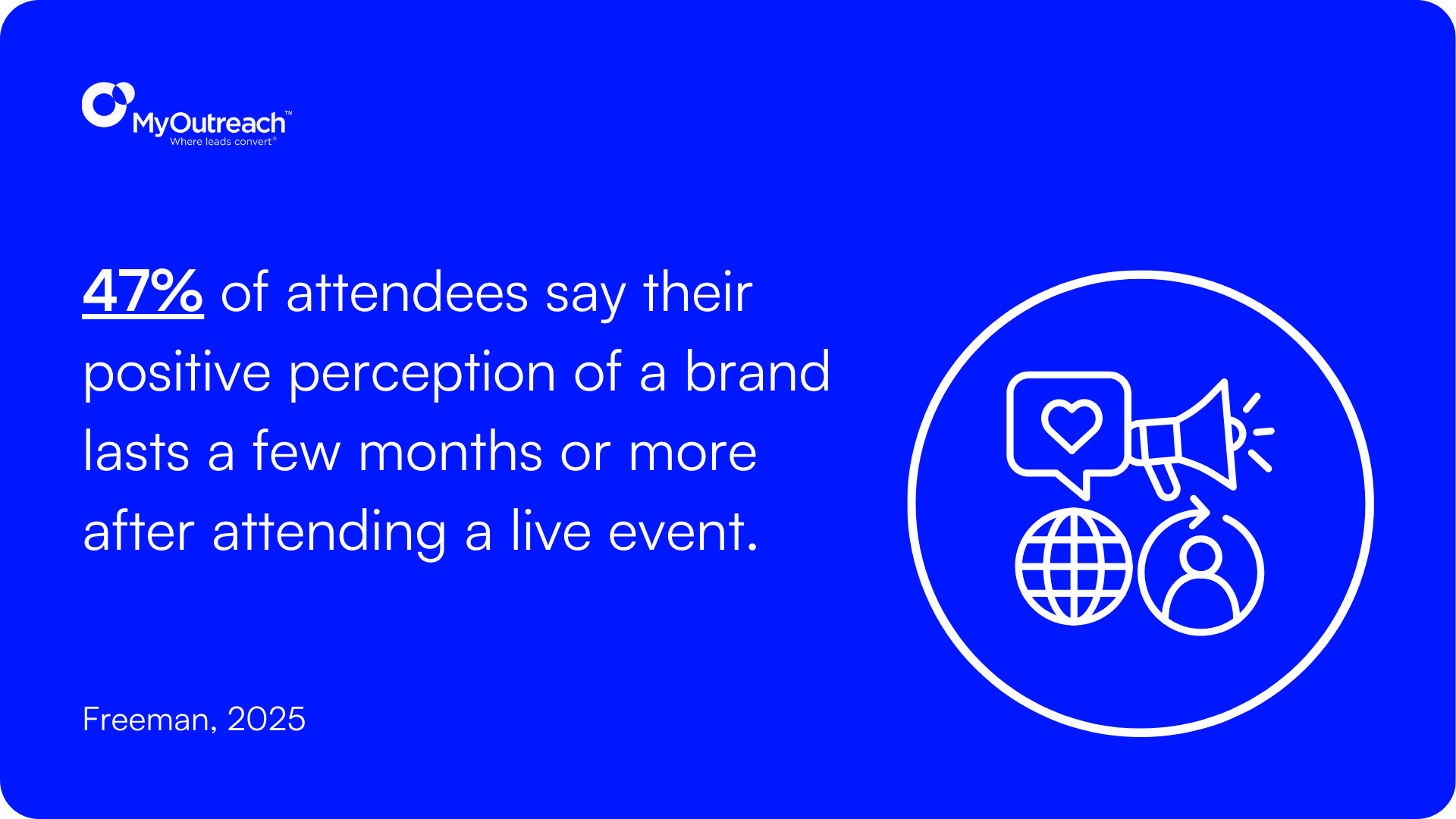
47% of attendees say their positive perception of a brand lasts a few months or more after attending a live event.
That means your event impact extends far beyond the event date. To maximise that long-term brand effect, structure your delegate acquisition like this:
- 6-8 months before: Announce dates and early-bird pricing to previous attendees and VIP lists.
- 4-6 months before: Full marketing launch with speaker announcements, programme details.
- 2-3 months before: Intensify campaign with testimonials, countdown messaging and scarcity tactics.
- Final month: Last-chance messaging and waitlist management.
3. Confusing or Complicated Registration Process
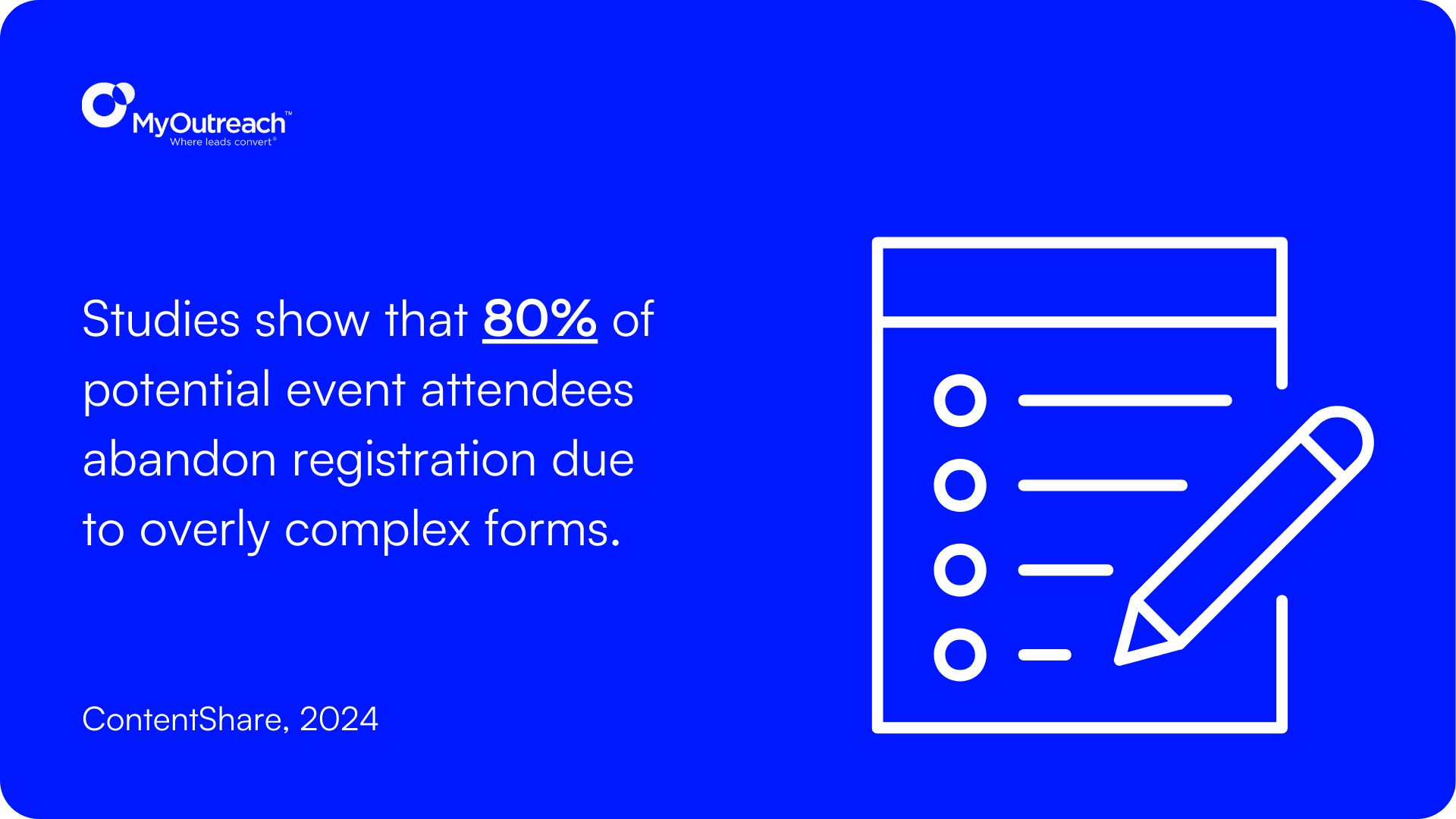
Your registration form is where enthusiasm meets reality and, too often, where delegate acquisition dies. Studies show that 80% of potential attendees abandon registration due to overly complex forms.
Common mistakes include requesting unnecessary information upfront, requiring account creation before seeing ticket options, offering too many ticket tiers without clear differentiation and embedding forms that don’t work on mobiles.
Each additional field on your registration form decreases completion rates. When delegates can't quickly understand what they're paying for or encounter technical glitches, they abandon the process, often permanently.
Streamline for Success
Implement these registration best practices:
- Request only essential information initially (name, email, ticket type).
- Display clear pricing with what's included for each tier.
- Enable guest checkout without mandatory account creation.
- Optimise forms for mobile devices.
- Show progress indicators for multi-step processes.
Test your registration process quarterly on different devices and browsers. Better yet, watch actual users complete it and identify frustration points you've overlooked.
4. Weak or Generic Value Proposition
"Join industry leaders for networking and learning" might describe your event, but it describes every event. This generic positioning undermines delegate acquisition efforts.
Potential attendees scroll past dozens of event invitations weekly. Without a compelling, specific reason to attend your event, they simply won't register. Your value proposition has to answer one critical question: "What will I gain that I can’t get elsewhere?"
Make Your Positioning Irresistible
Your value proposition should highlight specific, measurable outcomes:
- Weak: "Network with professionals in your field".
- Strong: "Connect with 300+ procurement directors who've collectively negotiated £2.4 billion in contracts".
- Weak: "Learn from industry experts".
- Strong: "Discover the exact framework three Forbes 500 companies used to reduce customer churn by 43%"
Ground your claims in specifics: exact speaker credentials, proprietary research being transparent, exclusive access to tools or communities, or quantified results that previous attendees achieved. Vague promises generate vague interest, which converts to zero registrations.
5. Pricing Strategy Disasters
Events pricing represents a delicate balance that many organisers get wrong. Price too low, and attendees question your event's quality, while you struggle to cover costs. Price is too high, and you price out your target audience entirely.
Research shows that cost and total price factors play a significant role in potential attendees’ decisions about whether to participate in events. Although pricing isn't always the issue, it's about perceived value and psychological triggers.
Common pricing mistakes include offering no tiered options, failing to create urgency with early-bird deadlines, pricing identically to competitors without differentiation, and ignoring what different audience segments can afford.
Strategic Pricing Framework
Implement a tiered pricing strategy:
- Super Early Bird (6+ months out): 40-50% discount to reward committed attendees and generate early cash flow.
- Early Bird (3-4 months out): 25-30% discount to create urgency as the deadline approaches.
- Standard Pricing (1-2 months out): Your baseline price point based on competitor analysis and value delivered.
- Late Registration (final 2 weeks): 10-15% premium for last-minute registrants.
Consider offering group discounts (3+ attendees from one organisation), and speaker or sponsor rates. Each tier should feel like a distinct opportunity.
6. Ignoring Social Proof & FOMO
First-time event organisers often underestimate how much potential delegates need reassurance before committing. Without social proof demonstrating that others have attended and benefited, your delegate acquisition suffers from a lack of trust.
92% of people trust recommendations from individuals over branded content. Still, many event marketers rely solely on their own promotional messaging without leveraging previous attendee experiences.
FOMO, at the same time, drives decision-making. When delegates see others registering, speakers announcing their involvement, or limited tickets selling out, psychological triggers activate that push hesitant prospects toward registration.
Put Credibility & Urgency in the Centre
Deploy these social proof elements throughout your delegate acquisition campaign:
- Video testimonials from previous attendees discussing specific outcomes they achieved.
- Case studies showing how delegates applied event learnings in their organisations.
- Real-time registration counters showing ticket sales.
- Social media posts from past attendees (with permission).
- Logos of companies whose employees have attended.
Create genuine scarcity by limiting early-bird quantities or offering exclusive workshops with capped attendance. However, never fabricate scarcity - discovered dishonesty permanently damages your reputation and future delegate acquisition efforts.
Display LinkedIn or Twitter feeds showing speakers and delegates discussing the upcoming event. This authentic buzz generates more conversions than polished marketing copy alone ever could.
7. Poor Email Marketing Execution
Email is still the highest-converting channel for delegate acquisition, with average open rates of 22.4% and click-through rates of 3.5% for event-related emails. But most event organisers ruin this potential through terrible execution.
Common email mistakes include sending irregular, infrequent communications followed by spam-like daily messages close to the event, using generic subject lines that blend into crowded inboxes, failing to segment lists based on engagement or persona, and neglecting mobile optimisation.
Your carefully crafted event gets deleted unread, relegated to spam folders, or triggers unsubscribes that damage your long-term delegate acquisition capabilities.
Email Campaign Excellence
Structure your email sequence strategically:
- Announcement phase: Generate awareness and early interest with compelling "save the date" messaging.
- Consideration phase: Deliver valuable content (speaker announcements, session previews, industry insights) that builds anticipation.
- Decision phase: Deploy urgency triggers (early-bird expiry, limited tickets, exclusive bonuses) that convert fence-sitters.
- Final push: Last-chance messaging for genuinely interested prospects who haven't yet registered.
Segment your list ruthlessly. Previous attendees receive different messaging than cold prospects. C-suite targets need ROI-focused content, while individual contributors want skills development emphasis.
Subject line testing can increase open rates by 49%. Test variations on 10% of your list before sending the winner to the remaining 90%.
8. Neglecting Content Marketing & Thought Leadership
The most successful delegate acquisition strategies don't start with "buy tickets now." They begin months earlier by establishing your event’s brand as a trusted industry resource.
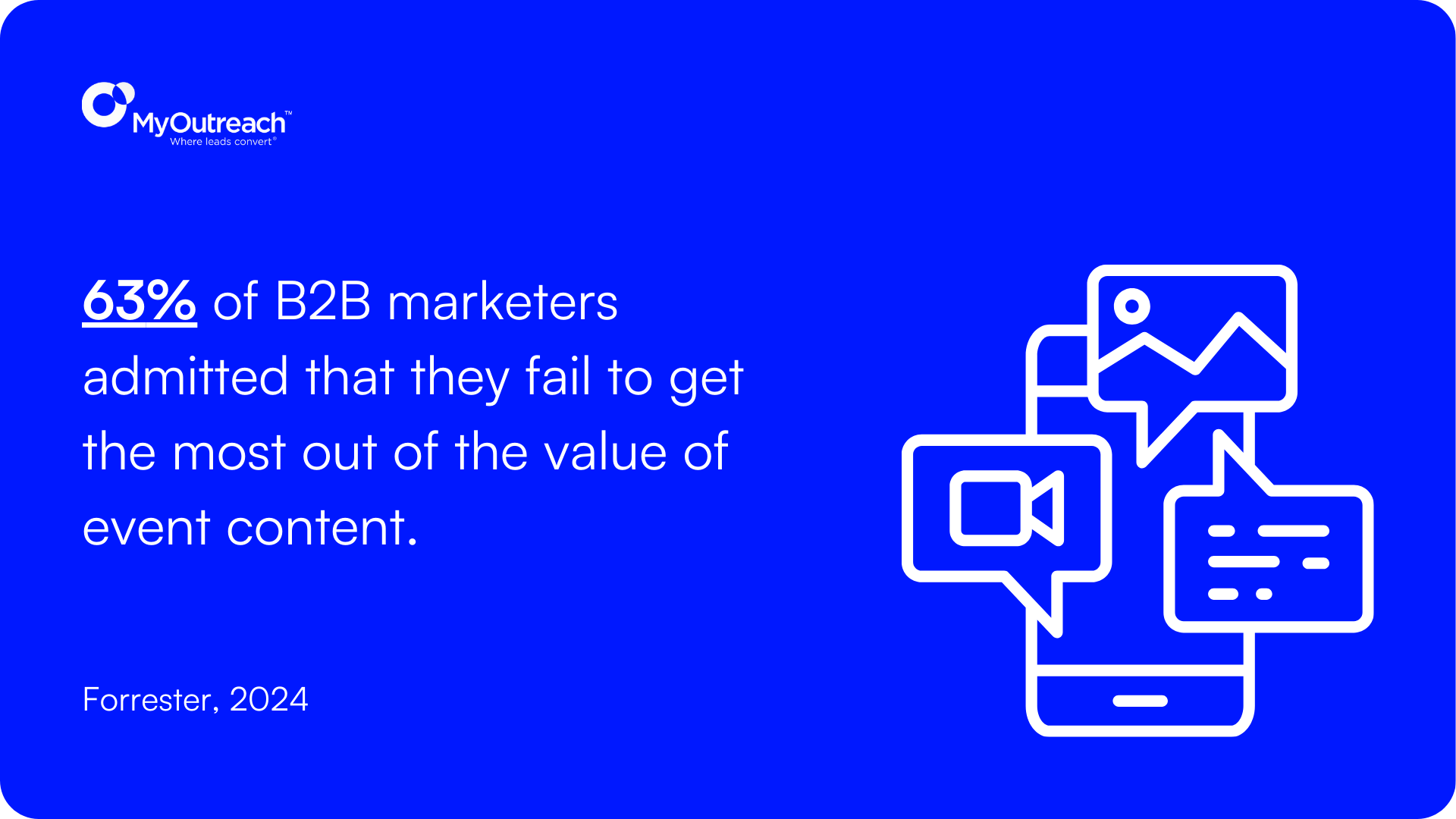
A significant 63% of B2B marketers admitted that they fail to maximise the value of event content.
Delegates want confidence that your event will deliver genuine value, and your content library provides that proof.
Many organisers treat their event website as a static brochure, missing opportunities to attract organic traffic, build email lists, and nurture prospects through valuable insights rather than constant promotional messaging.
Build Your Content Engine
Develop a content strategy that supports event delegate acquisition:
- Blog posts: Address industry challenges your event sessions will solve. Target keywords that potential delegates search for.
- Podcast or video series: Interview confirmed speakers about their session topics, generating valuable content whilst promoting the event at the same time.
- Research reports or whitepapers: Conduct original research within your industry and offer the full report to email subscribers, building your list whilst establishing authority.
- Guest contributions: Place articles on industry publications with subtle event mentions, driving referral traffic from trusted sources.
- Social media thought leadership: Share valuable insights, not just promotional content. The 80/20 rule applies: 80% education and value, 20% promotion.
Each content piece should include subtle CTAs directing engaged readers toward event registration, but the primary value has to be the content itself. Trust builds gradually through consistent expertise demonstration.
9. Abandoning Delegates After Registration
Delegate acquisition doesn't end when someone clicks "register."
The period between registration and event day represents a critical nurture window that most organisers completely ignore. Without ongoing engagement, initial enthusiasm disappears, calendar conflicts arise, and your carefully acquired delegates simply don't show up.
Additionally, registered delegates become your most powerful acquisition tool for reaching similar prospects within their networks, but only if you activate them strategically.
Nurture Delegates
Implement a post-registration engagement sequence:
- Immediate confirmation: Welcome email with clear next steps, calendar invites, and what to expect.
- Ongoing updates: Regular communications (every 2-3 weeks) with speaker spotlights, session announcements, and networking opportunities.
- Preparation content: Help delegates get the most of their event investment with pre-event planning guides, recommended sessions, and questions to prepare.
- Referral incentives: Offer registered delegates discounts or bonuses for bringing colleagues, turning them into acquisition channels.
- Community building: Create private LinkedIn groups or Slack channels where registered delegates can connect before the event, increasing commitment through social bonds.
Each touchpoint should deliver value while reinforcing their decision to attend. Share exclusive previews, introduce them to speakers, or provide relevant industry content that builds anticipation.
10. Failing to Track & Optimise Acquisition Metrics
The biggest mistake in delegate acquisition is probably operating without data. When you don't measure what's working and what isn't, you repeat expensive failures while abandoning successful strategies you don't realise are performing.
Without tracking, you can't answer critical questions: Which marketing channels deliver the highest quality delegates? What messaging resonates most effectively? When do most registrations occur? How do pricing tiers perform? Which audience segments convert best?
Build Your Data Infrastructure
Implement comprehensive tracking across your delegate acquisition funnel:
- Traffic sources: Use UTM parameters to identify which channels (email, social media, partnerships, paid advertising) drive website visits.
- Conversion rates: Measure the percentage of visitors who register from each source and page on your site.
- Cost per acquisition: Calculate exactly how much each registered delegate costs from different channels.
- Email performance: Track open rates, click rates, and conversions for each campaign and segment
- Drop-off points: Identify where potential delegates abandon the registration process.
- Delegate quality metrics: Beyond counting registrations, track which sources produce delegates who actually attend, engage, and return.
Create a simple dashboard tracking these metrics weekly throughout your campaign. When you notice early-bird pricing converts 3x better than standard pricing, or that LinkedIn drives more registrations than Facebook despite lower traffic, you can reallocate budget and effort accordingly.
A/B test continuously: subject lines, landing page headlines, call-to-action buttons, pricing displays, and email send times. Small improvements compound dramatically across thousands of potential delegates.
Post-event, conduct a detailed analysis identifying your most successful acquisition strategies. These insights become the foundation for your next delegate acquisition plan, creating a cycle of continuous improvement.
Conclusion
Effective delegate acquisition rarely fails because of one dramatic mistake. It breaks down due to small strategic errors that pile up over time. You can have world-class speakers and a stunning venue, but if the right audience never attends, none of it matters.
The difference between half-empty rooms and sold-out sessions is structure.
When delegate acquisition is treated as an ongoing system, attendance becomes predictable. And predictable attendance drives revenue, sponsorship value, and long-term brand authority.
MyOutreach Delegate Acquisition
At MyOutreach, we don’t rely on generic email lists or last-minute promotions. We build structured, targeted delegate acquisition strategies designed to attract the right decision-makers.
Our approach focuses on:
- Paying only for who shows up.
- Delegates aligned with your TAL.
- Delivering guaranteed delegates in all major business hubs (e.g, Barcelona, London, New York, etc..).
- Post-event reporting and insights.
If you’re serious about improving your event attendance, let’s have a chat!


.webp)

.webp)
.webp)