
What is Content Syndication?
Content syndication means putting your own content on someone else's platform. You do it because organic search is slow and most B2B buyers will never find your blog on their own. Free routes (LinkedIn, Medium, Quora) build awareness. Paid routes deliver qualified leads, with average B2B CPL around $43. MyOutreach runs managed content syndication for SaaS and B2B tech.
Content syndication serves as the core of many successful B2B marketing strategies.
By distributing content through third-party platforms, you give up some of the control that you usually have over content distribution in exchange for greater exposure to new audiences, more brand awareness, and more marketing qualified leads.
You can use syndication networks to share your content across multiple platforms. Third-party sites typically mark your content with text such as "This article originally appeared in "[Original Publication + Link]".
Currently, the content syndication platform market is valued at $4.8 billion (2025) and is projected to grow to $10.1 billion by 2034. Statistics show that around 65% of B2B marketers prioritise content syndication to generate more leads, and 43% of brands actively use content syndication as part of their marketing strategy to discover new prospects for their companies.
And 79% of marketers use at least one vendor for content syndication, and 30% of B2B companies consider content syndication one of their most effective lead-gen tactics.
In this blog post, we'll discuss what content syndication is, how it works, its pros and cons, the most effective channels to use, and ways to improve your strategy.
Why do B2B Marketers use Content Syndication?
Quality content is expensive to produce, and organic reach is slow. Most companies can't afford to wait six months for a piece to surface in Google results. Yet most B2B brands do exactly that: publish, wait, and move on to the next piece.
Content syndication changes that equation. Rather than treating each asset as a single-use investment, syndication puts it to work across multiple channels at once. The same piece can rank organically, generate leads through syndicated placements, fuel retargeting campaigns with warm audiences, and build backlinks that strengthen your site's authority over time. Most brands only ever use the first of those, and leave the rest on the table.
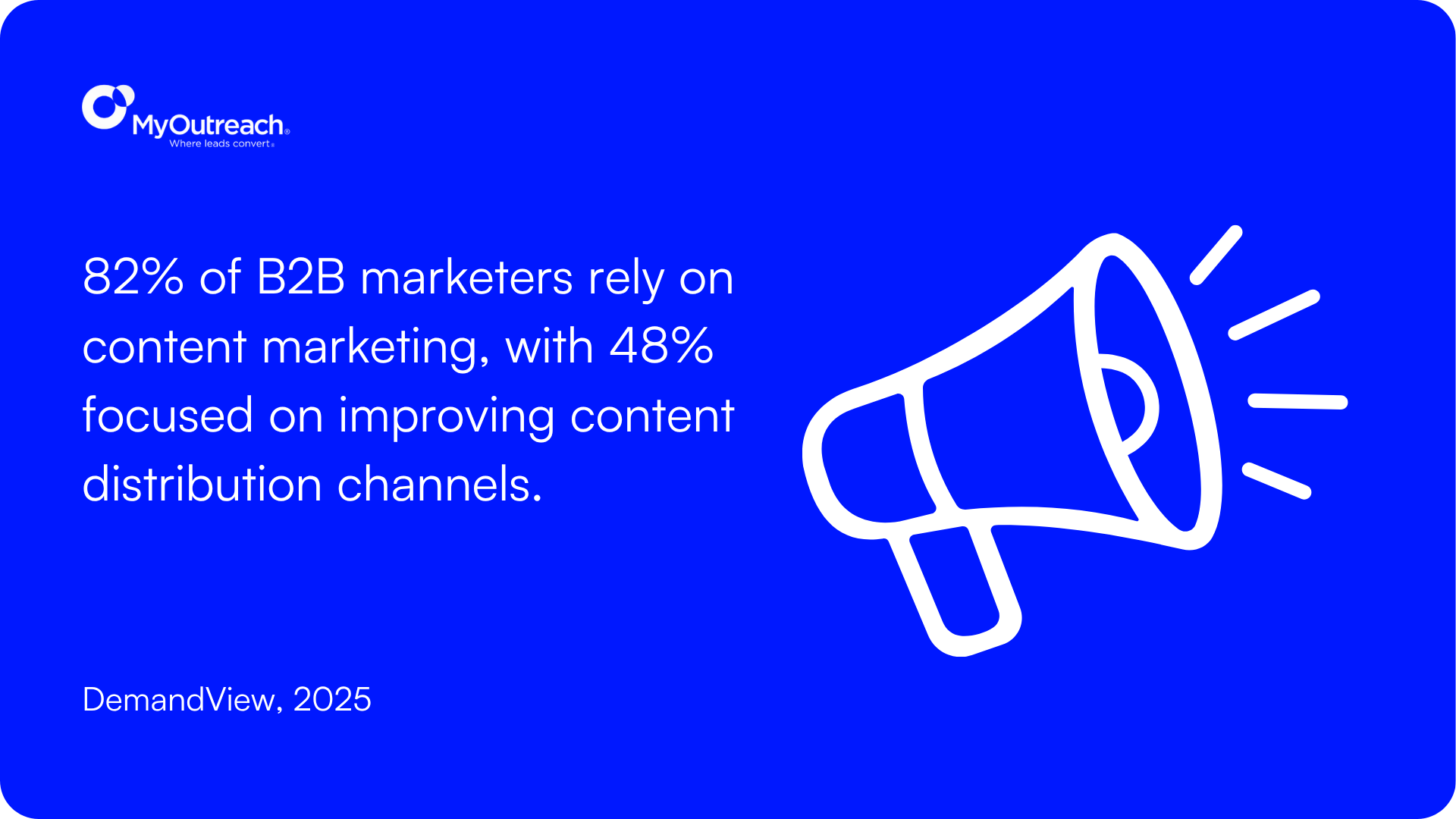
That's a significant missed opportunity, particularly given that 82% of B2B marketers rely on content marketing as foundational, with 48% specifically focused on improving content distribution channels, including syndication. Here are the benefits for those who do use it:
Benefits of Content Syndication
- Maximised ROI: Content syndication helps you extend the activity and value of your best performing pieces by repurposing them to a wider targeted audience. By constantly filling your sales pipeline with high-quality leads, you increase ROI on everything you create without starting from scratch.
- Increased brand visibility awareness: Publishing your content across multiple channels exposes your expertise to new and relevant audiences. This expansion targets more traffic to your website and creates brand recognition.
- Audience targeting: Unlike traditional methods, content syndication lets you target your ICP by industry, job title, company size or intent signals. This level of customisation gets your message in front of potential decision makers and saves your teams’ time and effort.
- Improved SEO performance and authority: When your content is syndicated through authoritative websites, you often gain backlinks that are high-quality and signal trust to search engines. These backlinks can also help you boost your website’s domain authority, improve SEO rankings, and increase your visibility in organic search.
“Clients use content syndication because they understand that nurturing leads from the beginning of their buying journey builds trust, credibility and relationships. Content syndication is a scalable and cost-effective way of generating early-stage leads which Marketing and Sales should collaboratively nurture and convert into opportunities.” - Chantelle Iles, Global Director of Client Services, MyOutreach
How it Works
We’ve explained what content syndication is and its benefits, but how does it work?
Paid vs Organic vs Owned Content Syndication
Your content's performance depends on the proper syndication method. Content syndication takes up two main forms: paid and organic. Free (organic) syndication lets you republish your content on platforms like Medium and LinkedIn. However, without paid promotion behind it, your content needs to be strong enough to attract meaningful reach on its own, through quality, relevance, and genuine value to the audience.
Marketers use platforms like Outbrain and Taboola for paid content syndication that work on a pay-per-click model. The benefit of paying third parties to feature your content is that you will get better targeting, and more and higher quality leads from these platforms.
There's also a third type: owned content syndication, which allows you to distribute your content on the channels that you own and control. This can include your website, email newsletter, and social media pages. Brands often overlook this type of content syndication, but it offers a great benefit for brands looking to maintain their existing customer base.
Your content on reputable websites will build credibility and authority in your field. Quality backlinks improve your website's SEO ranking, provided the syndicated content has proper attribution to avoid duplicate content issues.
Key Differences in Cost and Control
Organic content syndication costs nothing upfront; it's free but demands time. You'll have to manually reach out to websites and ask them to republish your content with proper attribution. Organic methods don't reach audiences well.
However, paid content syndication needs financial partnerships where you pay for your content to be featured on various platforms. Paid content syndication uses several pricing models:
- Cost-per-click (CPC)
- Flat campaign fees
Paid content syndication gives you exact targeting options to reach your ICP based on demographics, interests and location.
When to Use Each Method
Organic content syndication works best if you:
- Have a tight marketing budget but enough time.
- Want to build original content presence.
- Need better SEO through natural backlinks.
- Don’t mind waiting for results.
Paid content syndication is your best choice when you:
- Want faster guaranteed results.
- Must reach specific audience segments.
- Focus on lead gen.
- Need flexible and predictable outcomes.
- Have quality content that’s ready for immediate exposure.
A smart approach is to test your content organically first. Track how it does for a few weeks, then put a budget behind the pieces that work well. Notwithstanding that complete, authoritative resources might need paid promotion immediately.
Audience Syndication vs Lead Gen Syndication
It's also worth distinguishing between two broader approaches, because they serve different ends.
Audience syndication is about content amplification. You republish or promote your content to reach someone else's audience, building visibility and brand awareness over time. Lead gen syndication is more transactional. A vendor promotes your asset, gates it, and sends you qualified contact details directly.
Both have a place in a well-rounded strategy, and the strongest programs often combine them, using audience syndication to build familiarity and lead-gen syndication to capture demand once that awareness exists.

Lead Generation through Gated Content
Gated content continues to be one of the most effective lead gen tools in B2B marketing strategies. It offers valuable resources, such as whitepapers, eBooks, reports, and toolkits, in exchange for a visitor's contact information. This approach allows marketers to collect data and build personalised outreach strategies.
Example: Wind River generated 866 MQLs when MyOutreach helped them build a holistic content syndication strategy and delivered industry relevant content, like eBooks and whitepapers. Case Study ➝
Once the information is collected, it integrates directly into CRM and MAP systems, enabling:
- Contact segmentation and lead scoring.
- Persona profiling.
- Input for content personalisation.
- Marketing automation triggers.
Gated content becomes most effective when used in the buyer's experience at the right moment - it's best when buyers are in the "Think" or "Do" phase.
Arranging Content Syndication with The Sales Funnel
Content syndication should match your sales funnel strategy to maximise results. Different content types perform better at specific funnel stages.
Research shows that independent third parties' expert content is among the top reasons for marketing-qualified leads (MQLs). But, with nearly 80% of leads not resulting in a sale, lead nurturing becomes essential - nurtured leads make 47% larger purchases.
Modern buying committees typically include 14 to 23 stakeholders, especially in tech - this is where content syndication becomes a strategic advantage.
Example: Companies like Proofpoint and Twilio used targeted content syndication to increase qualified leads. Case Studies ➝
Pros and Cons of Content Syndication
The pros of content syndication
Increased reach without having to start from scratch with new content
Content syndication allows you to distribute your content to a much larger number of people on third-party platforms. This is especially beneficial for brands whose content is still growing in popularity and reach or whose budgets for paid advertising are limited.
You can publish to industry-specific platforms and free platforms like LinkedIn, Medium, and Quora to increase your content's reach to new audiences without spending a cent on advertising.
Wind River, a manufacturer of embedded systems software, used content syndication to distribute their ebooks on third-party platforms to target companies in the DACH region of Europe. By using these industry-specific channels for content distribution, they went from receiving 113 leads from their target region to 866 MQLs from over 367 different companies in the region. This is a significant, 7x increase of potential customers.
A more efficient use of content budget
The content that you produce is often very costly to create, and most brands do not use their content effectively.
A single piece of content can generate leads, get shared on social media, run in retargeting ads, and feature in email campaigns. Many brands do not think of their content as a valuable resource that you can repurpose multiple times.
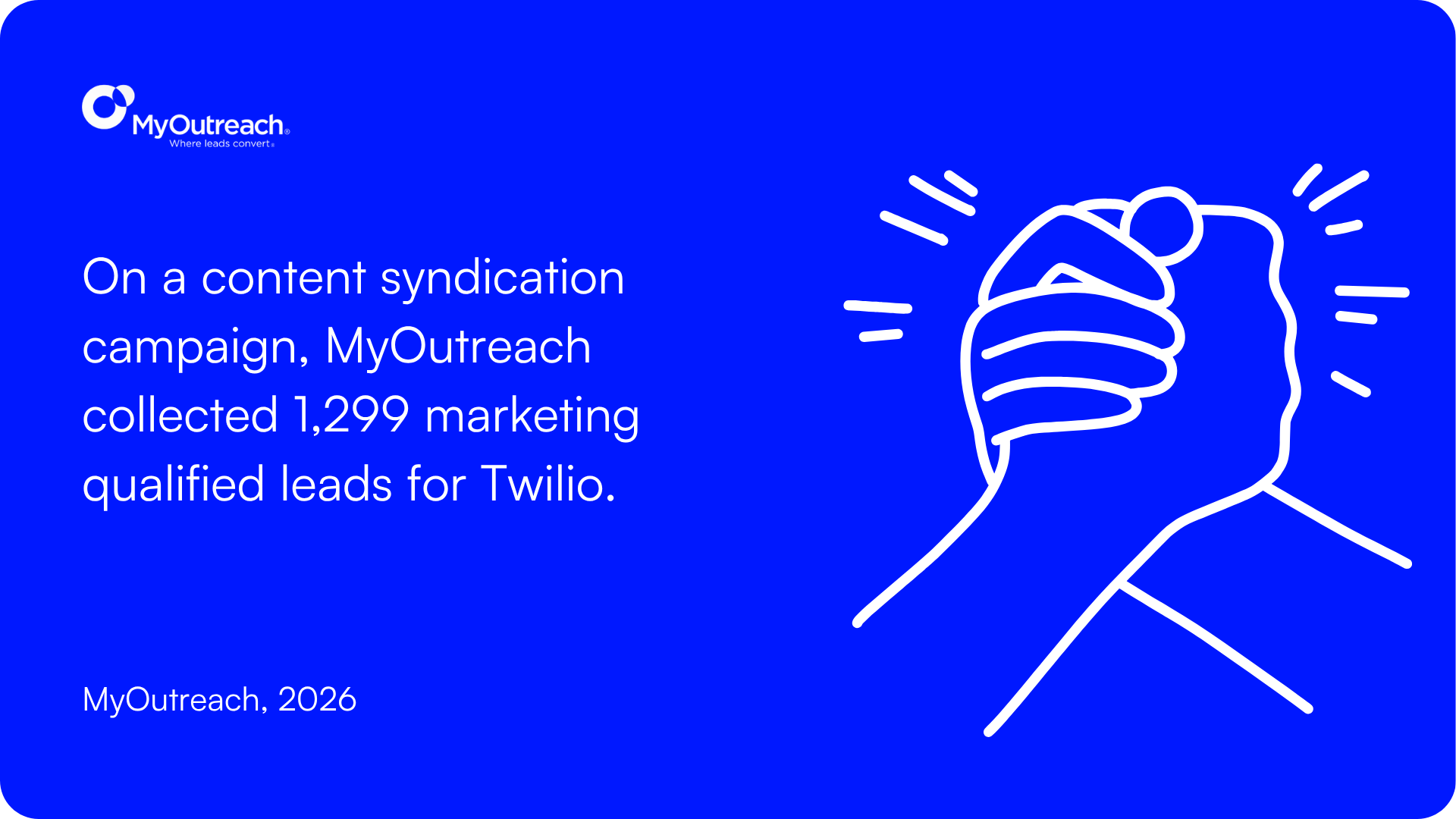
Twilio manufactures and sells cloud communications platform APIs to over 10 million developers worldwide. Since their target market was becoming saturated with new companies producing their own APIs, they were having significant difficulty finding new leads. By syndicating their existing whitepapers to their targeted accounts, they collected 1,299 marketing qualified leads from 915 different companies. This allowed them to increase their sales pipeline and develop new revenue opportunities without creating any new content.
Consistent and scalable lead generation
The conversion rate for brands that use content syndication is a much higher 5.31% compared to the average B2B brand's conversion rate of 2.23%. The cost per lead is $43 on average, which is more competitive than other paid B2B channels. Beyond conversion rates, content syndication ensures that leads arrive consistently and at a more scalable rate than other methods.
Proofpoint, a cybersecurity company, used content syndication to increase the number of companies that they spoke to and the number of sales opportunities that they could provide for their target market. By using content syndication, they delivered BANT-qualified leads and MQLs to their sales department.
Credibility through third parties
Having your content published on third-party sites allows you to instantly gain credibility.
Many buyers will trust your brand more if your content appears on a well-known industry website. This is especially beneficial for new brands looking to quickly gain recognition within their industry.
Pipeline support
Content syndication generates leads and supports your entire sales pipeline. The leads you collect through syndicated content are already familiar with your brand — they've engaged with your content already, which means they're warmer and more receptive than cold audiences. With a proper nurture program in place, those leads become the customers your sales department is looking to acquire. By focusing on lead quality and follow-up, studies show you can increase your lead-to-deal conversion rate by 45%.
The cons of content syndication
Duplicate content
Content syndication might expose you to duplicate content issues on third-party platforms. If you don't manage this correctly, it could pose a threat to your SEO.
However, proper management of your syndicated content will include the appropriate canonical tag and attribution agreements with third parties to minimise this threat (more on SEO tags below).
Loss of some brand traffic
When you share your content on third-party platforms, some of your traffic will come from those platforms rather than your own website
This means that your website will receive less traffic from users who only engaged with your brand on third-party platforms.
However, proper management of content syndication will include attribution on the content that you share on third parties to encourage traffic back to your website.
Brand consistency
When you share your content on third-party platforms, you will lose some control over how that content is presented.
Third parties might reformat the content to better suit their platform or edit the content in ways that do not align with your brand.
However, you can manage this by establishing agreements with third parties before they publish your content on their platforms. Additionally, you can monitor the content that third parties publish to ensure that it accurately represents you.
Content Syndication vs. other content strategies
Content syndication has unique characteristics that make it different from other content tactics. Let's break down the differences:
Content Syndication vs. Guest Blogging
- Guest blogging creates brand-new content for another publication.
- Content syndication republishes existing content with permission.
A guest post is new content written specifically for one publication.
Content Syndication vs. Content Distribution
- Content distribution shares your content across multiple channels like social media, paid ads, and email.
- Content syndication aims to focus on republishing on third-party websites.
With content distribution, you keep ownership of the distributed content, but with content syndication, the other websites may own the published version.
Content Syndication vs. Content Marketing
- Content syndication is a component of content marketing strategy.
- Content marketing creates and distributes valuable content to attract audiences.
Content syndication aims to increase lead volume by sharing pre-existing content resources with specific customer segments.
Content Syndication vs. Web Syndication
These get used interchangeably, which is annoying, because they cost different amounts and produce different things.
Web syndication is the older, free version. Your content gets pulled via RSS feed onto news aggregators, blog roundups, and other sites, usually as a snippet with a link back to your domain. You're trying to show up in more places. Sometimes you get referral traffic. Search engines see more inbound links to you, which is nice. This is what RSS was invented for in the early 2000s and the mechanic hasn't really changed.
Content syndication is paid, and targeted. You pay a platform or an agency to put your full asset (whitepaper, ebook, webinar) in front of a specific B2B audience. The platform gates it behind a form, captures the prospect's details, and delivers them to your CRM. You're trying to fill a pipeline, not just get seen.
The two differ on three things: cost, format, and outcome. Web syndication is free, runs on snippets, generates traffic and backlinks. Content syndication is paid, distributes the full asset, generates contact details and pipeline.
When someone in B2B says they're "doing syndication," they almost always mean content syndication. Web syndication is more of an SEO byproduct than a marketing budget line. Useful to have, but not the thing most marketers will go to the wall for.
Comparison Table: Content Syndication vs Other Strategies

📖 You might also like this: 7 Content Ideas for Your 2025 Content Syndication Campaign
How to Run Content Syndication Effectively
Choose content to distribute
The content that you distribute needs to specifically target the audience you want to reach. You should only choose content that will benefit the audience you are targeting.
For example, Wind River used content syndication to publish its ebooks on third-party content platforms. They specifically chose ebooks as the content for syndication because it would be of interest to their software buyers.
Additionally, interactive content holds the audience's attention for four times as long as static PDFs. Content that is useful and in demand will receive more attention and engagement from the audience.
Define your target audience
You must define your target audience for content distribution very specifically.
If you create content for HR professionals, for instance, you must define that audience as HR managers in the UK at companies with 100+ employees in that market.
If you are too general with your targeting, you will end up spending your budget on leads from companies you have no interest in.
When Wind River defined their target audience for content distribution through Europe, they also added targeting based on industry data and buying behaviour data for companies in the DACH region. As a result, they received leads from companies who were already in the buying cycle for their software.
Match the content to the content platforms
You might also want to distribute your content on specific platforms that cater to the audience you are targeting. For example, if you create a checklist that benefits operational managers, you might want to target content platforms with a high concentration of operational managers.
Additionally, targeted content syndication on platforms like LinkedIn produces 25% higher rates of lead conversion than most other lead generation sources.
Build a nurture track for the leads
Syndicated leads from third-party content platforms may not be enough on their own to generate a new deal for you. You should create a nurture program for these leads to follow up and develop a relationship with them. For example, if someone downloads your compliance content checklist, you might want to follow up with another relevant piece of content.
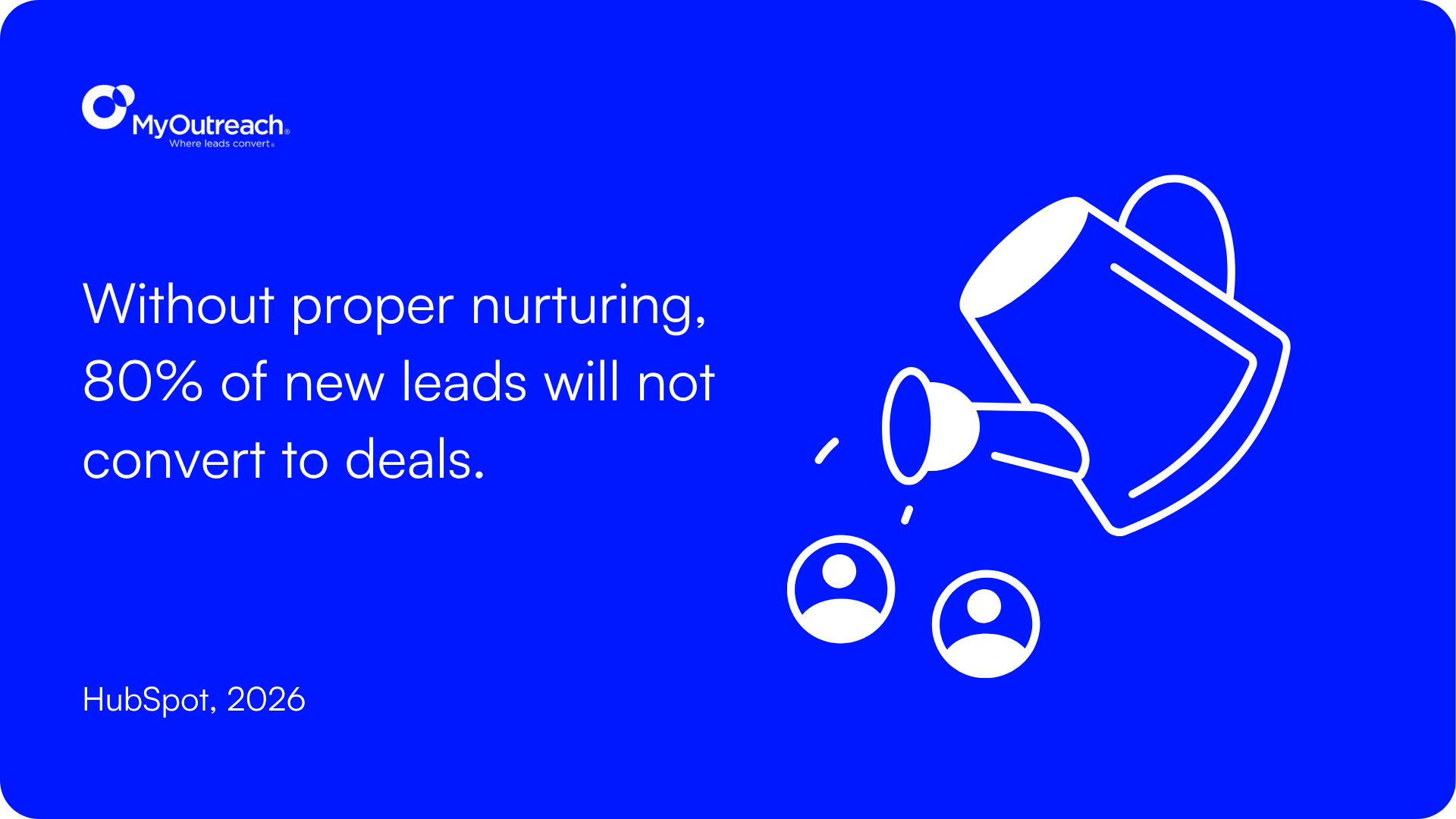
Twilio also created a sales enablement program that trains their sales department to follow up with these leads properly. Without proper nurturing, 80% of new leads will not convert to deals. By creating a six-week nurture programme to follow up with leads who showed interest in their brand, they ensured that the sales department was properly trained to handle these new leads.
Choosing the Right Content Syndication Vendor
Your content syndication strategy’s success depends on selecting the right syndication vendors.
How to Evaluate Content Syndication Vendors
The best content syndication vendors connect with your target audience and handle the distribution tasks. Here are some key factors to keep an eye out for when picking one:
- Audience relevance: Vendors should have access to your ICP.
- Industry expertise: Pick partners that know your industry and create better strategies for you.
- Distribution network: The quality and reach of their publisher partnerships matter.
- Reporting capabilities: Search for detailed performance tracking that helps you make informed decisions.
- Lead qualification process: Learn about their lead gen methods and marketing lead qualification criteria.
- Compliance Standards: The vendors you choose must comply with GDPR, CCPA and other data regulations.
- Reporting and Transparency: Look for transparent vendors that can provide analytics and real-time performance dashboards.
Always require case studies, references or pilot programs before signing a contract.
Avoid Poor-Quality Vendors
Poor content syndication partnerships can hurt your lead gen and brand reputation. Here are some red flags to keep an eye out for:
- Overpromising & underdelivering: If a vendor guarantees unrealistically high results, it is often a sign that they will underdeliver.
- Low Cost-Per-Lead: Vendors offering rates far below the market average may be cutting corners by using outdated lists or poor-quality data.
- Lack of transparency: Trustworthy vendors are open about their processes, lead sources, pricing and performance measurements. If a vendor is vague, that’s a red flag.
- Non-compliance with Data Privacy Regulations: Vendors who can't demonstrate compliance with regulations like GDPR put your business at risk.
- Not willing to provide references or case studies: If they hesitate to share client references or case studies, it can indicate lack of experience or poor performance in the past.
Trustworthy vendors are transparent, communicative, realistic, and compliant. These red flags will keep you aware and protect your budget, brand, and peace of mind.

Matching Platforms to Your Audience
Your content syndication platform should match your target audience's characteristics so that you can get better engagement.
There's no single best platform. Free routes are mostly about awareness. Paid routes are where you get verified contact details. In practice you want both running, just not at the same time and not with the same content.
Different platforms serve different needs:
- Blogging platforms give you a ready audience and creative freedom. For example, WordPress lets you import content directly with categories to reach the correct readers.
- Social networks offer massive reach. LinkedIn’s Publishing Platform tells connections about new posts, while Facebook’s Instant Articles lets you publish automatically with embedded media.
- Paid networks like Outbrain and ITCurated target qualified audiences. ITCurated uses AI to pick publishers based on industry and target personas, reaching over 138 million decision-makers. Taboola also sits in this category, but it's better suited to B2C.
Pick platforms that match your ICP. A clearly defined ICP will help your content find the right people and companies. Research condoned by CMI in 2023 shows that LinkedIn is the top organic platform used for B2B content syndication.
Free platforms
LinkedIn first, always, for B2B. Posts, articles, Sponsored Content. The audience filters are good enough that you can target down to job title and seniority. The bit most marketers ignore is the long-form article. It lives inside the same network where your buyers already are, and it costs nothing.
Medium works for thought leadership aimed at a wider business audience. The Partner Program will push your piece to readers outside your follower base when the topic lines up.
Quora is slower, but the people who find your answers are actually looking for what you sell.
Reddit and SlideShare are the ones people forget. Reddit, only if you can write something that isn't a pitch. SlideShare (LinkedIn owns it now) is fine for distributing research reports and infographics; we still see referral traffic from things we put up years ago.
Paid platforms
MyOutreach is the managed option. We don't hand you a dashboard, we run the campaigns. Every lead goes through a three-point verification check before it hits your CRM. CPL starts at $40 for MQLs. Custom packages for SaaS and B2B tech across EMEA, APAC, and North America
NetLine runs one of the larger publisher networks (15,000+ partners) on a self-serve CPL model. Pricing typically $50–$150 depending on targeting. Good if you want to control the campaigns yourself, less good if you wanted someone to actually own outcomes.
TechTarget is for IT and security buyers specifically. Priority Engine layers intent data over the syndication, so you can see which accounts are actively researching the category. Enterprise pricing, usually $50,000+ a year.
Madison Logic is for ABM rather than lead volume. The ML platform combines syndication with display, LinkedIn, CTV, and audio in one place. $25,000–$50,000 a quarter, so generally mid-market and enterprise.
Taboola is better suited to B2C, so I'd skip it if your goal is B2B leads. It's content discovery. Broad reach, no verified contact data. Useful for awareness if you have budget left over, not a starting point.
📖 Useful read: Best B2B Content Syndication Platforms

Use SEO Tags to Protect Your Original Content
When it comes to content syndication, the biggest concern is duplicate content, which can easily confuse search engines and impact your rankings. However, if you handle SEO correctly, this doesn't have to be a problem.
There are smart ways to signal to search engines that your republished content is intentional. Two SEO tags can help you preserve your original content’s authority while syndicating it safely:
- Canonical Tag (rel=canonical): This tag tells search engines that the syndicated version of your content is a copy, and the source should get all the SEO credit. It makes sure authority doesn’t split between versions.
- Nolndex Tag: This tag tells search engines not to include the syndicated page in search results. It helps prevent duplicate versions from competing with the original post in search rankings.
Using these tags ensures that your syndication strategies strengthen your visibility and not undermine it.
Content syndication also serves as a demand and lead gen tool, offering B2B businesses a reliable method to fuel their sales funnel.
Measuring Success and ROI
Measuring success creates the foundation of any successful content syndication campaign. You would never know if your efforts generated proper returns without tracking the right metrics.
Tracking traffic and involvement
The right metrics measure how syndicated content performs:
- Impression and reach: How many people have seen your content.
- Click-through rate (CTR): Percentage of viewers who have clicked on your content.
- Referral traffic: Visitors coming from content syndication platforms to visit your website.
- Time on page: Duration visitors spend on your content.
UTM parameters play a massive role in tracking performance on different platforms. These tracking codes identify which content syndication partners and campaigns bring the highest-quality traffic.
Evaluating Lead Quality
Lead quality determines true ROI beyond simple traffic metrics. MQLs show how many readers become customers based on form entries and past interactions with your brand. Cost per lead (CPL) is an excellent database-building metric that reveals whether your content syndication spending justifies ROI.
The content syndication ROI calculation uses this formula: ROI=(return-spend)/spend. This calculation considers lead numbers delivered, the average CPL, the lead to SQL conversion rate, the win rate and the average contract value.
Adjusting your Strategy Over Time
Content syndication is a long-term strategy that may not show immediate ROI. Regular reviews help you assess performance and monitor how changes affect results. A/B testing significantly optimises your syndication efforts. Testing variables such as post length, language, imagery, and posting timing determines what appeals the most to your audience.
Source data analysis reveals which syndication partners, content formats, and campaigns produce high lead quality and conversions. This evidence-based approach helps you continuously improve your content syndication strategy.
📖 Useful read: Mastering B2B Content Syndication in 2026
Conclusion
Content syndication is a proven strategy for B2B marketers looking to reach a wider audience, increase brand visibility and generate high-quality leads. By syndicating your content to the right channels - paid or organic - you can ensure that your message reaches the right people at the right time. Ultimately, your content syndication success heavily depends on picking the right syndication partner.
Let us Help with B2B Content Syndication
At MyOutreach, we specialise in helping B2B SaaS companies to maximise their content syndication results. We work closely with you to clarify your message, engage your ICP and deliver high-quality leads straight into your sales funnel.
Sit back and relax as we expand your brand's reach with precision-targeted ABM content syndication strategies. We ensure that your solutions connect with high-intent buyers by using intent data, multi-channel distribution and personalising content to each audience segment.
📋 Featured Case Studies:
- Bitdefender: Opened the door for 366 decision-makers at 124 companies. Case Study ➝
- TIBCO: Generated high-quality opportunities with MyOutreach. See how ➝
- Veeva: Our targeted syndication helped them increase engagement while enhancing authority in the life sciences sector. Case Study ➝
Video Testimonial 👇
FAQs
Q1. Does SEO lose value with content syndication?
Not if done correctly. Making sure syndicated content includes a canonical tag or backlink to the original source is a good way to prevent duplicate content and protect SEO value.
Q2. Is content syndication good for SaaS companies?
Yes - content syndication is especially effective for SaaS companies. It helps position your brand as a thought leader, reaches a wider target audience and fills your pipeline with qualified leads.
Q3. What are the risks of content syndication?
While an effective tool for B2B marketers, content syndication has its risks - duplicate content, compliance risks, poor lead quality and overpaying for CPL.
These risks exist only if your content syndication strategy is not managed properly. To avoid them, choose trustworthy vendors, use SEO tags correctly and monitor performance metrics.
Q4. How is content syndication success measured?
Content syndication success is measured with track metrics like clicks, traffic, lead quality, conversion rates, and cost per lead.


.webp)

.webp)
.webp)