

If your company is not taking advantage of B2B content syndication platforms, you could be sitting on a goldmine of marketable intellectual property. Change that in 2026 by exploring some of the best options available. These platforms give you the tools to strategically expand your content distribution in a systematic way, helping you target your messaging to a wider yet curated audience to drive greater viewership and valuable business leads.
What Is B2B content syndication?
In a nutshell, B2B content syndication takes your corporate materials (be it an article, white paper, annual report, webinar, or similar content) and distributes them tactically to third-party outlets, expanding their reach. Similar in some ways to how news organizations republish news articles, content syndication provides far wider distribution than your own corporate website and channels alone.
The goal is twofold: to expand brand awareness and to generate qualified leads. By getting in front of more readers, you automatically increase the number of people likely to encounter your content. But because B2B content syndication targets specific outlets relevant to your industry and offerings, potential clients who are already researching solutions in your space will be connected to your business. According to Gartner, 67% of B2B professionals research solutions independently without the involvement of sales reps.

What's surprising is how few companies are taking full advantage of content syndication, despite brand awareness being a top marketing priority. According to Pipeline360's research 61% of marketers using content syndication were able to reach their pipeline goals, compared to just 45% of those who don't. Yet over a third of B2B marketers had never even considered it. Among those already using it, over 90% plan to maintain or increase their investment, signaling a growing divide between early adopters and those still sitting on the sidelines.
Why use B2B content syndication platforms?
Once you've decided that B2B content syndication is worth pursuing, where do you start? Given the range of platforms available, it helps to understand the different metrics they provide so you can find the right fit for your target audience. Lead generation, cost-per-lead, demand generation, and account-based marketing are all factors in choosing a platform. You want your goals and corporate messaging aligned with a platform's strengths to ensure you connect with the right audience and generate leads worth pursuing.
There's been a measurable shift in how B2B buyers evaluate content. According to an independent research, 44% of B2B buyers trust impartial third-party content more than vendor-produced material. Meanwhile, paid advertising is getting more expensive to compensate: B2B cost-per-conversion on Google Ads in 2024 ran 109% above the eight-year agency average, per Firebrand's benchmarks, with display click-through rates languishing around 0.46%. The case for reaching buyers through credible third-party channels has never been stronger.
Here are some of the key reasons to include B2B syndication platforms in your content marketing strategy.
1. Increased brand visibility and reach
People can find your information on your website, marketing campaigns, LinkedIn profile, and social media pages, but given how siloed most individual readership tends to be, you're unlikely to reach as many potential clients as you could through targeted syndication. Placing your content on multiple, curated platforms dramatically increases your potential audience and your ability to reach your ideal customer profile: a targeted group of buyers with a genuine interest in your specific solutions.
2. Improved search engine rankings through backlinks
When someone finds your content on a syndicated site, they're not just reading your material — an effective syndication strategy includes backlinks that send readers directly to the source content on your website. Search engines like Google also scan for backlinks, and a high volume of quality inbound links can improve your keyword rankings. Search engines treat those references as a mark of credibility and authority for your site, making content syndication a valuable part of any SEO strategy.
.webp)
3. Increased website traffic and pipeline
More distribution outlets means more chances of reaching readers who might not have found you otherwise. When targeted readers encounter your content and click through to learn more, that drives traffic to your website and builds your lead pipeline. Companies are 35% more likely to hit their conversion goals when they use content syndication, according to Lead Spot.
Lead generation is one of the primary goals of any marketing campaign, and this is where B2B content syndication delivers tangible business results. When users click backlinks on a partner site, they land directly on your content, which is a high-value opportunity to capture leads. Adding gatekeeping strategies, such as requiring contact information to access premium content, helps build mailing lists and identify prospects.
4. Greater brand authority and thought leadership
Syndicating your material to reputable websites lends your brand credibility by association; this is what brand marketers call the "halo effect." If a well-respected outlet hosts your content, readers extend some of that trust and authority to your company. Having your material appear on sites like Business Insider or Harvard Business Review signals to potential clients that you operate at a similar level. Over time, that growing reputation gives you a competitive edge over companies that don't syndicate.
The 2026 B2B content syndication landscape
This is bringing meaningful changes to the B2B content syndication landscape. There's a widening gap between leaders and laggards, with the former increasingly embracing artificial intelligence, intent data, and multi-channel orchestration to build pipeline and reach potential clients more directly.
Key trends:
- AI-native syndication: AI agents can now engage prospects in real-time conversations, qualify intent using BANT criteria, and identify entire buying groups within target accounts.
- Buying group targeting: B2B purchases typically involve multiple stakeholders, and leading platforms now identify and engage entire buying committees rather than individual contacts.
- Pipeline over lead volume: Success metrics have shifted from raw lead counts to qualified pipeline created and revenue influenced.
- Privacy compliance: GDPR and CCPA compliance are no longer optional. The best platforms rely on first-party, fully permissioned data.
- Intent data integration: Leading platforms combine content syndication with behavioral intent signals to prioritize follow-up on accounts most likely to convert.
Free B2B content syndication platforms
To test the waters without a major financial commitment, a handful of free B2B content syndication platforms offer a low-cost way to expand your visibility and reach. They may lack the precision targeting or advanced features of paid services, but they provide a practical entry point to explore what syndication can do for your brand. As results accumulate they can serve as a springboard to larger platforms.
Medium and Dev.to
Ideal for in-depth articles and tech-focused content, these platforms cater to a wide range of professionals and can meaningfully boost brand authority. Medium's Partner Program also surfaces content to readers outside your existing audience based on topic relevance.
.webp)
LinkedIn and LinkedIn sponsored content
LinkedIn is the definitive platform for B2B content distribution. Beyond organic posts, LinkedIn Sponsored Content lets businesses amplify articles, whitepapers, and case studies to precisely defined audiences, filtered by job title, seniority, industry, and company size. LinkedIn's native publishing platform also supports long-form thought leadership content that can generate strong organic reach among decision-makers.
Facebook Business
While less dominant in pure B2B than LinkedIn, Facebook Business Pages and targeted paid distribution can effectively reach certain professional audiences, particularly in SMB markets.
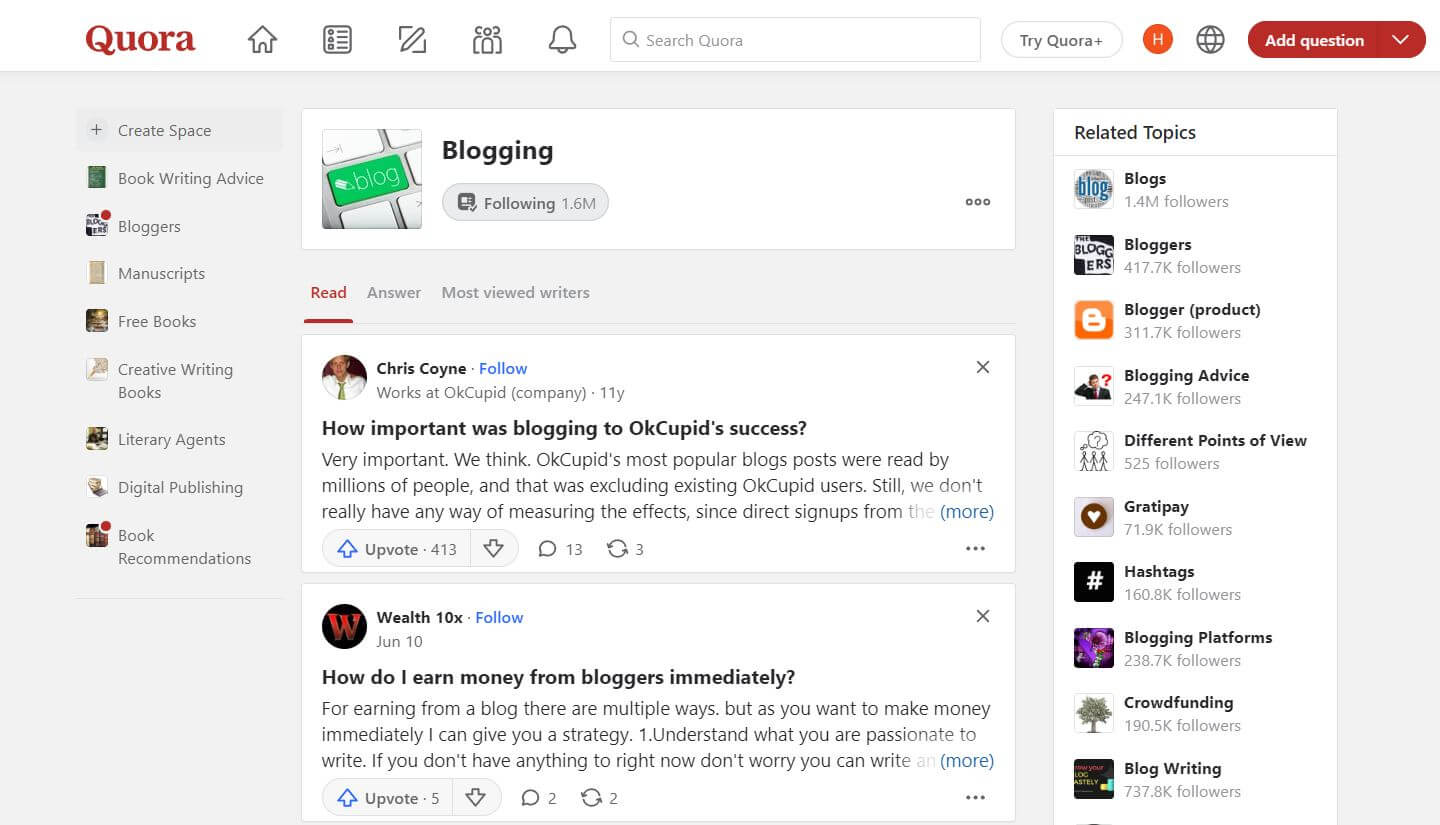
Quora
By answering questions relevant to your industry, companies can position themselves as subject-matter experts while driving qualified referral traffic to their websites. Quora's topic-based structure makes it particularly effective for reaching audiences actively searching for solutions to specific problems.
Reddit's community-based structure allows brands to share content in subreddits where their target audience is already active. Content that genuinely adds value can gain significant organic traction, but overt promotion tends to be poorly received. Authenticity and relevance are essential.
SlideShare
Often overlooked, SlideShare (part of LinkedIn) is an effective platform for distributing presentation-style content to a professional B2B audience. Infographics, research reports, and slide decks perform particularly well and can generate strong SEO benefits.
Scoop.it
Scoop.it promotes your content alongside other curated articles to a targeted audience using a subscription model. It's particularly useful for establishing topical authority and reaching professionals who follow specific subject areas.
Paid B2B content syndication platforms
If your organization is ready to invest more seriously, paid B2B content syndication platforms offer more precise audience targeting, greater lead volume, and more robust measurement tools, with some even guaranteeing results. Here are the leading paid platforms to consider in 2026.
MyOutreach
MyOutreach is a specialist B2B demand generation agency built specifically for SaaS and technology companies, offering a full-service suite that goes well beyond content syndication. Operating across EMEA, APAC, and North America, it combines a database of over 189 million verified contacts with access to 50+ digital publications to connect SaaS marketers with decision-makers across 133 industries and 86 countries.
What sets MyOutreach apart from purely self-serve platforms is its managed, agency-led approach. Rather than handing marketers a dashboard and leaving them to it, MyOutreach embeds itself as an extension of the client's marketing team, guiding strategy, managing execution, and working closely with sales to ensure leads actually convert. Every lead passes through a proprietary three-point verification process combining AI screening with manual review, so sales teams receive contacts that are genuinely sales-ready rather than raw form fills.
Best for: SaaS and B2B tech companies that want a hands-on agency partner rather than a self-serve platform, particularly those running complex, multi-touch campaigns across global markets.
Pricing: Transparent, CPL-based pricing starting at $40 per MQL; custom packages available.

NetLine
NetLine operates one of the largest B2B content syndication networks, connecting gated content with decision-makers across more than 15,000 publisher and media partners. Their proprietary AudienceTarget recommendation logic matches your content to the most contextually relevant buyers, ensuring high-intent engagement.
NetLine's "pull" model, where professionals actively search for and download resources, produces higher-intent leads than passive ad exposure. The platform integrates directly with major marketing automation platforms (MAP), CRM systems, and sales engagement platforms for seamless lead delivery. Pricing is CPL-based, typically ranging from $50 to $150 per lead depending on targeting criteria and industry.
Best for: SaaS and tech companies seeking high-volume B2B lead generation with self-service campaign control.
TechTarget
TechTarget combines content syndication with first-party intent data drawn from a network of over 150 technology-focused publications. Their Priority Engine identifies accounts actively researching technology solutions, making it a standout platform for technology marketers. With a media portfolio of over 221 publications reaching more than 50 million technology professionals globally, TechTarget offers exceptional depth in the enterprise technology buying market.
Best for: Technology companies targeting IT decision-makers, security professionals, and enterprise buyers.
Pricing: Custom enterprise contracts; typically $50,000+ annually.
Madison Logic
Madison Logic is an account-based marketing platform that integrates content syndication with multi-channel demand generation. Their ML Platform combines proprietary intent data, account intelligence, and activation across content syndication, display advertising, LinkedIn, Connected TV and audio, all from a single interface.
ML Insights aggregates behavioral, firmographic, technographic, and engagement data to surface the accounts most likely to purchase and identify the buying committee members within those accounts. Recent expansions, including deeper integration with Adobe Real-Time CDP and Adobe Journey Optimizer, allow marketers to orchestrate personalized outreach across owned channels based on Madison Logic intent signals.
Best for: Mid-market and enterprise B2B organizations running account-based content syndication strategies with longer sales cycles and multiple buying committee members. Pricing: Custom enterprise contracts; minimum commitments typically start around $25,000–$50,000 per quarter.
Taboola
Specializing in content discovery and native advertising, Taboola supports content visibility on high-traffic sites, enhancing engagement for both publishers and marketers. With a pay-per-click model, it connects content with over 500 million daily active users across its publisher network.
Taboola is best suited for companies seeking broad awareness and traffic rather than targeted B2B lead generation with verified contact data.
Best for: B2B and B2C brands looking for high-volume content distribution and native display advertising.

How to choose the right B2B content syndication platform
Choosing from a field of seemingly similar platforms is genuinely difficult. Careful evaluation of key factors can help you identify the right fit for your brand and business goals:
Audience match: Does the platform attract your ideal buyer profile? A misaligned audience produces low-quality leads that waste budget and sales capacity.
Data quality and compliance: Does the provider use verified first-party data? Look for GDPR and CCPA compliance, human verification processes, and transparent data sourcing. Avoid platforms that rely on purchased third-party lists.
Pricing model and transparency: Evaluate whether the pricing model (CPL, CPC, CPM, or subscription) aligns with your budget and campaign goals. Look for predictable costs and guaranteed results where possible.
Intent data integration: The best platforms go beyond distribution by providing behavioral intent signals that help you prioritize follow-up on the highest-potential accounts.
CRM and MAP integration: Seamless integration with your existing CRM and marketing automation platform is essential for timely lead follow-up and accurate attribution.
Lead quality vs. volume: Decide whether your primary goal is lead volume (top-of-funnel awareness) or qualified pipeline (mid-to-late funnel). Different platforms excel at different stages.
Analytics and reporting: Look for platforms with robust reporting that gives you visibility into content performance, lead quality, and conversion metrics.
Effective strategies for B2B content syndication
Strategic content placement and audience targeting
Choosing a platform that reaches your target audience is the foundation, but you also want meaningful breadth. Rather than limiting your distribution to a narrow slice of publications, build a diverse network of outlets that spans multiple relevant business sectors. Platforms with ABM capabilities can also help you reach organizations and buying committees rather than just individual contacts.
Lead generation and demand generation focus
The most important factor in generating quality leads through content syndication is straightforward: distribute quality content. Start with your highest-performing assets when working with a new partner, as they're most likely to drive strong conversions. Adding gatekeeping for signature assets such as whitepapers, research reports, benchmark data and buyer guides can further increase lead capture.
Analytics, attribution, and optimization
Regular analysis of performance data gives you the clearest picture of how your syndicated content is delivering. Lead quality, cost-per-lead, sales acceptance rate, and pipeline conversion rate all help you understand what's working, what isn't, and which platforms are best aligned with your goals. Consistent review lets you refine your syndication strategy over time.
Content optimization for SEO and engagement
To get the most from syndication, your materials need to be optimized. Content should include strategic backlinks, strong keyword usage, clear headings, engaging visuals, and properly structured HTML heading tags, all of which help potential clients find you and navigate from republished content back to your website.
Avoid common pitfalls
Strong platform selection and precise audience targeting can still be undermined by weak content. Best practices include carefully matching content to the right outlets, using canonical tags correctly so search engines surface the right version of each document, and submitting to a diverse range of publishers.
Most importantly, avoid overtly sales-focused content. Readers are looking for genuine value, and material that reads like a pitch can damage your reputation at exactly the moment you're trying to build it.
Lead nurture after syndication
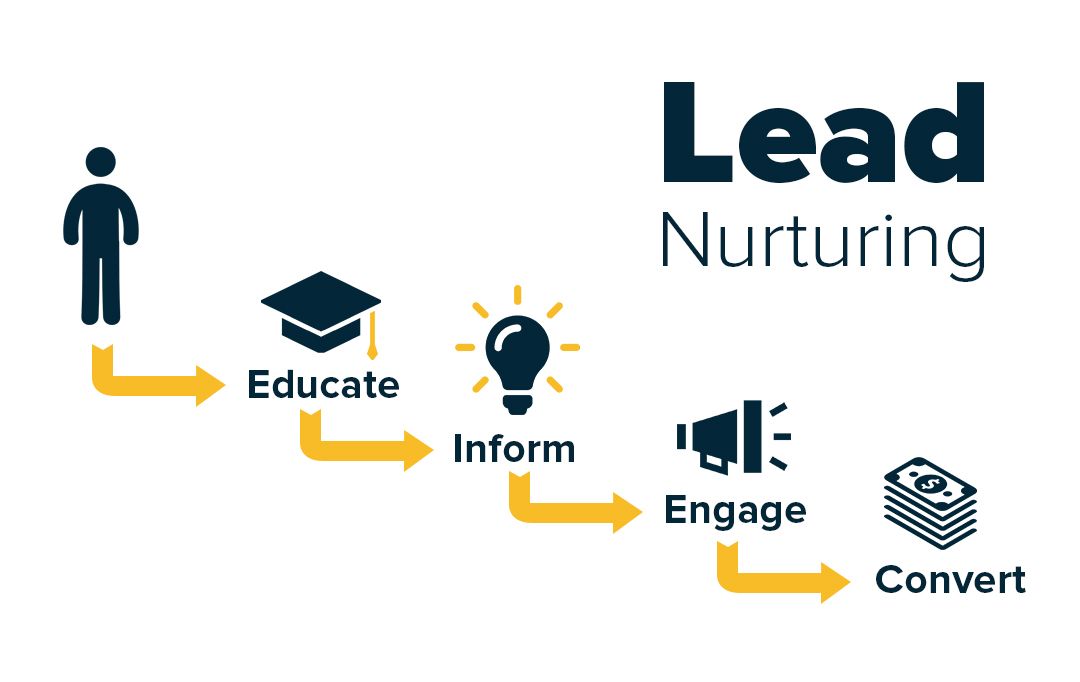
Traffic to your site only matters if it converts. Adding content-specific nurture sequences, whether tailored follow-up content based on site behavior or timely re-engagement campaigns, helps move visitors along the path from first contact to client. Once someone has engaged with your syndicated content, you want a process in place to guide them forward.
Content formats that perform best in B2B syndication
Some content formats consistently outperform others in syndication. Prioritizing these will improve your results:
Whitepapers and research reports: Data-rich, authoritative content that positions your brand as a thought leader. The gold standard for gated content syndication, these tend to attract high-intent buyers actively researching solutions.
Ebooks and buyer's guides: Comprehensive resources addressing specific pain points across the buyer's journey. Particularly effective for mid-funnel nurture.
Webinars and on-demand video: Increasingly popular in B2B syndication, especially on platforms like TechTarget and NetLine. They allow prospects to engage in depth with your subject-matter expertise.
Infographics and data visualizations: Highly shareable content that performs well on free syndication platforms and social channels, driving brand awareness and backlinks.
Case studies and success stories: Social proof that resonates strongly with late-stage buyers evaluating solutions. Best distributed through ABM-focused platforms that can target accounts already in your pipeline.
Measuring ROI from B2B content syndication
A content syndication strategy is only as valuable as your ability to measure its impact. Key metrics to track include:
- Cost Per Lead (CPL): Total spend divided by leads generated. Compare CPL across platforms to allocate budget to the most efficient channels.
- Lead Quality Score: The percentage of syndicated leads that meet your ICP criteria, as assessed by your sales team.
- Sales Acceptance Rate (SAR): The proportion of syndicated leads accepted and actioned by your sales team.
- Pipeline Contribution: The total value of pipeline opportunities influenced by syndicated content.
- Revenue Attribution: Revenue closed that can be traced back to contacts originally captured through content syndication.
- Content-to-Close Rate: The conversion rate from initial content download through to closed-won opportunity.
If you're deciding between a few platforms, consider running 60–90 day pilots with two or three providers before committing to a larger partnership. Using comparable content, topics, and target audiences, you can then measure how each platform performs against these metrics and let the results guide your decision.
In closing
Whether through free or paid platforms, B2B content syndication offers a genuine opportunity to extend your content marketing reach and generate leads that would otherwise never find you. With the continued growth of AI in the marketing technology stack, companies need to be strategic and leverage every available channel to break out of their own ecosystem.
Choosing the right syndication partner matters. Not just for reaching your target audience, but for ensuring that the outlets distributing your content are a good fit for your company's goals, reputation, and values.
The technology landscape keeps shifting, and that creates an ongoing need to evaluate new systems and emerging capabilities. Businesses that embrace that change thoughtfully are the ones best positioned to outpace competitors and build sustainable growth.
How MyOutreach can help?
As businesses continue to navigate the complexities of online marketing, the role of content syndication as a catalyst for brand visibility and lead generation will only grow in importance. By leveraging the insights and strategies outlined in this blog, MyOutreach’s content syndication services can ensure that the content not only reaches the widest possible audience but also resonates on a level that fosters genuine engagement and interest. The path forward involves a commitment to ongoing exploration and adaptation, as the digital realm remains in a constant state of flux, presenting both challenges and opportunities for those willing to innovate and optimize their content syndication efforts. See how MyOutreach can add value to your content syndication strategy here.


.webp)

.webp)